Bear Butts Rain Fly Review – Hammock Tarp for Backpacking

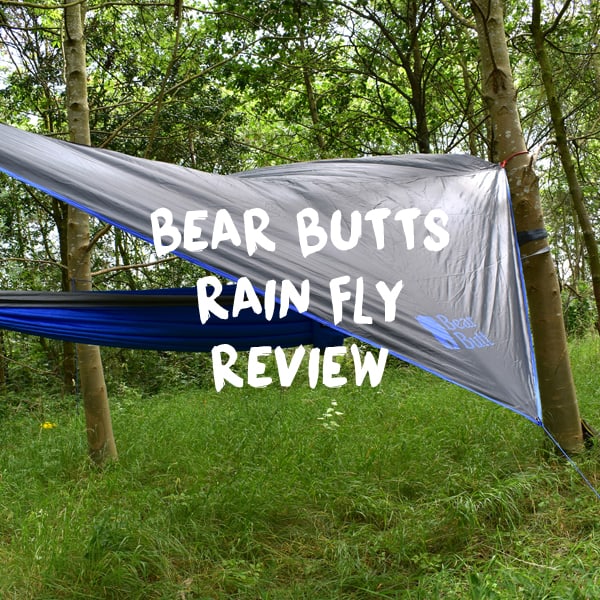
Bear Butts Rain Fly Review – Hammock Tarp for Backpacking
The Bear Butts Rain Fly is a lightweight hammock tarp that gives you plenty of coverage without adding much weight or bulk to your pack. I originally tested mine with the Bear Butts hammock, but it will work with plenty of other hammocks too and can even be pitched on the ground using hiking poles.
The Bear Butts Rain Fly is designed to pair with the Bear Butts hammock, and that is still where I think it makes the most sense.
A hammock gets you off wet or uneven ground, while the tarp provides the weather protection above you. The whole setup is simple, lightweight, and much less bulky than carrying a traditional tent.
One of the things I like about this tarp is that it isn’t limited to hammock camping. If needed, you can pitch it on the ground using two hiking poles or suitable sticks and sleep underneath on a camping mat.
QUICK VERDICT
Best for: Hammock camping, backpacking, hiking and lightweight shelter setups.
What I like: Lightweight, easy to pitch, good hammock coverage and reliable waterproofing.
Main downside: The supplied stakes are basic and the tarp is primarily shaped around hammock use.
Would I recommend it? Yes, particularly if you already use a Bear Butts hammock.
Features and Specifications

These are the specifications of the version I tested:
- Weight: 14.1 oz / 400 g
- Size: 9 ft 4 inches per side, approximately 11 ft 10 inches across the center
- Pack Size: 11 x 4 inches
- Material: 190T polyester with PU backing
- Hydrostatic Rating: 2,500 mm
- Includes: 4 reflective guy lines with tensioners and 2 metal stakes
Bear Butt still sells its Rain Fly today, although some of the materials and details of the current version appear to have been updated since I originally bought mine.

Setting Up the Bear Butts Rain Fly
Setup is very simple once you’ve done it once or twice.
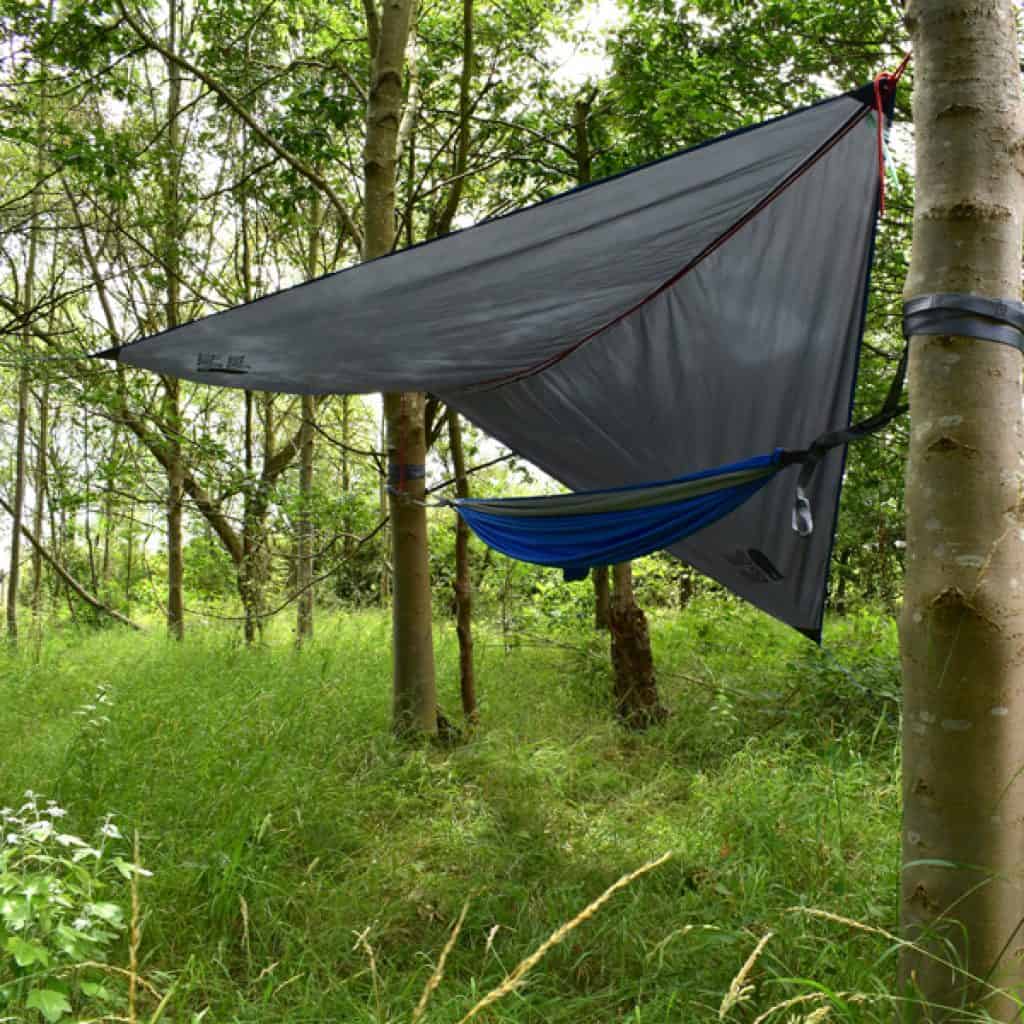
If you’re using the tarp with the Bear Butts Double Hammock, you should already have two suitable trees at roughly the right distance apart.
Secure the ridgeline above the hammock, then pull the two sides out using the guy lines and peg them into the ground.
The exact height and angle depend on the weather.
On a dry, calm night I like keeping the tarp fairly high and open because you get better airflow and can see more around you.
When the weather turns bad, lower the tarp and pull the sides down more steeply. This gives you much better protection from wind-driven rain.
You want enough clearance between the hammock and tarp that you aren’t constantly brushing against the fabric, but not so much that sideways rain can easily get underneath.
Using It Without a Hammock
One feature I think is easily overlooked is that you don’t actually need a hammock to use it.
With two hiking poles or suitable sticks, you can create a basic A-frame style shelter.
Run the ridgeline between the two supports, pull the sides out with the guy lines and sleep underneath on a camping mat.
It isn’t as enclosed or weatherproof as a normal tent, but in the right conditions it gives you an extremely simple lightweight shelter.
For backpacking, I like gear that can do more than one job, and this gives the tarp a bit more versatility than something designed exclusively to hang above a hammock.

Waterproofing
I tested the tarp in heavy rain and never had a problem with water coming through the fabric.
Water beads up and runs off well, which also makes packing up easier because you can shake a lot of the moisture off before putting it back into its stuff sack.
The version I tested had a hydrostatic rating of 2,500 mm, which is plenty for a tarp sitting above you rather than being pressed against wet ground.
The pitch makes a big difference though.
If the tarp is loose, rain can collect in sagging areas and the wind can make the fabric flap around badly.
Once you get good tension along the ridgeline and guy lines, the water runs away very easily.
Condensation can still collect underneath in certain conditions, but because the shelter is so open and well ventilated I find this less of a problem than inside many small tents.
I also always dry the tarp properly when I get home rather than leaving it packed away damp.
Coverage and Shape
The shape is designed around hammock camping.
The approximately 11 ft 10 inch center line gives you enough length to extend beyond the ends of most normal hammocks, which is important when rain is coming in at an angle.
You don’t want the tarp ending directly above your head and feet.
The sides are wide enough to create good protection while still allowing you to adjust the pitch considerably.
In warm conditions you can open the sides up.
If the wind starts blowing harder, pull them lower and tighter.
That adjustability is one reason I prefer a simple hammock tarp to something with a fixed shape.
Bear Butts got the balance between coverage and packed size about right with the version I tested.
A much larger tarp would obviously give you more shelter, but it would also add extra weight and bulk.
Weight and Pack Size
At around 400 grams, the tarp is lightweight enough that I wouldn’t hesitate to take it backpacking.
Its 11 x 4 inch packed size also makes it very easy to squeeze into a backpack.
Unlike a tent, there are no poles inside the bag.
That means you can compress it into awkward gaps without worrying about breaking anything.
This is one of the reasons hammock camping can work so well for hiking through wooded terrain.
Your shelter can effectively consist of:
- A hammock
- A rain fly
- Tree straps
- Insulation
Whether that ends up lighter than an ultralight tent depends heavily on the rest of your setup, especially your underquilt or sleeping mat.
But it can certainly be a very compact system.
Durability
The material feels thin because it needs to stay lightweight, but I never felt like it was excessively fragile.
I used mine in heavy rain and strong winds and didn’t notice any problems with the fabric, stitching or attachment points.
The guy-line loops are particularly important because they take most of the tension when the weather gets rough.
These felt securely stitched and I was happy pulling them reasonably tight.
As with any lightweight tarp, I would still keep it away from sharp branches and avoid allowing the fabric to rub repeatedly against rough bark in the wind.
I haven’t tested mine under a significant snow load, so I wouldn’t make any claims about using it as a winter shelter in heavy snow.
For normal three-season hammock camping, it did everything I expected.
Wind Performance
Hammock tarps can handle surprisingly bad weather when they are pitched properly.
The key is reducing the amount of fabric exposed to the wind.
If strong wind is expected, I lower the tarp closer to the hammock and tighten the sides so there isn’t a large open area for gusts to get underneath.
I also make sure every guy line is properly tensioned and that the pegs are firmly anchored.
The supplied stakes are fairly basic, so soft or sandy ground may require something more substantial.
The tarp itself handled the strong winds I used it in without giving me any reason to worry about the attachment points.
Bear Butts Rain Fly With a Hammock
This is still what I think the tarp does best.
Using it with a hammock gives you a sleeping area that is completely separated from wet ground.
The tarp then protects both you and most of the hammock from rain above.
I like this setup when hiking through woodland because I don’t need to find a perfectly flat patch of ground.
You just need two suitable trees.
It is also a comfortable way to camp in areas where the ground is wet, rocky, covered in roots or otherwise unpleasant to sleep on.
The obvious limitation is that hammock camping becomes much more difficult once you leave areas with suitable anchor points.
What I Like
- Simple setup: There isn’t much to learn before you can pitch it confidently.
- Good hammock coverage: Plenty of length over both ends.
- Lightweight: Around 400 grams for the version I tested.
- Compact: Easy to fit into a backpack.
- Waterproof: Mine performed well in heavy rain.
- Adjustable: You can pitch it high and open or low and protected.
- Versatile: Can also be used as a basic ground tarp.
What I Don’t Like
The supplied stakes are probably the weakest part of the kit.
They are perfectly usable on decent ground, but if you regularly camp on very soft or difficult soil I would upgrade them.
The other limitation is simply the shape.
This is primarily a hammock tarp.
It can be used as a ground shelter, but if that were my main purpose I would probably choose a larger rectangular or square tarp with more pitching options.
There are also lighter specialist hammock tarps available if you’re trying to build the absolute lightest possible backpacking setup.
But that usually comes with a higher price or less durable material.
Who Is It Best For?
I think the Bear Butts Rain Fly makes most sense for:
- People who already own a Bear Butts hammock
- Beginners getting into hammock camping
- Backpackers who want a simple tarp without spending a fortune
- Campers who want a tarp that can also work as a basic ground shelter
- Anyone who values easy setup more than having lots of complicated pitching options
If you already have a very lightweight specialist hammock setup, there are more technical tarps available.
But for normal camping and backpacking, I think simple is often better.
Is the Bear Butts Rain Fly Worth It?
Yes, especially if you already own one of the Bear Butts hammocks.
The tarp is lightweight, compact, easy to set up and mine performed well in heavy rain and strong winds.
It also gives you enough coverage that you don’t spend the entire night worrying about whether rain is going to blow underneath at your head or feet.
I wouldn’t call it the lightest or most advanced hammock tarp available.
That isn’t really the point.
It is a straightforward, affordable tarp that does the job it was designed for without creating unnecessary complications.
For hiking, backpacking and normal hammock camping, that makes it easy to recommend.
Where to Buy
You can also check the current version directly on the Bear Butt website.
Thanks for reading. If you have any questions about the Bear Butts Rain Fly or how I set mine up with a hammock, leave them below.