How to Camp Without a Tent
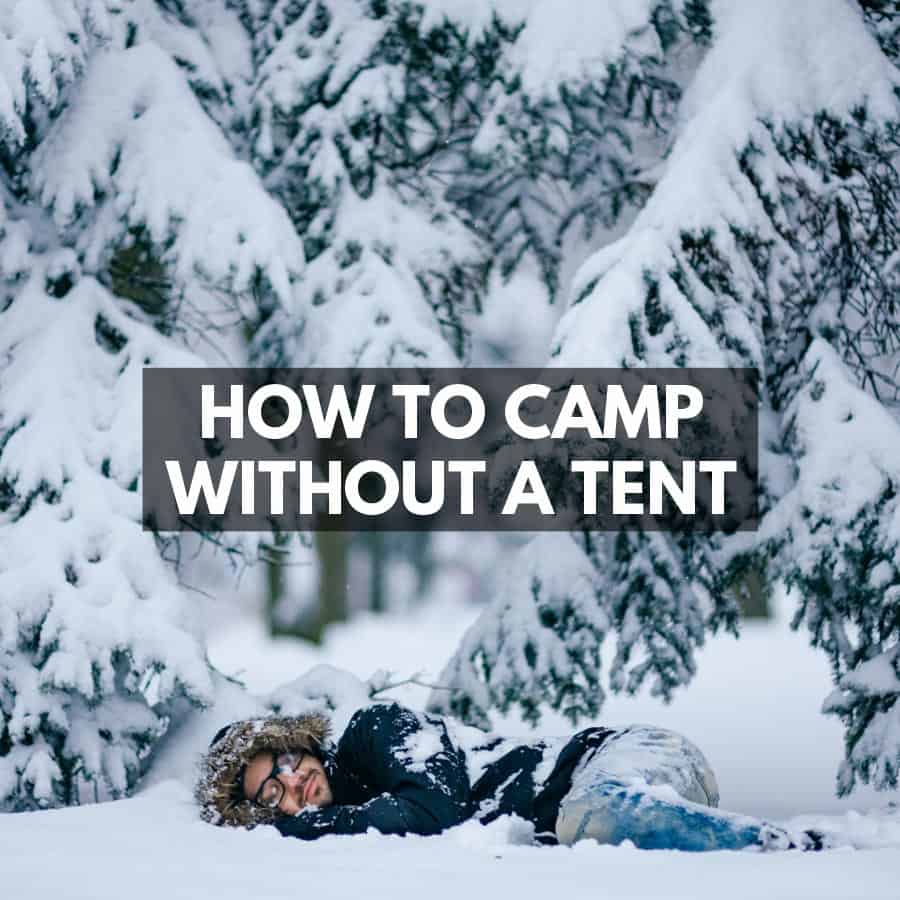
The trick with learning how to camp without a tent is to stay warm and dry by whatever means possible, while also accepting that you may have to endure a slightly more restless night’s sleep than you would inside a tent.
Camping without a tent can be incredibly freeing. You carry less gear, feel far more connected to your surroundings and, on a clear night, get to fall asleep looking straight up at the stars instead of the inside of a nylon roof.
It can also go badly very quickly if you underestimate cold ground, condensation, insects or a sudden change in the weather. In this guide, I’ll go through the best tent alternatives, what to expect when sleeping outside and the things I think matter most if you’re planning a night without a traditional tent.
Can You Really Go Camping Without a Tent?
In certain places, you can absolutely get away without taking a tent camping, but in most situations I still want some form of shelter available. I once decided to sleep under the stars without a tent on a beautiful night in New Zealand and woke up soaked from condensation settling in the morning and thought, “never again.”
That experience taught me that clear skies don’t necessarily mean you’ll stay dry. Dew can settle surprisingly heavily overnight, particularly when temperatures fall towards the dew point, so even when the forecast looks perfect I now like having some kind of tarp or waterproof cover nearby.
If you do go camping without a tent, get a fire going while it is still light if fires are permitted and conditions are safe. A fire can provide warmth and morale, but I would never rely on it as my only protection from the cold because fires die down, fuel runs out and some campsites or dry environments prohibit them completely.
The most important thing is to have a plan for staying dry and insulated from the ground. A basic tarp, bivvy bag, hammock system or even your vehicle can give you enough protection without carrying a conventional tent.

Best Tent Alternatives for Camping
There are plenty of ways to camp without a normal tent, and each has its own advantages. Some are designed for lightweight backpacking while others make more sense for vehicle camping or a simple overnight adventure.
1. Hammock
If you dislike sleeping on the ground because your hips, shoulders or back get sore, a hammock can be one of the most comfortable tent alternatives. A good backpacking hammock weighs very little and gets your entire sleeping system off wet, rocky or uneven ground.
For proper overnight use, though, the hammock itself is only part of the setup. You’ll normally want straps, a rain fly, some form of insulation underneath and potentially a mosquito net, although you can simplify things by using one of these hammocks with bug netting already built in.
The biggest limitation is obvious: you need something suitable to hang from. Above the treeline, in open desert or on campsites without correctly spaced trees, a hammock may be completely useless.
2. Camping Tarp
A camping tarp is probably my favourite tent alternative because it gives you weather protection without completely separating you from the outdoors. It won’t provide the bug protection or enclosed warmth of a tent, but it is lighter, cheaper and far more versatile.
A tarp can be pitched as a lean-to, A-frame, plough-point shelter or in dozens of other configurations depending on the weather and available anchor points. Here’s our guide to the best tarps for camping if this is the route you want to take.
The main skill is learning how to pitch it properly before you actually need it. Trying to figure out knots and shelter angles for the first time in darkness while rain is already falling is not much fun.
3. Bivy Sacks and Bivy Shelters
Bivy sacks are weather-resistant or waterproof covers that go around your sleeping bag and give you a very compact layer of protection from wind, dew, rain and insects. They are especially popular with minimalist backpackers because there are no poles or large fabric panels to carry.
Bivy shelters add a small pole structure around your head or upper body, giving you more breathing room and somewhere to keep a few essentials. They are still significantly smaller and lighter than most tents but feel less claustrophobic than a simple zipped sack.
The downside is condensation and lack of space. In warm or humid weather, moisture can build up inside some bivvies, while anybody who dislikes confined spaces may find them less comfortable than a tarp or hammock.
4. Natural Shelters
If you really want to immerse yourself in the wilderness, you can use existing natural cover or build a very simple shelter from materials already on the ground. Outdoor Life has some useful examples of wilderness shelter designs if you’re interested in the survival side of this.
I would be careful about caves, overhangs and hollow trees because they may already be home to wildlife, can collect water or occasionally have unstable rock above them. A natural shelter should always be assessed before you commit to sleeping inside it.
If you build anything using sticks, logs or vegetation, try to use dead material that’s already on the ground and dismantle the shelter when you leave. The aim is to leave the area looking much as it did when you arrived.
5. Your Car
Your car can be one of the easiest and safest tent alternatives, especially if the rear seats fold flat. Add a mattress or sleeping mat, a decent pillow and some blankets and you can create a surprisingly comfortable little sleeping space with almost no setup time.
The biggest advantage is weather protection. If rain suddenly becomes much heavier than expected, you’re already inside a metal and glass shelter rather than trying to improve a tarp pitch in the middle of the night.
Ventilation is important, though. Crack a window slightly where safe to reduce condensation, and never run the engine for heating while sleeping in an enclosed or poorly ventilated area.
Sleeping Outside Without a Tent
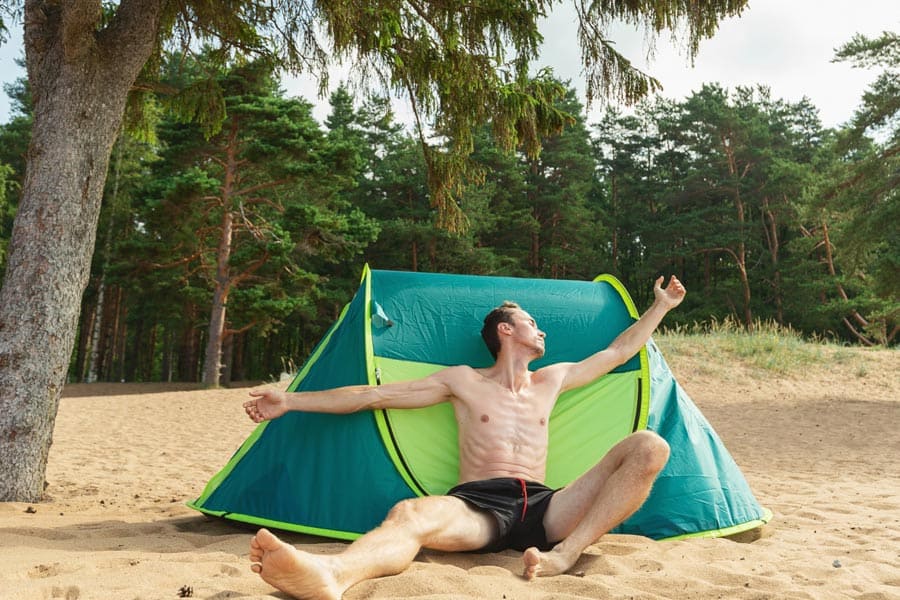
Sleeping without a tent can feel incredibly peaceful, but you’re removing a layer of protection that normally handles a lot of small problems for you. Bugs, wind, dew, wildlife and cold ground all become much more noticeable once there is no fabric wall between you and the environment.
1. Lurking Bugs
Unfortunately, one of the most common problems with sleeping outside is dealing with insects. Mosquitoes buzzing around your ears can ruin an otherwise perfect night, while midges and other small biting insects can be even worse in certain places and seasons.
A lightweight bug net can solve most of the problem without adding much weight. If you’re camping somewhere with ticks, I would also avoid sleeping directly in long grass and check yourself carefully in the morning.
2. Roaming Animals
Most wild animals would rather avoid you than investigate your sleeping bag, but food can change that. Keep food, rubbish and scented items stored appropriately for the area you are camping in and don’t leave leftovers scattered around your sleeping spot.
Always follow local guidance where animals such as bears are present, because food-storage rules vary considerably by region. A flashlight, whistle and easy access to your footwear are also sensible when sleeping without the protection of a tent.
3. Changes in the Weather
Even if the forecast looks perfect, conditions can change unexpectedly overnight. You can use guides like our article on camping in 60-degree weather to help plan your clothing and sleep system, but I would still carry enough waterproof protection to deal with an unexpected shower.
Wind can be just as important as rain. A sheltered campsite behind natural features can feel dramatically warmer than an exposed ridge even when the measured temperature is exactly the same.
4. Cold Ground
One of the easiest mistakes when camping without a tent is concentrating entirely on what goes over you and forgetting what goes underneath. The ground can draw heat from your body all night, even when the air temperature feels fairly mild.
A decent sleeping pad often matters more for warmth than adding another blanket on top. If I’m sleeping directly under a tarp or cowboy camping, ground insulation is one piece of equipment I would not willingly leave behind.
5. Dew and Condensation
Dew is the thing that caught me out in New Zealand. You can go to sleep beneath a completely clear sky and still wake up with the outside of your sleeping bag damp because moisture condenses as the air and surrounding surfaces cool overnight.
A lightweight tarp pitched high above you can prevent most of this without making the experience feel like normal tent camping. Even a small amount of overhead protection makes a big difference when heavy dew settles in the early hours.

How to Choose a Good Campsite Without a Tent
Where you sleep matters much more when you don’t have a tent. Look for level ground with good drainage and natural protection from wind, but avoid obvious depressions where rainwater could collect during a storm.
I also avoid pitching directly beneath dead branches or unstable-looking trees. These are sometimes called widowmakers for a reason, and no amount of ultralight camping credibility is worth having a branch land on you while you’re asleep.
Think about what the site will be like at 3 a.m., not just what it looks like when you arrive. A beautiful exposed viewpoint might be fantastic while the sun is setting and absolutely miserable six hours later when the wind changes direction.
Other Ideas for Camping Without a Tent
If you want to go properly minimal, you can ditch both the tent and most alternative shelters and camp cowboy style. Cowboy camping simply means sleeping out in the open, usually on a sleeping mat with a sleeping bag or quilt and perhaps a groundsheet underneath.
On a genuinely dry, warm night this can be one of the best ways to camp because there is nothing between you and the sky. I would still keep a tarp or waterproof bivvy within reach unless I was extremely confident in the conditions, partly because of my New Zealand dew experience.
Camping Without a Sleeping Bag
You can also camp without a sleeping bag, particularly during warm summer weather, but that doesn’t mean you should sleep completely unprotected. A quilt, blanket or insulated clothing can work perfectly well depending on the overnight temperature.
Our sleeping bag vs wool blanket comparison goes into the advantages of both approaches. Whatever you choose, remember that something underneath you for insulation is often just as important as what you put over yourself.
For really hot conditions, a sleeping mat, lightweight quilt and groundsheet may be all you need. Just don’t assume a warm afternoon means the temperature won’t drop sharply in the early hours of the morning.
Using a Tent Without a Rainfly
If you have a tent but don’t have its rainfly, you can often use a camping tarp as an alternative. Something like the DD Hammocks Tarp 3 x 3 can be pitched over the tent to create a large waterproof roof while still allowing plenty of airflow around the sides.
In genuinely warm and dry conditions, leaving the rainfly off can actually improve ventilation and give you a better view through a mesh inner tent. If there is any realistic chance of rain, however, I would have a fly, tarp or other waterproof cover ready rather than trusting the weather to remain perfect all night.
Is It Safe to Sleep Without a Tent?
For most people in suitable conditions, yes. The main risks aren’t caused by the lack of a tent itself but by exposure to cold, wet weather, unsuitable campsites, wildlife or poor preparation.
Check the weather, understand the area, have enough insulation and keep some form of emergency shelter available. If conditions deteriorate beyond what your setup can handle, there is nothing heroic about staying outside when you have the option to move somewhere safer.
Conclusion
There are plenty of ways to go camping without a normal tent. Hammocks, tarps, bivvy bags, natural shelters and vehicles can all work brilliantly, while cowboy camping takes the idea to its simplest form by putting almost nothing between you and the night sky.
For me, the biggest lessons are to keep yourself dry, insulated from the ground and protected from wind. I would also keep some kind of lightweight waterproof shelter nearby even when the forecast looks perfect, because waking up soaked by dew once was enough to teach me that lesson.
Whatever tent alternative you choose, take the equipment you genuinely need, know what the weather is doing and leave the campsite as you found it. Camping without a tent can be one of the most memorable ways to spend a night outdoors when you get the basics right.