


Guide to Camping in 60-Degree Weather
Camping in 60-degree weather is close to ideal for a lot of people. It is usually cool enough to sleep comfortably without feeling cold, but still warm enough to sit outside in the evening without piling on heavy winter layers. You still need the right sleeping bag, sleeping pad and shelter, though, especially if temperatures are expected to fall overnight.
60°F, or around 15.5°C, is a very comfortable temperature for camping, especially compared with colder conditions. You can usually get away with lighter sleep systems and clothing, while still avoiding the sticky heat you sometimes get on warmer summer nights.
The equipment you carry for camping in 30-degree weather is going to be very different from what you need at 60°F. That said, don’t assume mild daytime temperatures mean you can’t get cold at night, because wind, humidity, elevation and an overnight temperature drop can all make conditions feel much cooler.
Your gear also needs to breathe well enough to prevent you from overheating. Warm, humid conditions inside a tent can quickly become clammy, so ventilation matters just as much as insulation.
Is 60 Degrees Good Camping Weather?
For most people, yes. Around 60°F is warm enough that you don’t need heavy winter equipment, but cool enough that you can sleep comfortably inside a tent without feeling overheated.
The important thing is to check the overnight low rather than just the daytime temperature. A campsite might be 60°F at sunset and fall into the 40s before dawn, especially in exposed or mountainous areas.
Your own tolerance matters too. Some people sleep warm and will be comfortable with very little insulation, while others feel cold even in fairly mild conditions.
How to Stay Comfortable When Camping in 60-Degree Weather
Comfort at this temperature comes down to balancing insulation and ventilation. You want enough warmth to cope with the coolest part of the night without ending up sweating inside your sleeping bag.
Ventilation is particularly important in warmer camping weather, especially somewhere humid. Moist air from breathing and perspiration can collect inside a poorly ventilated shelter and leave the interior feeling damp by morning.
Use adjustable vents, leave doors partially open where conditions allow and avoid sealing yourself inside a warm sleeping bag before you actually need the insulation.
Essentials for Camping in 60-Degree Weather
Sleeping Pad
You can use a fairly lightweight sleeping pad in 60-degree conditions, but I would still take one. A sleeping pad isn’t just about comfort; it also reduces heat loss into the ground where compressed sleeping bag insulation underneath you can’t loft properly.
At these temperatures you don’t need a heavily insulated winter mat, but some insulation is still useful. A lightweight option such as the Therm-a-Rest NeoAir UberLite is the kind of pad that makes sense for mild-weather backpacking.
If the overnight temperature is expected to drop significantly below 60°F, choose your sleeping pad based on the colder forecast rather than the temperature when you first arrive at camp.
Sleeping Bag or Camping Quilt
Sleeping bags are normally rated using comfort, limit and extreme temperatures, although the exact labelling depends on the manufacturer and whether the product uses standardized testing. For normal camping, the comfort rating is far more useful than the extreme rating.
I wouldn’t specifically look for a sleeping bag with a 60°F comfort rating because that would be an extremely lightweight bag with very little margin if the temperature dropped. For most people, a lightweight warm-weather or two-season sleeping bag gives you more flexibility.
If you start getting hot, unzip the bag and use it more like a quilt. It is far easier to ventilate an overly warm sleeping bag than to make an under-insulated bag significantly warmer at 3 a.m.
Camping quilts are also excellent in this kind of weather because they allow plenty of airflow and are easy to move underneath. A lightweight sleeping bag liner can be useful too, both for managing sweat and for keeping the inside of your sleeping bag cleaner.
A Well-Ventilated Tent
You still need a weatherproof shelter even if the temperature is mild. 60°F doesn’t stop it raining, and strong wind can make otherwise comfortable conditions feel much colder.
Rather than concentrating too much on whether a tent is labelled “2-season” or “3-season,” I would look for good ventilation, weather protection and enough mesh for the conditions you’re camping in. Tent color can also make a difference in direct sun, particularly if the tent is left pitched during the day.
Desert camping tents are often designed with ventilation and airflow in mind, which can make them useful in warm, dry conditions. Just make sure the shelter is still appropriate for the amount of rain and wind you expect.
A double-wall tent can help manage condensation because the inner and rainfly are separated, but single-wall tents aren’t automatically unsuitable. Good single-wall designs can work well in mild weather if they have enough ventilation.
What Should You Wear Camping in 60-Degree Weather?
During the day, normal lightweight hiking clothes are usually enough. In the evening, I would keep a fleece, jumper or light insulated jacket nearby because 60°F can start feeling much cooler once you’re sitting still.
For sleeping, lightweight base layers, pajamas or underwear are normally enough for most people. I wouldn’t automatically wear heavy thermals unless the temperature is expected to drop considerably or you know you sleep particularly cold.
A dry layer reserved for sleeping is useful even in mild weather. Changing out of damp hiking clothes before bed will make you feel noticeably warmer and more comfortable.
Is 60 Degrees Fahrenheit Cold for Camping?
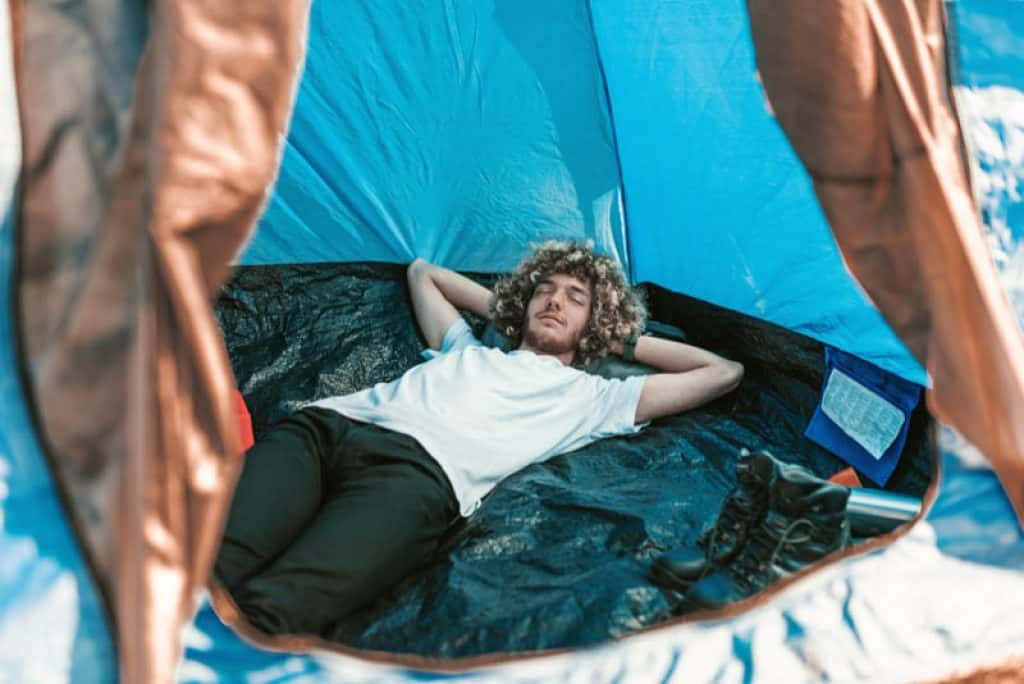
No, not for most people. Around 60°F is generally considered mild camping weather and is often very comfortable for sleeping.
It can still feel chilly if you’re wet, exposed to wind or sitting around inactive for a long time. The expected overnight low is more important than the temperature earlier in the evening.
What Sleeping Bag Do You Need for 60-Degree Weather?
A lightweight warm-weather sleeping bag or quilt is normally enough. I would choose something with a comfort rating below the expected overnight minimum so you have a little safety margin if temperatures fall more than forecast.
There is no problem using a warmer bag either, provided it has a full zip or can be opened up for ventilation.
Can I Use a 30-Degree Sleeping Bag in 60-Degree Weather?
Yes. A 30°F sleeping bag is much warmer than you actually need at 60°F, but that doesn’t make it unusable.
Unzip it, stick a leg out or use it as a loose blanket rather than sealing yourself inside. For people who sleep particularly cold, the extra insulation may actually be welcome later in the night.
Can You Go Hammock Camping in 60-Degree Weather?
Yes, 60-degree weather can be excellent for hammock camping. The airflow around a hammock feels great in mild conditions and you don’t need nearly as much insulation as you would during winter.
Don’t forget that air circulates underneath you as well as above you. If the temperature drops during the night, your underside can become cold surprisingly quickly, so an underquilt or insulated pad may still be worthwhile.
Do You Need a Sleeping Pad at 60 Degrees?
I would still use one. Even if you don’t need much insulation, the sleeping pad provides comfort and reduces heat loss into the ground.
You don’t need a high-R-value winter pad, but I wouldn’t voluntarily sleep directly on the tent floor just because the air temperature is mild.
Final Thoughts
Camping in 60-degree weather is about as straightforward as camping gets. You don’t need heavy winter equipment, but you still want enough insulation to handle a cooler-than-expected night and enough ventilation to stop yourself becoming hot and clammy.
A lightweight sleeping bag or quilt, a comfortable sleeping pad and a well-ventilated tent should cover most situations. Check the overnight forecast rather than just the daytime temperature, keep one warmer layer handy for the evening and you should have a very comfortable night outside.




[…] snowflakes fall as you enjoy your solitude. If you’re a keen camper, you don’t just go camping when it’s 60 degrees, you want to get outside all year […]
[…] you can make use of 60-degree weather forecasts to know if precipitation will take place during your camping trips, it’s never safe to […]