Is Hiking in Crocs a Good Idea?
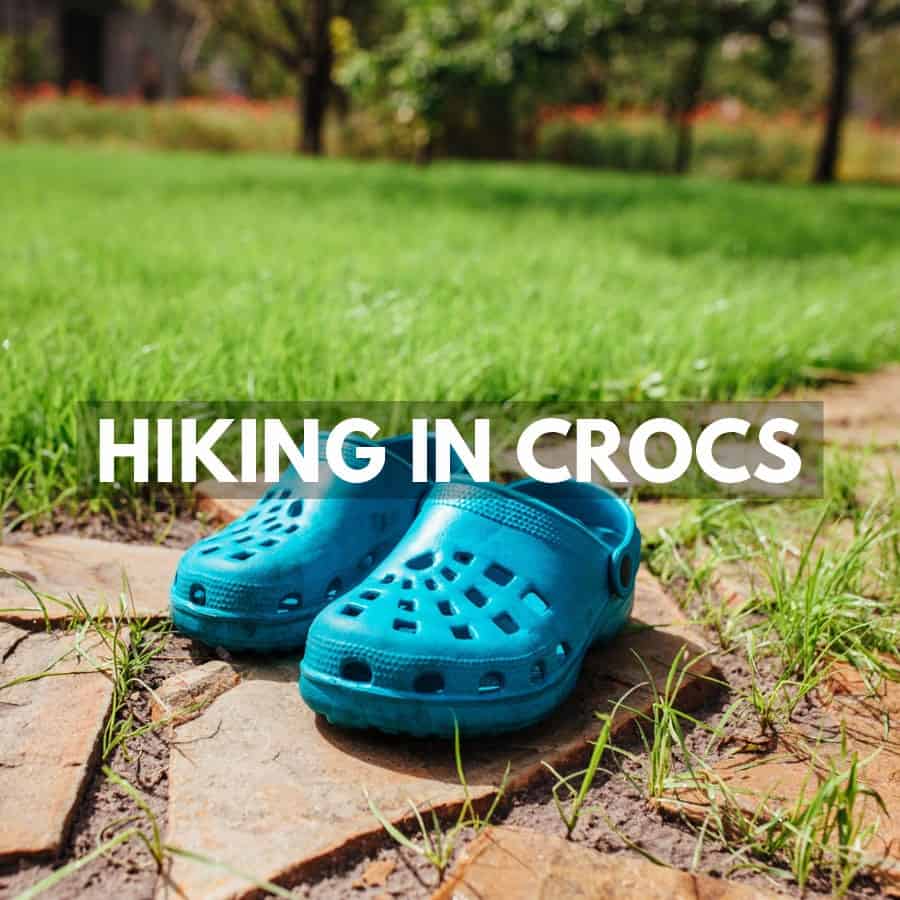
You can hike in Crocs, but whether it is a good idea depends on the trail. They are lightweight, breathable, quick-drying and excellent around water, but standard Crocs have limited foot security, relatively shallow tread and much less protection than proper hiking shoes. I like them for easy trails, camp shoes and river crossings far more than steep or technical hiking.
Crocs are some of the comfiest shoes to wear around the house, garden or campsite, but should you actually hike in them? Yes and no. If the trail is easy and you are comfortable walking in them, there is nothing stopping you, but they definitely have limits.
Standard Crocs don’t have laces, a locked-in heel or an aggressive hiking outsole, so I wouldn’t choose them for steep mountain trails, loose descents or carrying a heavy backpack over rough ground. For casual walks, campsites, river crossings and easy summer trails, however, they can be surprisingly useful.
The important thing is to judge the conditions rather than treating Crocs as either brilliant hiking shoes or completely unusable. Terrain, weather, pack weight and how securely they fit your feet matter far more than the Crocs logo.
Are Crocs Good for Hiking?
For easy hiking, they can be. Standard Crocs are lightweight, very breathable and don’t hold much water, which makes them appealing in hot weather and on trails with frequent stream crossings.
The biggest weakness is foot security. A hiking shoe can be tightened around your heel and midfoot, whereas a Classic Clog relies mainly on the shape of the shoe and heel strap to keep your foot in place.
The standard outsole is also fairly shallow compared with a proper trail shoe. On dry paths and easy woodland tracks this may not matter, but loose gravel, mud, wet rock and steep slopes expose the limitations pretty quickly.
So I would happily use Crocs for a relaxed trail or walk into camp. I would not deliberately choose standard Crocs for technical terrain when I had a proper hiking shoe available.
Are Crocs Good for Your Feet?
Crocs have several things going for them from a comfort point of view. They have a wide toe box, plenty of ventilation and a soft Croslite foam construction that allows your toes to spread more naturally than in narrow footwear.
The old version of this article referenced podiatry advice from Kelsey-Seybold Clinic. I would treat that as general foot-health discussion rather than proof that Crocs are ideal for everyone, because comfort and medical needs vary enormously from person to person.
For everyday casual use, Crocs can be extremely comfortable. For long hikes, though, comfort at the start of the day isn’t the same thing as having enough heel security, traction and protection several hours later.
Crocs currently describe Croslite as their proprietary foam/resin material, and it remains the main material used across most of the range. The company says it is designed to be soft, lightweight and comfortable. :contentReference[oaicite:1]{index=1}
Are Crocs Good Walking Shoes?
Crocs can be good casual walking shoes, but I wouldn’t put a standard Classic Clog in the same category as a purpose-built hiking or trail shoe. You get very little protection from sharp vegetation, gravel can enter through the openings and your foot can move around more on uneven ground.
Where Crocs really make sense is as a second pair of shoes. After hiking all day in boots or trail shoes, slipping into Crocs at camp feels fantastic, and they are especially useful if you have water crossings ahead.
They are light enough to clip or strap to the outside of a backpack and don’t take long to dry once wet.
Are Crocs Comfortable to Hike In?
For short, easy walks, yes. Crocs are soft, lightweight, roomy and extremely breathable, and the heel strap gives you more security than wearing them purely as slip-ons.
Where comfort starts becoming more complicated is repeated movement inside the shoe. If your heel or forefoot slides around on uneven ground, friction can build even though the Croslite itself feels soft.
I wouldn’t put an arbitrary one-mile or two-mile limit on them because some people walk all day in Crocs without a problem while others develop rubbing much sooner. If your feet start sliding, rubbing or feeling unstable, that’s the point where they’re no longer good hiking footwear for you.
Are Crocs Good for Walking All Day?
For casual use, many people wear Crocs all day quite happily. For an all-day hike, I would normally prefer proper hiking footwear because it gives me a more secure fit and better traction as fatigue starts to set in.
If your route is flat, dry and non-technical, Crocs may be completely fine. If you’re heading into the mountains, carrying a heavy pack or dealing with rough surfaces, proper hiking boots or trail shoes make much more sense.
What Are the Best Crocs for Hiking?
If I wanted to hike in Crocs, I would choose one of the models designed with better traction and foot security rather than the standard Classic Clog.
Two options worth looking for are the Crocs Offroad Sport Clog and Crocs Classic All-Terrain Clog. Both are more suitable for outdoor use than the basic Classic because they have a more rugged outsole and a more secure heel arrangement.
I would still think of them as outdoor clogs rather than genuine hiking shoes. Better tread makes a noticeable difference, but it doesn’t suddenly give you the locked-in fit and protection of trail footwear.
Are Crocs Worth It?
For camping and casual outdoor use, I think they are. Prices vary by model and sales, so I wouldn’t keep the old fixed $25-$40 figure in an article like this anymore, but they remain relatively inexpensive compared with most hiking footwear.
They are comfortable, easy to clean and extremely useful around camp. They are also excellent as a second pair of shoes for thru-hikers on a tight budget who want something simple for evenings and water crossings.
I wouldn’t say they “last a lifetime,” though. Croslite soles eventually wear smooth, especially if you walk significant distances on abrasive pavement or rock.
How Much Do Crocs Weigh?
Weight varies considerably with model and shoe size, so there isn’t one useful number for every pair of Crocs. Classic Clogs are still relatively light compared with a second pair of conventional hiking shoes, which is the main reason backpackers sometimes carry them.
If you’re trying to reduce your backpack weight, weigh your own pair before deciding whether they’re worth carrying. An ultralight flip-flop or camp sandal will usually weigh less, but Crocs give you far more toe protection and are much more useful in water.
Can You Wear Crocs Barefoot?
Absolutely. Barefoot is probably how most people wear them, and the large ventilation holes make them particularly comfortable in warm conditions.
If I’m actually hiking in Crocs, however, I prefer socks underneath — socks and sandals baby! Socks reduce direct rubbing against the Croslite and help deal with sweat on longer walks.
You can also rotate the heel strap forward if it starts rubbing, although doing that obviously reduces how securely the shoe stays attached to your foot.
How to Avoid Sweaty Feet in Crocs
Crocs are very well ventilated, but Croslite itself isn’t a breathable textile. Your feet can therefore still become sweaty where they are in direct contact with the footbed.
The original article linked to this discussion of Croslite and sweaty feet, and the basic solutions remain straightforward:
- Wear moisture-wicking socks.
- Keep the Crocs clean so sweat and dirt don’t build up on the footbed.
- Let your feet and footwear dry properly during longer breaks.
I would skip coating your feet in talcum powder or antiperspirant as default hiking advice. Socks are by far the simplest option and solve the rubbing problem at the same time.
Are Crocs Good for the Beach?
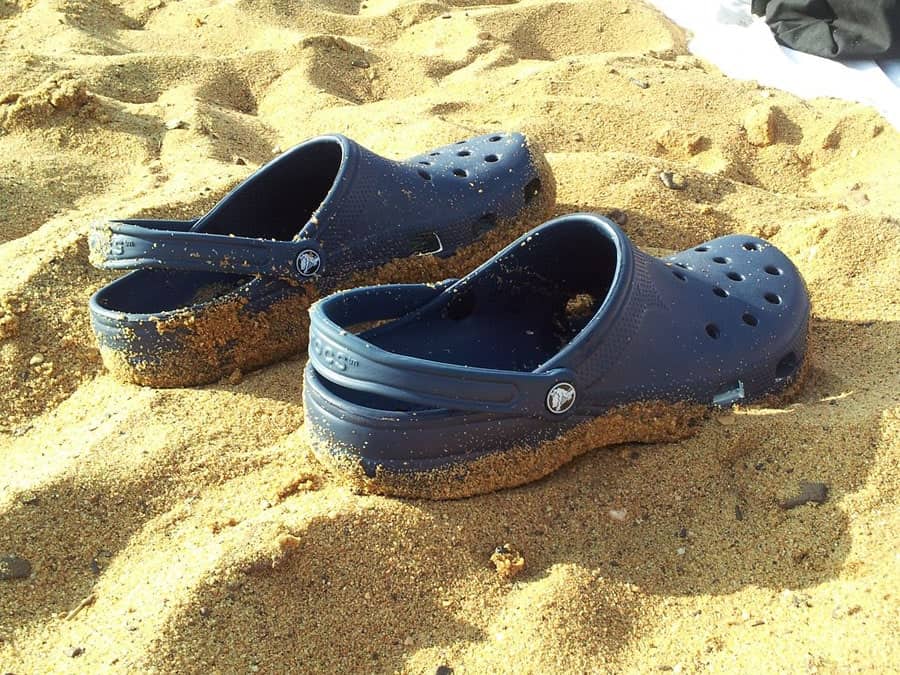
Yes, this is one place where Crocs make a lot of sense. They don’t soak up water like fabric shoes, they’re easy to rinse clean and the ventilation holes allow sand and water to escape fairly quickly.
You can kick them off when the sand is comfortable and put them back on for hot surfaces, pebbles or rougher sections. Saltwater isn’t going to ruin Croslite, although I would still rinse them with fresh water afterwards if they get covered in sand and salt.
Are Crocs Good for Creek Walking and River Crossings?
This is probably my favourite outdoor use for Crocs. As a dedicated river-crossing shoe, they have several advantages:
- They absorb very little water and dry quickly.
- The heel strap helps stop them washing straight off your feet.
- Standard Croslite Crocs float, which gives you a chance of recovering one if it does come off.
- The ventilation holes allow water to drain immediately.
- The enclosed front offers more toe protection than a flip-flop.
- They are lightweight enough to carry as a second pair of shoes.
The one point I would change from the original article is grip. I would not describe standard Crocs as having reliably good traction on slippery underwater rocks.
Crocs themselves note that only certain models use their CrocsLock slip-resistant tread, and even those are explicitly described as slip-resistant rather than slip-proof. Wet algae-covered rocks can be extremely slippery in almost any footwear. :contentReference[oaicite:2]{index=2}
Are Crocs Considered Shoes?
Yes. Crocs are footwear, although the Classic Clog sits somewhere between a shoe, clog and sandal in everyday language.
And despite what the old article said, plenty of people now wear Crocs in public. They’ve gone from weird garden shoes to mainstream casual footwear, so wearing them to the shops is unlikely to get quite the reaction it once did.
How to Prevent Blisters From Crocs
The easiest way to prevent blisters when hiking in Crocs is to reduce movement and friction. Socks help enormously because they create a barrier between your skin and the Croslite footbed.
I would start with one good pair of moisture-wicking socks rather than automatically recommending two pairs. Two socks can help some hikers, but they can also make the fit tighter and hotter, which isn’t necessarily what you want inside Crocs.
If you repeatedly get blisters in the same place, Crocs probably aren’t fitting securely enough for that particular hike. Changing footwear is a better solution than endlessly trying to engineer around a poor fit.
Are Crocs Slippery When Wet?
They can be. The standard Classic Clog doesn’t have the deep lugs of a proper hiking shoe, and the outsole becomes less effective as it wears smooth.
All-Terrain models have a more aggressive tread and make more sense on loose or uneven surfaces. But no Crocs model should be treated as magically safe on mud, wet roots, moss or algae-covered stone.
Why You Should Consider Crocs for Backpacking
I think Crocs make far more sense as backpacking camp shoes than as your main hiking footwear. After spending all day in boots or trail shoes, changing into something wide, airy and soft feels excellent.
They also perform a second useful job as river-crossing footwear. That makes it easier to justify carrying them than a pair of shoes used only for walking around camp.
They aren’t the absolute lightest camp shoes available, but they are comfortable, durable, easy to clean and much more protective than flip-flops. If you don’t mind rocking Crocs in public, they are genuinely useful backpacking footwear.
When Should You Not Hike in Crocs?
I would leave the Crocs in my backpack when the route involves steep scree, prolonged mud, scrambling, sharp rocks, heavy snow or technical terrain. I would also switch to more secure footwear when carrying a heavy backpack because the consequences of slipping or rolling a foot become greater.
Trail difficulty is a much better guide than distance. A five-mile flat riverside walk may be completely comfortable in Crocs, while half a mile over wet boulders could be a terrible idea.
Conclusion
Hiking in Crocs isn’t automatically a bad idea, but I wouldn’t pretend standard Crocs are hiking shoes. They are best on easy terrain where their comfort, ventilation and quick-drying construction matter more than aggressive grip and precise foot control.
For me, their best role is as a second pair of shoes for backpacking, camping and river crossings. If you’re heading onto steep, loose or technical ground, put the Crocs on your backpack and wear proper trail footwear instead.
So rather than saying you should never hike more than two miles in Crocs, I would judge the trail. Easy ground, light pack and secure fit? They may be perfectly fine. Mountains, mud and sketchy descents? That’s what your hiking shoes are for.