Are Doc Martens Good For Hiking?
You can hike in Doc Martens, especially if you already own a well-broken-in pair, but I would not buy them specifically for hiking. Classic Docs are comfortable and extremely durable once worn in, but compared with proper hiking boots they are heavy, relatively stiff and don’t have the same kind of trail-focused grip, cushioning or weather protection.
When I originally wrote this article, I asked a bunch of people in our hiking group whether they would hike in Doc Martens. Interestingly, the people who wore Docs every day were quite happy with the idea, even though none of them had actually turned up for the hike wearing them.
I still think there is a good reason for that. Once a pair of leather Docs has properly softened and shaped around your feet, they can become incredibly comfortable. Someone who has worn the same pair for years may be perfectly happy walking five or ten miles in them because their feet are already completely accustomed to the boots.
That doesn’t suddenly turn them into hiking boots, though. If I’m heading onto muddy tracks, steep descents, rocky ground or carrying a backpack for a long distance, I would much rather wear a pair of proper hiking boots designed for long-distance walking.
QUICK ANSWER
Easy paths and short walks: Yes, if already broken in
Muddy trails: Not ideal
Rocky or steep terrain: I would use hiking boots
Long-distance hiking: No
Backpacking with a heavy pack: No
Best current Doc Martens option: Combs Leather Casual Boot
Would I buy Docs specifically for hiking? No
Why Doc Martens Can Be Comfortable for Walking
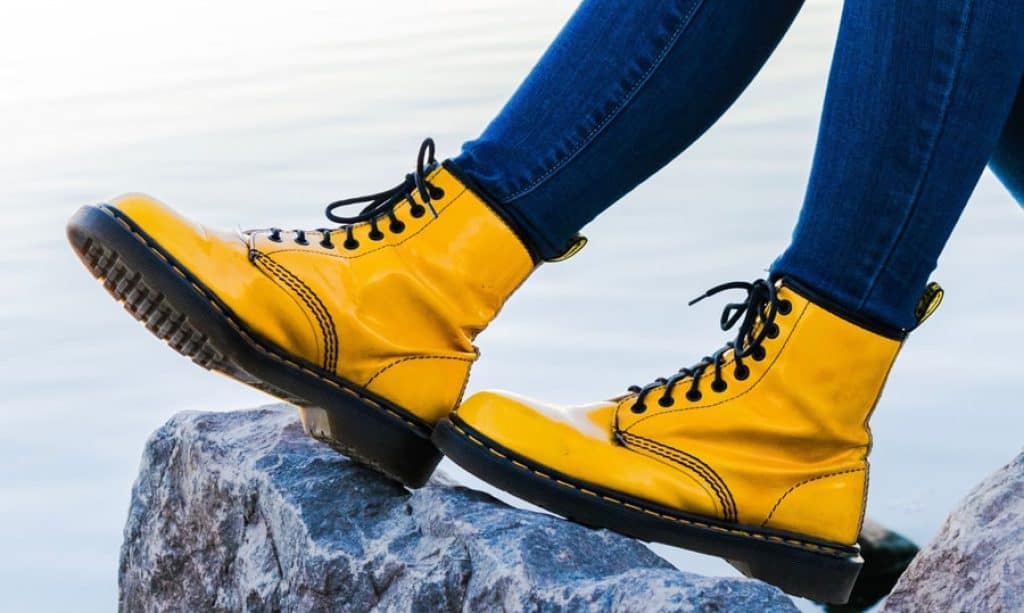
The confusing thing about this subject is that Doc Martens can genuinely be very comfortable boots. The classic 1460 has an air-cushioned PVC sole, a wide rounded toe box and a leather upper that gradually relaxes and moulds around your foot.
That is also why opinions on walking in Docs are so divided. Someone putting on a brand-new pair of stiff Smooth Leather 1460s and walking ten miles is probably going to have a very different experience from somebody who has worn the same boots every day for three years.
A broken-in pair can feel almost like an old leather glove around your feet. There are no unfamiliar pressure points and the leather moves in all the places it has gradually learned to flex.
The problem is that comfort on a pavement and performance on a hiking trail are not quite the same thing.
Why Doc Martens Aren’t Proper Hiking Boots
The classic 1460 was originally a work boot rather than a mountain boot, and the basic design still reflects that. The current model uses a tough Smooth Leather upper and Dr. Martens’ distinctive air-cushioned DMS PVC outsole.
That sole is comfortable on hard surfaces, but the tread isn’t shaped like the deeper, more aggressive lugs I expect underneath a dedicated hiking boot. Once a trail becomes muddy, loose or steep, that difference becomes much more noticeable.
Proper hiking footwear is normally designed around traction, underfoot stability, impact absorption and maintaining grip when the ground isn’t flat. Modern hiking boots can also achieve all of that while weighing considerably less than a chunky pair of traditional leather Docs.
I also wouldn’t assume that the tall ankle automatically gives you better hiking support. It can make the boot feel secure around your ankle, but the overall sole construction, heel hold, fit and stability of the footwear matter far more on uneven ground.
Are Doc Martens Waterproof?
Standard leather Doc Martens are not the same thing as waterproof hiking boots.
Well-maintained leather can resist showers, damp grass and shallow splashes surprisingly well, particularly when treated properly, but water can eventually penetrate the leather or enter around the construction and openings of the boot.
Applying wax or Dr. Martens Wonder Balsam can help condition suitable leather and improve its resistance to water, but it doesn’t magically convert a standard 1460 into a membrane-lined waterproof boot.
Dr. Martens has made genuinely waterproof versions of the 1460 using its DryWair membrane, but the regular men’s waterproof lace-up model is no longer part of the main current US range. The brand currently sells the 1460 Rain as a fully waterproof PVC boot, but that is essentially a Doc Martens-shaped rain boot rather than something I would choose for hiking.
What Are the Best Doc Martens for Hiking?
If I absolutely had to choose a current pair of Doc Martens for walking on easy trails, I would probably choose the Dr. Martens Combs Leather Casual Boots.
The current Combs uses a lighter cemented construction and Dr. Martens’ Tract outsole, which has deeper indentations and a more rugged design than the classic DMS sole. It also has hiker-style laces and a hard-wearing Wyoming leather upper.

There is an important catch. Dr. Martens itself describes the Tract sole as pavement-ready and categorises the Combs as a casual boot. The hiker-style laces and rugged appearance don’t make it a technical hiking boot.
The newer Combs Tech MK.02 looks even more like outdoor footwear, with utility-style hardware, canvas, leather and an ankle strap, but again Dr. Martens sells it as a casual/utility boot rather than hiking footwear.
So my recommendation is really: if you want to hike in Docs because you already love Docs, look at the Combs. If you’re buying a boot specifically because you want to go hiking, buy a hiking boot.
What About Classic 1460 Doc Martens?
You can absolutely walk in 1460s. Plenty of people spend entire days on their feet wearing them.
For a five-mile walk along tracks, pavements, towpaths and relatively dry trails, I wouldn’t be particularly worried if my 1460s were already properly broken in.
Where I would start changing footwear is when the terrain becomes part of the challenge. Wet rock, thick mud, long rocky descents and steep grass are exactly where I want a hiking-specific outsole underneath me.
The classic sole also adds a fair amount of weight compared with modern hiking footwear. That doesn’t matter much walking to the pub, but after thousands and thousands of steps, repeatedly lifting extra weight on your feet becomes noticeable.
4 Tips for Hiking in Doc Martens
If you already own Docs and want to take them on a hike, there are a few things I would do first.
1. Break Them In Properly
Do not make a long hike the first serious outing for a brand-new pair of Smooth Leather Docs.
Dr. Martens’ own material information acknowledges that its Smooth Leather can feel stiff initially and gradually relaxes with wear. Start with shorter periods around town and gradually increase the amount of walking you do in them.
If you can still feel obvious rubbing around your heel or ankle after an hour, don’t assume adding another seven hours of hiking will somehow improve the situation.
2. Wear Proper Hiking Socks
A decent pair of hiking socks can make Docs considerably more comfortable. I generally like merino-rich hiking socks because they manage moisture well and give me some cushioning without needing an enormous amount of padding.
I wouldn’t automatically wear two thick pairs. If the extra material makes the boot too tight, you can actually create more problems. What matters is reducing movement without crushing your foot inside the boot.
If rubbing starts, deal with it immediately rather than carrying on until you’ve produced a full blister. My guide to preventing hiking blisters covers the methods I use in more detail.
3. Lace Them Securely
Heel movement is one of the quickest ways to make a long walk miserable.
I tighten the laces enough that my heel stays seated when I climb, but not so tightly that the boot starts creating pressure points across the top of my foot or restricting circulation.
Docs have a tall lacing area, so you have plenty of adjustment available. Don’t assume every eyelet needs to be pulled as tight as physically possible.
4. Treat the Leather Before Wet Walks
If your Docs are made from a leather suitable for balsam or wax treatment, keeping the leather conditioned helps stop it absorbing water as quickly and also prevents it drying and cracking.
I clean off the dirt first, let the boots dry naturally and then apply the treatment recommended for that specific Dr. Martens leather.
Again, this improves water resistance rather than creating a truly waterproof hiking boot.
How Far Can You Hike in Doc Martens?
There isn’t a magic distance where Doc Martens suddenly stop working.
If your boots fit perfectly and you’ve worn them for years, you could walk a surprisingly long way in them. People have walked enormous distances in considerably worse footwear throughout history.
But that isn’t the same as saying they’re the best tool for the job.
For easy paths and relatively flat ground, I would be perfectly comfortable using well-broken-in Docs for a short or medium-length walk. As the distance increases, the ground gets rougher or I add a heavy backpack, the advantages of proper hiking footwear become more important.
I definitely wouldn’t choose Docs for a thru-hike simply because I already owned them. If I’m taking hundreds of thousands of steps, footwear is not where I want to prove a point.
Are Doc Martens Good in Mud?
This is one of their weaker areas.
The traditional DMS sole has a distinctive tread, but it doesn’t have the aggressive widely spaced lugs you see on many trail boots. Those deeper lugs can bite into soft ground and shed mud more effectively.
A Combs with the more rugged Tract outsole is better, but I would still choose a proper hiking outsole for regularly walking through British winter mud.
On dry woodland paths or gravel tracks, the difference is much less important.
Are Doc Martens Good on Rocks?
They are fine on easy rocky paths, but again there are better choices.
The thick sole gives you decent separation from sharp stones, but technical hiking footwear normally provides a more controlled combination of traction, stiffness and underfoot protection.
Wet smooth rock is where I become particularly reluctant to rely on fashion or general-purpose footwear. I want to know exactly what the outsole is designed to grip.

Hiking Boots That Look Like Doc Martens
If what you really like about Docs is the classic leather-boot appearance, you don’t have to choose between that look and genuine hiking performance.
The Danner Mountain Light II is probably the closest high-end alternative I would look at. It has the old-school full-leather appearance but is an actual backpacking boot with a waterproof GORE-TEX lining, fiberglass shank, Vibram Kletterlift outsole and Danner’s stitchdown construction.
They’re expensive, but unlike a boot that has simply borrowed hiking-style hooks and laces, the Mountain Light II was actually designed for backpacking.
For something more affordable, Timberland’s current Mt. Maddsen 2.0 range gives you a fairly traditional leather-boot look in footwear that is genuinely designed and sold as a waterproof hiking boot.
What Happened to the Dr. Martens Santo?
The Santo is worth mentioning because it looked more like a traditional hiking boot than most Docs.
Dr. Martens built it from heavyweight Grizzly leather with a padded collar, and the styling was based on a hiking boot from the company’s archive. The important detail that the old version of this article missed is that Dr. Martens itself still described the Santo as being made for urban terrain.
It is now discontinued anyway, so I wouldn’t go hunting down an old pair because you think you’ve discovered a secret Dr. Martens hiking boot.
The Santo looked like one. It still wasn’t really one.
Are Doc Martens Better Than Hiking Boots?
For hiking? No.
Docs have advantages in other areas. They look good, they can last for years, broken-in leather can become extremely comfortable and you can wear the same boots around town without looking like you’re permanently halfway through an expedition.
A proper hiking boot wins when the actual walking gets difficult. I want better trail grip, lower weight, better heel control, more purposeful cushioning and weather protection designed around prolonged outdoor use.
That is why I own different footwear for different jobs.
A Brief History of Doc Martens
The origin story is genuinely interesting and the old article had most of it right.
In 1945, 25-year-old German doctor Klaus Maertens was recovering from a broken foot and developed an air-cushioned sole as a more comfortable alternative to the hard leather soles common at the time. He later partnered with engineer Dr. Herbert Funck, and formal production began in 1947.
British footwear manufacturer R. Griggs Group later licensed the air-cushioned technology and developed the boot that became the Dr. Martens 1460.
The name is literally its birthday: the first 1460 rolled off the production line on 1 April 1960.
It began as practical work footwear before being adopted by generations of musicians, subcultures and youth movements. That history explains why Docs have managed to remain both utilitarian boots and fashion icons for more than six decades.
So, Are Doc Martens Good For Hiking?
They’re usable, but they aren’t good hiking boots compared with footwear actually designed for hiking.
If I’ve already got a beautifully broken-in pair of Docs on my feet and somebody suggests a five-mile walk along an easy trail, I’m not going home to change my shoes.
If I’m planning a proper day in the hills, carrying camping gear, expecting deep mud or walking long distances over rough terrain, I am absolutely changing them.
If you insist on buying a Doc Martens boot that you can also use for occasional easy trails, the Combs Leather Casual Boot is probably my current pick because it is lighter and has the deeper Tract sole.
But if the question is whether I would spend my money on Doc Martens specifically to go hiking, the answer is no. Buy hiking boots and keep the Docs for everything else.