
10 Best Sunglasses for Cross Country Skiing 2026 | Nordic Skiing


In this guide to the best sunglasses for cross country skiing, we share the features we look for that make a pair of shades good for Nordic skiing. We focus on things like polarization, lens color, and eye coverage as well as how they look and how well they stay on your face. After reading this guide you may be reconsidering whether to wear ski goggles or get some sunglasses you can wear for other sports too.
Cross-country skiing, aka Nordic skiing, can be strenuous on the uphills and even on the flats when the snow is too deep. Then once you reach the top it is an adrenaline rush all the way down.
Having a good pair of sunglasses to protect your eyes, improve your vision, and stay on your face is crucial if you want to avoid snow blindness. And of course, it is important that they look good too.
For serious mountain sun protection, check for 100% UVA and UVB protection, suitable lens darkness, and enough coverage around the sides of your eyes. Polarized lenses can reduce reflected glare, but they aren’t essential for skiing and can sometimes make icy patches harder to distinguish. Lens category and visible light transmission (VLT) matter just as much.
Quick Picks: Best Sunglasses for Cross-Country Skiing
- Best Overall Cross-Country Ski Sunglasses- Ombraz Classic: The armless design is exceptionally secure and comfortable, with large lenses and no hinges to break.
- Best Smart Sunglasses – Oakley Meta Vanguard: Prizm optics, a 12 MP hands-free camera, and open-ear audio for skiers who want more than ordinary sunglasses.
- Best for Off-Piste Skiing – Julbo Vermont Classic: Traditional glacier glasses with removable side protection and very dark lens options.
- Best for Changing Light – Julbo Shield REACTIV: Photochromic lenses, removable side shields, and a design built for mountain sports.
10 Best Sunglasses for Cross Country Skiing
Ombraz Classic Armless Sunglasses

- POLARIZATION: Available with polarized ZEISS lenses, including grey, brown, yellow, and blue-mirror options. Prescription and photochromic options are also available.
- STABILITY: 10/10 DURABILITY: 10/10 COMFORT: 10/10 LENS DARKNESS: 7/10 FIELD OF VISION: 9/10
The Ombraz Classics are the best sunglasses for cross-country skiing and most other outdoor sports. We have never tried a pair of sunglasses that stay on your face so well. No matter what you do, they don’t move a millimeter. We tried headbanging with them on at a music festival and I would have pulled a muscle before these things came loose. The frames are also incredibly durable which means you can hang these around your neck, on your head, or even stuff them in your pocket.
The armless design is not for show. Not only does the Ombraz perform better than traditional sunglasses but feels better too. Because the straps are soft and flexible you get a perfect fit every time. They don’t even look any different from the front or sides. It is only when you see the cord around the back (which can be hidden if you have long hair) that you realize these are unlike any other Nordic skiing sunglasses.
The way these sunglasses feel is amazing, so lightweight, and no pressure on your nose at all. You don’t have to wear the strap tight at all, it can be loose and the shades stay perfectly in place. The lenses are nice and big on the Classic aviator design which is ideal on the slopes but there are other models available with smaller lenses. The large lenses give your eyes lots of coverage from snow and wind hitting your eyes and also give you a very wide field of vision.
Which lenses are best for skiing? The ZEISS Polarized Grey with Blue Mirror lenses are especially appealing for bright snow because they reduce the amount of visible light reaching your eyes while cutting glare. Ombraz also offers photochromic lenses that adapt between brighter and darker conditions. Just remember that the Classic frame doesn’t have the side shields of a dedicated glacier sunglass, which is something worth considering for high-altitude snowfields.
VERDICT: The Classic Armless Sunglasses from Ombraz are not just a gimmick, they are genuinely better than traditional sunglasses with rigid arms on hinges that often break. They are comfier, lighter, and stronger, with higher performance for Nordic and cross-country skiing. When you have a skiing pole in each hand the last thing you need is to have to constantly push your sunglasses onto your face as you persevere up a hill in deep snow. These are the future and you can even get them with prescription lenses.
Oakley Meta Vanguard AI Sports Sunglasses
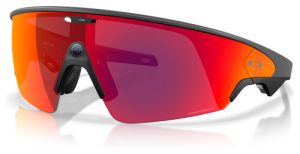
- POLARIZATION: Depends on lens version; available with Oakley Prizm and Prizm Transitions lenses.
- CAMERA: 12 MP ultra-wide with up to 3K video recording
- AUDIO: Built-in open-ear speakers and microphones
- BATTERY: Up to 9 hours of typical use, with additional charging from the case
- STABILITY: 9/10 DURABILITY: 8/10 COMFORT: 8/10 LENS DARKNESS: Depends on lens FIELD OF VISION: 9/10
The Oakley Meta Vanguard sunglasses are probably the most technologically advanced pair of shades in this entire guide. And I don’t just mean they have some fancy lens coating or special rubber on the nose. These things have a camera, speakers, microphones, artificial intelligence, and fitness tracking features built into what is otherwise a fairly normal-looking pair of high-performance sports sunglasses.
Well, normal if you’re used to wearing massive Oakley sports shields.
For cross-country skiing, there are some genuinely useful features here beyond the obvious novelty of having a computer attached to your face. You can record your ski runs without holding a phone or mounting an action camera to your chest, listen to navigation instructions without plugging your ears, and potentially get workout information through supported Garmin and fitness app integrations.
How good are the lenses? Oakley uses its Prizm lens technology on the Meta Vanguard, which is designed to enhance contrast and help you distinguish details in your surroundings. There are several different lens options, including Prizm Black, Prizm Road, Prizm Sapphire, and a Transitions version that adjusts to changing light.
For Nordic skiing, I would look carefully at the lens before buying. Prizm Black makes sense for bright sunny conditions, while a Transitions option can be more versatile if you’re spending time skiing in and out of woodland. However, none of these options should automatically be treated as Category 4 glacier protection, and you’ll still want proper side coverage or goggles in more extreme mountain conditions.
What’s the camera like? This is probably the feature that will sell the Vanguard to most people. The camera is positioned centrally above the nose bridge rather than tucked away at one corner of the frame, so it captures a perspective that’s much closer to where you’re actually looking.
It has a 12-megapixel sensor with a 122-degree ultra-wide field of view and can record video at up to 3K resolution. You also get stabilization, slow-motion recording, and hyperlapse options. Being able to capture a fast downhill section or an incredible mountain view without taking your hands off your poles is a major advantage.
It isn’t a replacement for a dedicated action camera if you need long recording sessions, though. Individual 3K clips have recording limits, so think of it as a convenient way to capture highlights rather than film an entire day of skiing.
What about the speakers? Instead of sticking earbuds into your ears, the Vanguard has open-ear speakers built into the arms. This means you can listen to music, directions, or voice feedback while still hearing some of what’s going on around you.
I prefer this idea to skiing with ordinary earphones because it doesn’t completely seal off your ears. However, the volume, wind noise, and surrounding conditions can still make it harder to hear other people or approaching hazards. You certainly shouldn’t rely on the speakers to keep you aware of avalanche danger.
How well do they stay on? Oakley has designed the Vanguard as proper sports eyewear rather than ordinary fashion sunglasses with electronics attached. You get a wraparound frame, interchangeable nose pads, and a fit intended to remain stable while running, cycling, or skiing.
They are also rated IP67 for dust and water resistance, which is reassuring when you’re dealing with snow and sweat. That doesn’t mean you should deliberately submerge them in water, but normal exposure to wet weather is part of what they’re designed to handle.
The main downside is the extra technology, weight, charging requirements, and price. Ordinary sunglasses are fairly difficult to run out of battery, after all.
VERDICT: The Oakley Meta Vanguard is one of the most interesting new products for anyone who enjoys cross-country skiing, trail running, cycling, and other outdoor sports. You get the excellent optics and secure fit that Oakley is known for, combined with a surprisingly useful hands-free camera and open-ear audio.
They aren’t the best choice if all you want is maximum protection from bright mountain sun, because a dedicated pair of glacier glasses can offer more appropriate lens darkness and side coverage. But if you want to record your adventures, listen to music, and use smart fitness features without carrying extra gadgets, these are in a league of their own.
The biggest issue is the price. At roughly $499 in the US at launch, you could buy several excellent pairs of ordinary sports sunglasses for the same money. Then again, none of those will film you skiing down a mountain.
Oakley Meta Vanguard official product details

Julbo Shield REACTIV Photochromic Sunglasses
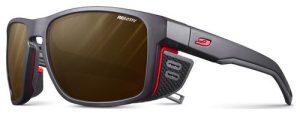
- POLARIZATION: Depends on lens version. REACTIV 2-4 is a photochromic lens with approximately 7-35% visible light transmission.
- STABILITY: 9/10 DURABILITY: 9/10 COMFORT: 9/10 LENS DARKNESS: 10/10 FIELD OF VISION: 8/10
The Julbo Shield REACTIV Sunglasses are specially designed for mountain sports and are exactly the kind of sunglasses you want when spending hours surrounded by snow. They have the coverage of traditional glacier glasses but without the tiny round lenses and old-fashioned leather blinkers that make you look like you’re setting off to discover the North Pole.
Instead, you get a modern wraparound frame with removable side shields, adjustable grip around the ears, and lenses that automatically darken or lighten depending on the conditions. What more could you want when skiing through forests, over open hillsides, and across snowfields that reflect sunlight straight back into your face?
How good are the lenses? The REACTIV 2-4 lenses are one of the biggest reasons to choose these over ordinary sports sunglasses. They automatically change between Category 2 and Category 4, allowing approximately 35% of visible light through at their lightest and just 7% when fully darkened.
This means you can wear them in a range of mountain conditions without constantly swapping between lenses. The Category 4 end of that range is particularly useful on bright snow at altitude, although it is far too dark for driving and some shaded conditions. Photochromic lenses also need some time to react, so don’t expect them to change instantly every time you ski under a tree.
What’s the ventilation like? Julbo has built Air Flow vents directly into the frame to help keep air moving behind the lenses. This is particularly important for cross-country skiing because you’re generating far more body heat than someone sitting on a chairlift waiting to ski downhill.
The removable Spandex side shields are another excellent feature. They help block light and wind from getting around the edges of the frame, which is something ordinary sunglasses aren’t always very good at. If the conditions are less extreme, you can take them off to get more airflow and a less enclosed feel.
How comfortable are they? At around 32 grams, the Shield REACTIV is fairly lightweight for a pair of mountain sunglasses with this much protection. The Grip Tech temple arms are designed to sit comfortably against your head without grabbing your hair, while the soft Grip Nose helps stop them sliding down when you’re sweating.
You also have curved temples and the option to attach a retaining cord, which is useful if you’re skiing somewhere that would make losing your sunglasses particularly annoying.
VERDICT: The Shield REACTIV from Julbo is one of the best all-round choices for serious Nordic skiing in the mountains. It combines the coverage of glacier glasses with the comfort and ventilation of modern sports sunglasses, and the photochromic lenses are a major advantage when conditions keep changing.
If your cross-country routes involve bright open snowfields, high elevations, and occasional sections through woodland, the Shield REACTIV makes far more sense than carrying two or three different pairs of sunglasses. It’s expensive, but for the protection and versatility, it is money well spent.
Oakley Sutro Lite Nordic Ski Sunglasses

- POLARIZATION: Depends on the lens. Prizm contrast-enhancing lenses are not necessarily polarized.
- STABILITY: 9/10 DURABILITY: 8/10 COMFORT: 8/10 LENS DARKNESS: 8/10 FIELD OF VISION: 10/10
The Oakley Sutro Lite Sunglasses are semi-rimless and are ideal for cross-country skiing even though they are predominantly designed for cyclists. They are an updated variation of the full-framed Sutro sunglasses released in 2019 and offer a much better field of view when looking directly down. You can get a range of lenses including the Prizm lens which enhances colors and contrasts so you can see what lies ahead as clearly as possible. Some variations offer additional ventilation to help prevent fogging up.
Something that the entire Sutro line has is an Unobtainium grip on the nose which is super comfy and gets tackier the more you sweat. The Sutro Lite shades also have an Unobtainium grip on the inside of the temple arms which provides additional grab to keep them in position all the time. These are one of the lightest-feeling options in the Sutro range and so they rarely slip down your nose.
The frame is fairly wide so if you have a narrow face then maybe check out the Sutro S which is a slightly smaller size. Unlike cheap gas station sunglasses, these are designed for sports and use Oakley’s impact-tested lens and frame technologies. That doesn’t make them a substitute for proper ski goggles when conditions call for them, though.
VERDICT: This style of single-lens sun spectacle is not to everyone’s taste but it offers excellent coverage and is most alike to ski goggles without the enclosed design. You get an excellent field of view thanks to the semi-rimless frame as well as excellent contrast against the snow so you can see what is coming up ahead. Some awesome lens colors are available too.
Julbo Vermont Classic Mountain Sunglasses With Alti Arc Lens

- POLARIZATION: No on the traditional Alti Arc mineral-glass lens; Category 4 high-altitude sun protection.
- STABILITY: 10/10 DURABILITY: 9/10 COMFORT: 7/10 LENS DARKNESS: 10/10 FIELD OF VISION: 7/10
The Julbo Vermont Classic Mountain Sunglasses with Alti Arc Lens provide serious sun protection for your eyes at high altitude or on snow-covered landscapes. They have leather blinders on the side and a removable leather bridge cover so that you aren’t exposed to as much unfiltered UV light or surface glare from snow-covered pistes. The lenses are circular and not the biggest but because they sit so close to your face you still get a nice field of view in all directions.
One of the features that make these sunglasses so suited to Nordic skiing is the flexible temple arm grips that bend right around your ear to give a custom fit that doesn’t come loose. They have a Grip Tech coating on the arms which doesn’t stick to hair but gives good traction on bare skin which is super soft and comfortable. Once you have adjusted the flexible arms to ergonomically wrap around your ear you will hardly ever have to mold them again.
This style of classic mountaineering sunglasses is what explorers first wore on high-altitude expeditions and they are perfectly adapted for skiing through open country where everything is white as far as the eye can see. You can choose between a range of lenses but we highly recommend the Alti Arc option for intense mountain sunlight because it uses mineral glass with a very dark Category 4 tint.
One thing worth knowing is that Category 4 lenses are not suitable for driving, and they can also be far too dark for heavily shaded forest trails or flat-light conditions.
VERDICT: The Vermont Classic Mountain Sunglasses from Julbo are kind of retro-looking but we think they are one of the best sunglasses for cross country skiing. Above that though is how well these perform on bright sunny days high in the mountains where UV exposure can be particularly intense. The blinkers are such a good feature that directly lends to Nordic cross-country skiing.
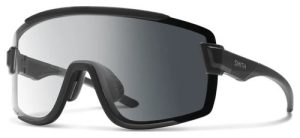
SMITH Wildcat ChromaPop Sunglasses
- POLARIZATION: Available in polarized and non-polarized ChromaPop lens options, including photochromic versions.
- STABILITY: 9/10 DURABILITY: 8/10 COMFORT: 9/10 LENS DARKNESS: Depends on lens FIELD OF VISION: 10/10
The SMITH Wildcat Sunglasses are what happens when you take the coverage of ski goggles and strip away everything that makes them hot, sweaty, and bulky. You get one massive lens, a lightweight frame, and enough ventilation to stop your face feeling like it is trapped inside a greenhouse when you’re working hard uphill.
These sunglasses are technically designed for cycling and mountain biking, but that’s exactly why they make so much sense for cross-country skiing. Both sports involve plenty of movement, sweat, changing light conditions, and a constant need to see what’s coming up ahead. And when you’re skiing through woodland before suddenly emerging onto a wide-open snowy hillside, having a clear view of the terrain is pretty important.
What’s the field of vision like? This is where the Wildcats really stand out. The oversized shield lens gives you excellent coverage across the front and sides of your eyes, while the cylindrical shape means you don’t feel as though you’re peering through two little windows. There’s no thick frame running down the middle to interrupt your view either.
The ChromaPop lens technology enhances color and contrast, making subtle details in the terrain easier to distinguish. For Nordic skiing, the most interesting options are the photochromic lenses that adjust to changing light conditions. You can also choose polarized versions if reflected glare is your main problem. Not every ChromaPop lens is polarized, though, so check the exact option before buying.
How well do they stay on your face? The Wildcat uses two-position adjustable Megol nose pads alongside rubberized temple grips. The idea is simple: the more you’re moving around and sweating, the less likely your sunglasses are to slide down your nose. The frame itself is a combination of TR90 and TPU, which gives it a flexible feel without being flimsy.
One thing I particularly like is that SMITH includes a spare clear lens with the standard Wildcat package, along with a proper protective case. Clear lenses aren’t what you want for bright snow, but having the option to swap lenses is useful for other sports and low-light conditions.
VERDICT: The Wildcat Sunglasses from SMITH are an excellent alternative to ski goggles for cross-country skiing, particularly when you’re moving fast and don’t want condensation building up around your eyes. The field of vision is fantastic, the frame has plenty of grip, and the ChromaPop lenses are genuinely useful for spotting changes in the terrain.
They’re not cheap, and the oversized styling won’t be to everyone’s taste, but if you want maximum coverage without wearing proper goggles, these are among the best options out there. For skiing in variable light, I would favor one of the photochromic versions.
Oakley Holbrook Snow Sunglasses

- POLARIZATION: Available in Prizm Polarized options; not all Holbrook lenses are polarized.
- STABILITY: 7/10 DURABILITY: 8/10 COMFORT: 8/10 LENS DARKNESS: 9/10 FIELD OF VISION: 7/10
The Oakley Holbrook sunglasses have been some of our favorite sunglasses to wear to the beach or while driving for the past few years now. They are the perfect combination of sporty and casual, and they look good on almost everyone. But how do they perform for Nordic skiing? Pretty good, actually.
Although there is no fancy grip on the temple arms and the ear hooks aren’t all that pronounced, these sunglasses stay on your face very well when XC skiing. In a sport that requires you to constantly keep looking at the snow and terrain ahead and then back down at your feet and the snow beneath them. The frames are made from O Matter which is Oakley’s signature material known for durability, impact resistance, and being ultralightweight.
You don’t get as big of a range of view as with the Sutro Lite, but on the flip side, you can wear them all year round without feeling ‘overdressed’. You can get a range of lenses, including Oakley Prizm technology or polarized prescription lenses, which is great if you have bad eyesight like me. Orange, red, and yellow tints can be useful in certain lower-light conditions, while darker Prizm or polarized options can be more comfortable in bright sun. Choose the actual lens specification rather than assuming that every mirrored color performs the same way.
VERDICT: The Holbrook sunglasses from Oakley are the perfect balance between shades you can wear every day or to the beach and sunglasses you can wear for sports like cross-country skiing. The only downside to wearing such a good-looking pair of sunglasses is that you don’t get the wide field of vision that you get with some more sporty types. If you’d rather look cool than obtain peak performance when Nordic skiing cross country, then these classic sunglasses fit the profile.
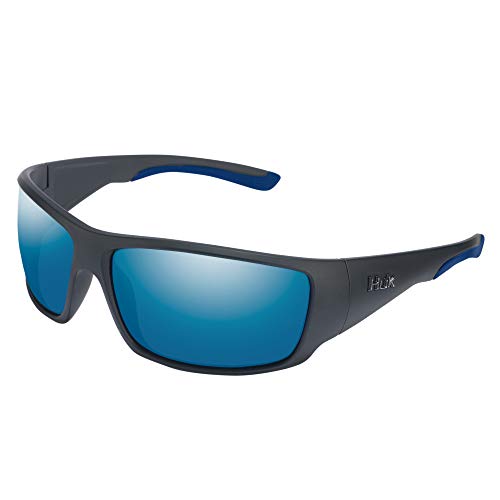
HUK Polarized Lens Eyewear Spearpoint Sunglasses
- POLARIZATION: Yes
- STABILITY: 7/10 DURABILITY: 7/10 COMFORT: 8/10 LENS DARKNESS: 9/10 FIELD OF VISION: 7/10
The HUK Polarized Lens Eyewear Spearpoint Sunglasses with performance frames are actually designed for fishing, but their design also makes them an ideal pair of sunglasses for Nordic skiing. The fact that they are designed to prevent glare from the sun reflecting off the water also means that they reduce glare reflected off snow as you are constantly looking down and up again. They have a superb grip around the ear and are extremely comfortable to wear.
The lenses are made from polycarbonate material for durability and clear vision, while the polarization reduces reflected glare. UV protection comes from the lens’s UV-blocking properties rather than polarization itself. You can choose a selection of frame shapes that are all made from lightweight and rugged injected TR90 plastic, which bends instead of being brittle. We like the Spearpoint model pictured above and also the Spar model with green mirror lenses and a camo pattern frame.
VERDICT: The Polarized Lens Eyewear Spearpoint Sunglasses from HUK are designed for fishing but are better than most cheap ski sunglasses. They are lightweight, durable, and very comfortable to wear whilst gliding up a mountain trail in the snow. The lenses do an excellent job of reducing reflected sunlight, although their shape offers less side protection than dedicated glacier glasses. We really like the way these are made.
Nike Skylon Ace Sunglasses

- POLARIZATION: No on the original version reviewed
- STABILITY: 7/10 DURABILITY: 7/10 COMFORT: 7/10 LENS DARKNESS: 7/10 FIELD OF VISION: 8/10
The Nike Skylon Ace Sunglasses have a cool sporty look with a semi-rimless frame that works well for Nordic skiing. The frames are made from a durable nylon composite which is very lightweight and abrasion resistant. These are popular sunglasses for lots of different outdoor sports like running, baseball, football, cricket, and skateboarding but having used them once or twice on the slopes, I can confirm they do a perfectly good job.
The grips on the arm tips have little dimples, and the nose bridge has tracks that improve ventilation and work like tread, so they rarely ever slide from their position. They are designed in such a way that they flex to fit different face shapes, from tall and narrow to wide and round. Because there is no frame at the bottom of the lens, you have excellent vision downwards and straight ahead, which is useful for skiing up trails.
VERDICT: The Skylon Ace Sunglasses from Nike Vision are not specially designed for cross-country skiing and instead get used for football, golf, and more popular sports. This doesn’t mean you can’t use them for skiing. If you want a lightweight pair of shades you can use all year round when you aren’t XC skiing, then these are ideal for all sports.
Bertoni Cortina Glacier Polarized Sunglasses
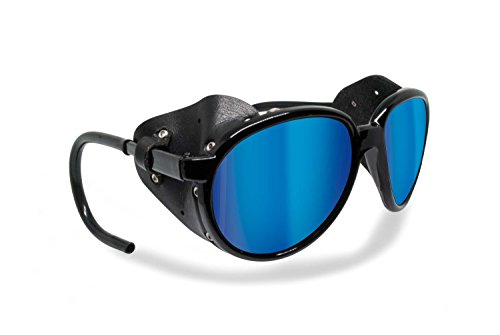
- POLARIZATION: Yes
- STABILITY: 9/10 DURABILITY: 6/10 COMFORT: 6/10 LENS DARKNESS: 7/10 FIELD OF VISION: 7/10
The Bertoni Cortina Glacier Polarized Sunglasses are very similar to the Julbo Vermont Classics but are much more budget-friendly. They feature similar temple arms with flexible tips that can be shaped right around your ear. Cross-country skiers often choose these over sports sunglasses because they rarely fall off and are specially designed for snowy conditions.
The lenses come in three colors, but for Nordic skiing, we like the blue or green polarized smoke color, which helps reduce distracting reflections and makes the bright conditions more comfortable. The version originally reviewed has approximately 12.1% Visible Light Transmission (VLT), meaning it blocks almost 88% of visible light. On top of that, you have additional sun protection with the side shields around the frames that have ventilation holes to help prevent misting.
VERDICT: The Cortina Glacier Polarized Sunglasses from Bertoni are a much cheaper type of glacier mountaineering shades than the Julbo Vermont Classics. They do a similar job, but they aren’t quite as durable or well-made, and so you have to take better care of them. The comfort around the ears and on top of the nose isn’t as well engineered either, but in terms of eye coverage and good looks, they are an easy choice.

Different Styles of Sunglasses for Nordic Skiing
There are lots of different sunglasses styles out there that all do the same thing but may suit different face types better than others. If you have a narrow or long face then you may want something sporty or if it is performance you are going for then you should be thinking about your field of vision, how lightweight they are, and also their aerodynamics.
Aviator Sunglasses
Aviators were originally called pilots glasses because they were used to provide a large coverage over your eye to protect them at high altitudes. The frame is usually very thin metal with large lenses and a reinforced bridge or top bar which means they stay on your face really well but are not the strongest or most durable by any means. They are good for Nordic skiing for the same reason, and they also look good on anyone.
Mountaineer Sunglasses
Mountaineering sunglasses are also known as glacier sunglasses and are used by climbers to summit the highest mountains in the world. They are characterized by small circular lenses, leather side shields or blinkers, and a wrap-around ear bar to help keep them attached to your face. They provide excellent protection from the sun and reflection off of the snow surface so that you don’t go snow blind at altitude where UV exposure is especially intense due to thinner atmosphere and highly reflective terrain.
Sport Sunglasses
Sporty sunglasses like cycling, running, or fishing sunglasses typically translate very well into cross-country skiing so long as the lenses have a suitable tint and 100% UV protection. They typically have a much more aerodynamic shape to decrease wind resistance and have more of a focus on being lightweight, grippy, and having a wide field of vision… especially when looking downwards at the ground.
Shield Sunglasses
Shield sunglasses are basically single lenses that are more of a visor; see the SMITH Wildcat Sunglasses above for an example. They are also very sporty and aerodynamic and provide an even wider field of vision that is almost unobstructed. Many downhill skiers prefer this type of lens because it is the closest substitute for goggles, but when you spend most of your time gliding uphill in your skis, then the big protective shield isn’t always so important.
Semi Rimless Sunglasses
Semi-rimless sunglasses will generally have a complete top half of a frame, and then the underside of the lenses will be totally open with no frame. They are generally durable enough for sports but have the benefits of being more lightweight and having a better field of view straight down in front of you.

Guide to the Best Sunglasses for Cross Country Skiing
To decide which sunglasses were best for Nordic and cross-country skiing, we had to consider a number of different factors. Here are the things we looked for and why:
Lens Shape
The shape of your sunglass lenses or lens will have the biggest impact on your field of vision in most cases. Larger lenses offer wider views however if you wear small lenses closer to your eyes, they also offer a wide viewpoint. Single-lens sunglasses (aka shields) are very similar to goggles in that they have a massive field of vision that is unobstructed by a nose bridge.
Lens Color
Blue mirrored lenses are a popular choice for snow sports in sunny weather, but the color of the mirror finish doesn’t tell you everything about how the lens performs. The underlying tint, visible light transmission, contrast-enhancing properties, and UV protection are what really matter.
Green and orange lenses work just fine too, but if you have the choice, experiment with different tints to see what gives you the clearest view of the snow. Many sunglasses come in a range of lens colors that are often interchangeable so you can experiment with what works best for you once you have the frames sorted. Standard grey lenses are a good color for everyday use for things like waxing your skis or having a morning coffee.
Lens Finish
Whether your lenses are polarized or not will influence how much reflected glare reaches your eyes, but polarization doesn’t automatically improve your ability to see every detail in snow. In some conditions it can actually make icy surfaces more difficult to distinguish.
Other influencing factors are whether they have anti-fogging coatings and scratch-resistant coatings. Mirror finishes help reduce visible light, and personally, I quite like it when you can’t see my eyes.
Frame Shape
The frame shape will influence the style of sunglasses and how they look on your face. Once you know what style of frame you want you can really narrow down your search. The popular sunglasses maker Ray-Ban has almost created its own frame-shape brand, including the popular Wayfarer style, among others.
The sportier sunglasses will have a more aerodynamic shape to them, whereas the glasses designed to look traditionally ‘cool’ will be boxier. We tried to find frames that were shaped to optimize your field of view and comfort while providing excellent grip and stability.
Frame Size
Some people can put on any pair of sunglasses and look good, while others may have a preference for a particular style that suits their face. There are also certain pairs of sunglasses that just seem to suit anyone, like Ombraz, Ray-Bans, or Oakleys. The trick is to find a pair that suits you and then note down their width and height so that you know what to look for in the future. If you have a pair at home that you like, you can do this now.
Temple Arms
Temple arms are the folding bars that rest on your ears and keep your sunglasses on your face. Things you should be looking for are strength when you flex them as well as on the hinge that connects them. Also, how well they fit around your head and what the grip is like. If the temple arms feel comfortable and grip well, then you will most likely have a good fit that feels comfortable.
Fit Around the Ear
Some types of XC skiing sunglasses have a wrap-around ear bar on the tip of the temple arms, namely mountaineering or glacier sunglasses. These are awesome for traversing up and down snow slopes on skis where you are constantly working your legs and arms and so you don’t want to have to keep pushing your sunnies back up your nose.
Even better than wrap-around arm bars is no arm bars at all. If you struggle to find sunglasses that fit around your ear then check out Ombraz, which uses a soft strap instead of hard plastic.

Ombraz Classics
Grip on the Nose
This is often an underrated feature on snow sunglasses, and the regular nose pads you get on reading glasses are not the best. What you really need is some grippy and cushioned rubber-like material that provides padding and grip even when you are sweating. Oakley uses something they call Unobtainium which is one of the best nose grips for Nordic ski sunglasses.
Comfort
Sunglasses should be comfortable to wear for long periods. It isn’t hard to find a pair that fit your face and so if your sunglasses feel uncomfortable, then get rid of them.
Two areas where you may feel discomfort from sunglasses when Nordic skiing are the bridge of your nose and around the top of your ears. If your sunglasses feel a little bit uncomfortable on your ear, you can try to gently manipulate them slightly so that they don’t feel so tight. If your ski sunglasses feel uncomfortable on your nose, then unless they are adjustable, you may have to try a different pair.
Durability
Durability is important to a certain degree. You want your lenses to be scratch resistant, and you don’t want them to pop out either. You also don’t want the hinges to break, which is why we highly recommend the Ombraz sunglasses because there are no hinges to break. If, in the unfortunate event that you sit on your sunglasses, a durable pair should be more likely to survive than a fragile one.
Weight
All of the sunglasses we recommend in this guide are relatively lightweight for what they do, and there is a reason for that. If your sunglasses are not lightweight, they can end up sliding down your nose constantly as you ski uphill and are more likely to come off if you hit a bump going downhill. So the lighter your sunglasses are, the less they are likely to move on your face.
The exception is smart sunglasses like the Oakley Meta Vanguard, where you have to accept some extra weight in exchange for cameras, speakers, and batteries.
What is the Best Color Sunglasses Lens for Snow?
Polarized blue mirrored lenses are a popular option for snow because they reduce distracting glare and can be comfortable on bright, sunny days. However, there isn’t one scientifically established best lens color for every skier or every snow condition.
Grey lenses preserve natural colors, while rose, amber, and certain orange or brown tints can make contrast easier to see in flat light. The lens category and VLT are also important. A darker Category 3 lens may be ideal for bright Nordic ski trails, while Category 4 glacier lenses are designed for more extreme sunlight but are too dark for driving and some forest conditions.
For the most demanding mountain conditions, side coverage is another thing you shouldn’t overlook. UV light and snow glare can reach your eyes around the edges of ordinary sunglasses.
What Does Polarized Lens Mean with Sunglasses?
Polarized lenses use a special filter to reduce certain reflected light, particularly the glare that bounces off horizontal surfaces such as water and snow. This can make bright conditions more comfortable and improve the clarity of your surroundings.
However, polarization is not the same as UV protection. A pair of non-polarized sunglasses can offer excellent UV protection, while polarized lenses still need a proper UV-blocking specification.
Polarized lenses can also make it harder to see some icy patches and certain digital displays, like a phone, watch, or GPS. For this reason, we wouldn’t automatically choose polarized lenses for every type of Nordic skiing.
If you want to learn more about the technology, the American Academy of Ophthalmology explains how polarized lenses work.
We hope you enjoyed reading this guide to the best sunglasses for cross country skiing and found our nuggets of information useful in your decision-making process. Let us know what you think in the comments below.





[…] the types of skiing you will be doing and in what conditions. If you are Nordic skiing then cross country sunglasses make the most sense as sweat and fogging will be worse with goggles on. If you are […]
[…] is most well known for its snow sports sunglasses but is branching into more sports where the conditions require similar levels of performance like […]
[…] play when we asked a bunch of skiers and snowboarders which lens color they preferred. For example, cross-country skiing sunglasses are often better in lighter colors to account for times when you will be on forest paths, whereas […]
[…] on your face in the event of a tumble. Fortunately, this problem has been solved and you can get sunglasses for cross-country skiing that use an armless design much like a pair of goggles. You can also get aftermarket cords that […]