Using a Wool Blanket vs Sleeping Bag
The whole purpose of this article is to answer two questions: can you use a wool blanket instead of a sleeping bag, and which is better for camping? The short answer is that a wool blanket can absolutely work in mild conditions, but a sleeping bag is usually the better choice when warmth, weight and pack size really matter.
Wool blankets and sleeping bags overlap in what they do, but they are not really designed for the same job. A sleeping bag is purpose-built to trap heat efficiently while you sleep, while a wool blanket is much more versatile and can be used around camp in all sorts of ways.
Are Wool Blankets Worth It for Camping?
Whether you are a lifelong bushcrafter, outdoors person or weekend camper, a wool blanket can be incredibly useful outdoors. The question is whether that usefulness justifies the extra weight and bulk in your pack.
If you are worried about being cold at night, a wool blanket can be a very reassuring bit of kit. You can use it as an extra layer over your sleep system, sit on it around camp, wrap it around your shoulders like a shawl or poncho, or fold it into a makeshift pillow.
Whenever I take a wool blanket camping, it normally gets used for something. If the night is warm I might use it as a pillow, and if the ground is rough I can use it underneath me for a little extra protection.
That versatility is probably the biggest reason I still like wool blankets. A sleeping bag is brilliant at sleeping-bag things, but you are not exactly going to wrap one around your shoulders while sitting next to the fire without looking slightly ridiculous.
Is Wool Warm for Its Weight?
Wool is an excellent insulator, but I would not say it has the best warmth-to-weight ratio. Modern down is much better in that respect, and good synthetic insulation can also provide more warmth for less weight and bulk than a traditional wool blanket.
Where wool does extremely well is comfort across changing conditions. It breathes well, handles moisture better than cotton and can retain useful insulation when damp. That makes it a very forgiving material outdoors.
The key word there is damp, not magically warm when completely saturated. A soaking wet wool blanket will still be heavy and unpleasant, even if it continues to provide more insulation than many other natural fabrics.
Can You Use a Wool Blanket Instead of a Sleeping Bag?
Yes, especially in warm or mild weather. If nighttime temperatures are comfortable and you simply need something to take the edge off, a decent wool blanket can work perfectly well.
Once temperatures start dropping, though, a sleeping bag becomes much more efficient. Its shape wraps insulation around your body, reduces drafts and traps warm air far better than a flat blanket.
A wool blanket can still be folded, wrapped or tucked around you, but you usually need a lot more material to achieve the same warmth. That quickly turns into a heavy and bulky sleep system.
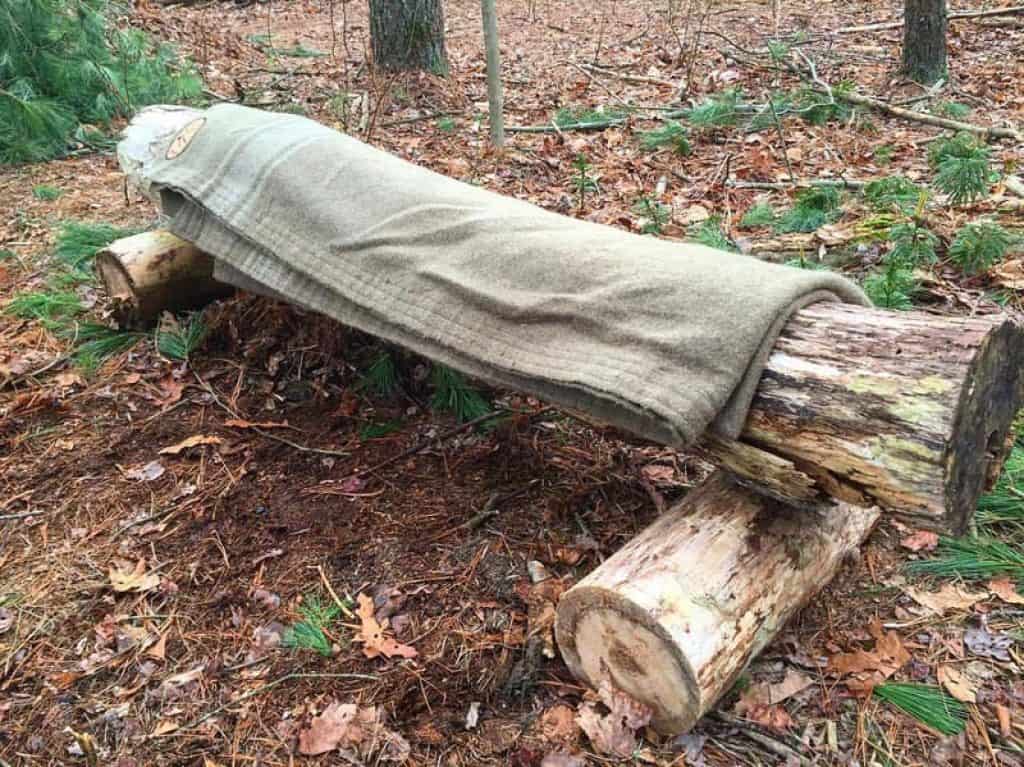
Are Two Wool Blankets Warmer Than One?
Usually, yes, because layering creates more total insulation and can trap additional air between the blankets. But it is not quite as simple as saying two thin blankets will always outperform one blanket of the same total weight.
Warmth depends on the thickness, density, weave and how well the blankets trap air around you. Loose, fluffy layers generally insulate better than dense material that has been compressed flat.
This is also why a proper sleeping bag can do so much with comparatively little weight. Its insulation is designed specifically to loft and trap warm air efficiently.
Wool Blanket vs Sleeping Bag for Camping
If you are trying to decide whether sleeping bags are better than wool blankets for camping, my advice would be not to treat them as direct replacements. They are different pieces of outdoor gear designed with different priorities.
A sleeping bag is engineered to keep you warm while you sleep. A wool blanket is much more multipurpose but less efficient at trapping body heat around your entire body.
For normal camping, backpacking and cold nights, I would choose the sleeping bag first. If I had room for both, the wool blanket would be the luxury extra.
Benefits of Sleeping Bags
- Excellent warmth-to-weight ratio
- Much lighter than an equivalent wool sleep system
- Pack down much smaller
- Designed to reduce drafts
- Available with reliable temperature ratings
- Can use down or synthetic insulation depending on conditions
Benefits of Wool Blankets
- Very versatile around camp
- Retain useful insulation when damp
- Durable
- Breathable and comfortable across a wide temperature range
- Can be used as clothing, seating or extra bedding
- Generally resist odors better than many synthetic fabrics
Which Is Warmer: a Sleeping Bag or Wool Blanket?
For the same weight, a good sleeping bag will usually be warmer. That is especially true with down bags, which can trap a huge amount of insulating air while weighing very little.
A sleeping bag also surrounds your body and limits drafts in a way that a flat blanket struggles to match. Features such as draft tubes, hoods and shaped footboxes all exist for one reason: keeping warm air in and cold air out.
A heavy wool blanket can still feel incredibly warm and cozy, especially in a tent or shelter, but you pay for that warmth in weight and pack size.

Is Wool Better Than Down When Wet?
Wool handles moisture much better than untreated down in the sense that it continues to provide useful insulation when damp. Traditional down loses loft when saturated, and once that loft collapses its insulation drops dramatically.
That said, modern sleeping bags are often made with water-resistant shell fabrics and sometimes hydrophobic-treated down, so the old idea that one splash instantly ruins a down bag is exaggerated.
Either way, keeping your sleep system dry should be the priority. A wet wool blanket may still insulate, but carrying several pounds of wet wool is nobody’s idea of fun.
Can You Put a Wool Blanket Over a Sleeping Bag?
Yes, and this can work very well in cold weather, but there is one thing to watch out for: don’t compress the sleeping bag’s insulation too much.
Down and synthetic insulation work by trapping air. If you throw a very heavy blanket over a highly lofted sleeping bag and squash it flat, you can reduce some of the warmth you were trying to add.
A reasonably light blanket draped loosely over the top can still add useful insulation and reduce drafts. Another option is to use the wool blanket underneath or around the sides of your sleeping setup where it adds warmth without crushing the bag.
What About Ground Insulation?
One thing that often gets overlooked in the wool blanket vs sleeping bag debate is what is underneath you. Your body weight compresses almost all the insulation underneath a sleeping bag, which means your sleeping pad is doing most of the work against the cold ground.
If you are freezing underneath, adding another blanket over your chest might not solve the real problem. A warmer sleeping pad with a suitable R-value can make a bigger difference than piling more insulation on top.
A folded wool blanket underneath you can add a little extra protection and comfort, but it is nowhere near as efficient as a good insulated sleeping pad.
Are Wool Blankets Itchy?
Some definitely are. Traditional coarse wool blankets can feel scratchy against bare skin, especially if you are used to soft synthetic fleece or modern merino clothing.
Wool blends are often softer, and finer wool such as merino can be much more comfortable against the skin. If your blanket is particularly rough, using a sleeping bag liner or thin sheet between you and the wool makes a big difference.
Wool Blanket vs Sleeping Bag for Bushcraft
This is where wool blankets start making much more sense. Bushcraft camping often puts more value on durability, versatility and using one piece of kit for several different jobs than on shaving every gram from your backpack.
A wool blanket can be wrapped around you beside the fire, used as part of a shelter, folded as bedding and generally abused far more confidently than an expensive ultralight down sleeping bag.
If you are walking twenty miles a day with everything on your back, though, the equation changes quickly. Carrying a bulky four-pound blanket starts to feel slightly less romantic after the first hill.
Wool Blanket vs Sleeping Bag for Backpacking
For backpacking, I would choose the sleeping bag almost every time. Warmth-to-weight ratio and pack size matter too much when you are carrying everything yourself.
A lightweight down or synthetic sleeping bag can provide far more warmth than a wool blanket while taking up a fraction of the space in your backpack. A wool blanket becomes more attractive if you are car camping, canoe camping, bushcrafting or simply don’t care about carrying a bit of extra weight.
Can You Sleep Outside With Just a Wool Blanket?
Yes, if the conditions are suitable. On a warm summer night with good ground insulation and protection from wind and rain, a wool blanket may be all you need.
I wouldn’t rely on a single blanket in genuinely cold weather unless I already knew exactly what temperatures I was dealing with and had tested the setup. Wind, humidity and cold ground can make a mild-looking forecast feel considerably colder once you are lying still for eight hours.
Which Should You Choose?
If your main priority is sleeping warm with the least possible weight and bulk, choose a sleeping bag. If you value durability, versatility and something you can use around camp as well as in bed, a wool blanket has a lot going for it.
For car camping or bushcraft, I like having both. For backpacking, the sleeping bag wins because the blanket simply takes up too much weight and space for what it adds.
Conclusion
For camping and sleeping outdoors, I would still recommend a sleeping bag as the main sleep system. Modern sleeping bags are lighter, more compact and far more efficient at trapping body heat than a traditional wool blanket.
That doesn’t make wool blankets obsolete. They are durable, versatile, comfortable and incredibly useful around camp, and I nearly always find something to do with one when I take it.
If you are camping in mild weather, a wool blanket can replace a sleeping bag. In colder conditions, I would rather use a properly rated sleeping bag and treat the blanket as an optional extra rather than trying to turn several kilos of wool into a makeshift sleeping bag.