
Do Tents Come With Stakes?
Almost every tent comes with enough stakes or pegs to pitch it, but the quality varies enormously. Budget tents often include basic steel pegs, while lightweight backpacking tents may come with aluminium or more specialized stakes. In some cases, you may still need extra pegs for every guyline or for difficult ground.
Tent stakes are an important part of keeping your shelter properly tensioned and stopping it from shifting or collapsing in the wind. When you buy a new tent, it is worth knowing whether everything you need is actually in the bag or whether you should add a few extra stakes before your first trip.
Most tents do include stakes, but that doesn’t necessarily mean the supplied set is ideal for every campsite. A peg that works perfectly in normal soil may be almost useless in loose sand, snow or very hard ground.
How Many Stakes Does a Tent Come With?
Most tents come with enough stakes to pitch the basic structure. Some manufacturers include a couple of spares or enough additional pegs for guylines, while others supply only the minimum required for the standard pitch.
This is one of the reasons I always recommend test-pitching a new tent at home before taking it away. You can check that every component is present, work out how many stakes the tent actually needs and decide whether you want to carry extras.
| Tent Size | Number of Stakes |
|---|---|
| 1 Person | 4 - 10 Stakes |
| 2 People | 6 - 15 Stakes |
| 3 People | 7 - 15 Stakes |
| 4 People | 9 - 18 Stakes |
| 5 People | 9 - 20 Stakes |
| 6 People | 10 - 30 Stakes |
| 8+ People | 16 - 40 Stakes |
Are the Stakes Included With Tents Any Good?
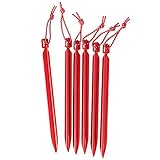
Sometimes. The quality of the included stakes usually reflects the price and purpose of the tent, but the ground you camp on matters just as much.
Cheap family and festival tents often come with simple steel wire pegs. These can work perfectly well in ordinary soil, but thinner versions can bend surprisingly easily if you hit stones or try to drive them into hard ground.
More expensive backpacking tents often include lighter aluminium stakes with V, Y or other shaped profiles. These usually provide more holding power for their weight, but even a premium lightweight stake may struggle in very soft sand or rocky ground.
So I wouldn’t automatically throw away the pegs supplied with a tent. Test them first, then replace or supplement them if the places you camp require something more specialized.
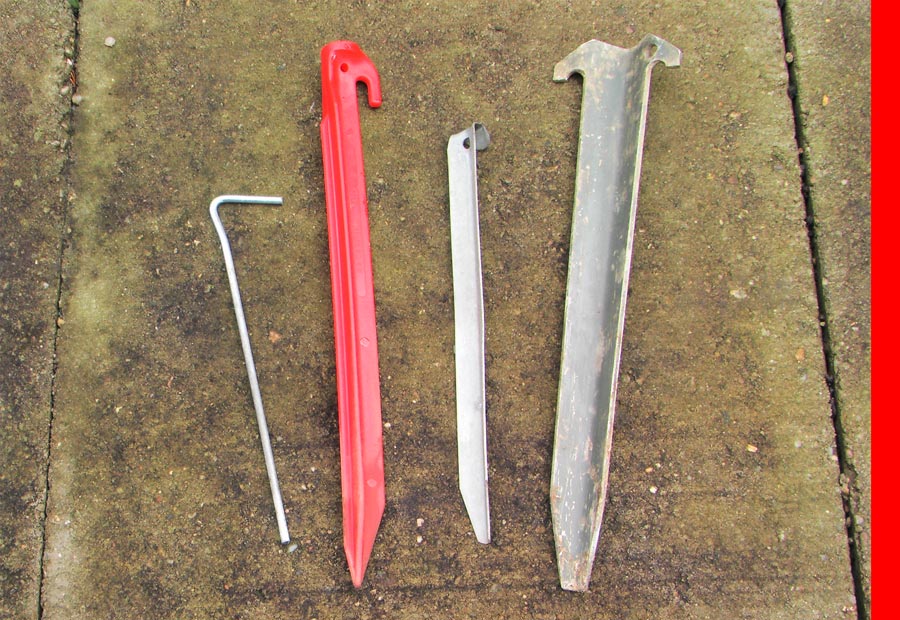
Different Types of Tent Stakes
Different stake designs suit different ground conditions. There is no single tent peg that is best everywhere, which is why regular campers often end up owning several different types.
Sand and Snow Stakes
Tent stakes for snow and sand need a much larger surface area than ordinary pegs because loose ground doesn’t provide much resistance. Narrow wire pegs can simply pull straight through.
One option is a fabric anchor that you fill with sand, snow or rocks and bury or place under tension. Another is a broad metal or plastic stake designed to spread the load across a much larger area.
For deep snow or very loose sand, deadman-style anchors can be extremely effective because the surrounding material provides the holding power rather than relying on a thin peg gripping the soil.
Hard Ground Stakes
If you’re camping on compacted or rocky ground, you need stakes that can tolerate being driven firmly without folding over. Heavy-duty stakes are often steel or another strong material with a relatively narrow point.
These tend to be heavier than backpacking pegs but are much better suited to hard campsites. A camping hammer or suitable mallet also makes driving them in considerably easier.
Lightweight Stakes
Lightweight tent stakes are commonly made from aluminium or titanium. Aluminium V and Y stakes provide an excellent combination of low weight and holding power, while titanium wire pegs can be incredibly light.
The compromise is that some ultralight stakes are easier to bend than heavier steel versions. If you do bend one, trying to repeatedly straighten a badly bent tent peg can weaken the metal and eventually cause it to fail.
V-shaped, Y-shaped and cross-shaped stakes are designed to increase stiffness and create more surface area in the ground than a simple round peg. They are popular for backpacking because they provide good holding power without adding much weight.
Tent Stake Materials
The material affects the weight, strength, corrosion resistance and price of a tent stake. The shape and thickness matter too, so you can’t judge a peg from the material alone.
Steel
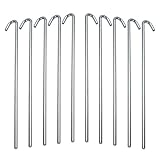
Steel stakes are strong, inexpensive and extremely common with family tents and heavier camping shelters. They are particularly useful on firm ground where lightweight aluminium pegs are more likely to bend.
Plain untreated steel can rust, but galvanized, plated and stainless-steel stakes are much more resistant to corrosion. The main disadvantage is weight, which matters far more to backpackers than car campers.
Aluminium Alloy
Aluminium alloy is probably the most common material for modern lightweight tent stakes. It is much lighter than steel, corrosion-resistant and can be formed into stiff Y or V profiles that provide excellent holding power.
The downside is that thin aluminium stakes can bend if they hit rocks or are hammered aggressively. Once badly bent, repeated straightening may weaken them further.
Titanium
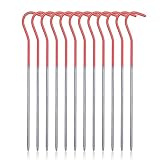
Titanium stakes are popular with ultralight backpackers because they can be extremely light while remaining strong for their diameter. Simple titanium shepherd’s-hook pegs weigh very little and work well in reasonably firm soil.
They are generally more expensive than aluminium or steel, and thin titanium stakes don’t provide as much surface area in soft ground as a broad Y-shaped peg. Like every stake material, they work best when matched to the right terrain.
Fabric Anchors and Sandbags
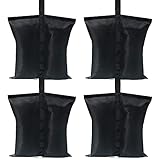
Fabric anchors aren’t really conventional tent stakes, but they can solve the same problem when the ground won’t hold a normal peg. They can be filled with sand, snow, gravel or rocks and attached to guy lines to provide weight and resistance.
They are particularly useful on beaches, snowfields and surfaces where you either can’t drive a stake into the ground or the soil is too loose to hold one securely.
Do You Need to Replace the Stakes That Come With a Tent?
Not necessarily. If the supplied stakes are strong enough for the places you camp and don’t add unnecessary weight, there is no reason to replace them just because an aftermarket set looks better.
I would consider upgrading if the stock stakes keep bending, don’t grip your usual campsite surface or are unnecessarily heavy for backpacking. Sometimes the best solution isn’t replacing the entire set but carrying two or three specialist stakes alongside the originals.
For example, I might use lightweight Y-stakes for most of the tent and carry a couple of stronger pegs for the most heavily loaded guylines. That gives you better performance without carrying a bag full of heavy-duty stakes you rarely need.
Should You Carry Spare Tent Stakes?
I usually carry at least one or two spare stakes. Pegs get lost surprisingly easily in long grass, bent against rocks or accidentally left behind when you’re packing up in a hurry.
Spare stakes are also useful when the weather turns worse than expected and you decide to deploy guylines that weren’t needed when you first pitched the tent. A few extra pegs weigh very little compared with the inconvenience of not having enough when the wind starts picking up.
How to Tell if a Tent Includes Tent Stakes
It is normally safe to assume that a conventional tent includes stakes, but I would still check before buying. Look at the manufacturer’s specifications or the “what’s included” section, where the tent body, poles, flysheet, stakes and stuff sacks are usually listed individually.
If the product page isn’t clear, check the manual, retailer FAQs or reviews. With specialist ultralight shelters, this becomes more important because some manufacturers sell stakes separately to let buyers choose their preferred type.
Final Thoughts
So, do tents come with stakes? Almost always, yes. Most tents include enough pegs for the basic pitch, although you shouldn’t assume they will be perfect for every type of ground or that there will be enough for every optional guyline.
Before your first camping trip, pitch the tent at home and count what you’ve got. If the supplied stakes feel flimsy, don’t suit your usual terrain or leave you short when every guyline is deployed, buy a few appropriate replacements or spares before you head out.