6 Best Sun Hoodies for Hiking 2026 | Sun Protection Shirts


What is the Best Sun Hoody?
The best sun hoodie is one that gives you reliable UV protection without making you feel hotter than you would in a normal hiking shirt. After testing different sun hoodies for hiking and climbing, I prioritize breathability, a comfortable hood, long sleeves, freedom of movement, and fabric with a clearly stated UPF rating.
When you are hiking or climbing, it is surprisingly easy to forget about the sun when there is a breeze or you are concentrating on the trail. This can lead to repeatedly burning the same exposed areas, particularly your neck, ears, arms, and hands.
Even if you use sunscreen, sweat, water, and rubbing from clothing or backpack straps mean you still need to think about reapplying it. A sun hoodie gives you a physical layer of protection across most of your upper body.
I still use sunscreen on exposed areas such as my face, but wearing a sun hoodie dramatically reduces the amount of skin I need to worry about.
One feature I particularly like is thumb loops. When climbing, hiking with poles, or repeatedly reaching overhead, ordinary sleeves can ride up and expose your wrists. Thumb loops keep the sleeves extended and provide some extra coverage across the backs of your hands.
You can find more information about choosing a sun hoodie further down the page, but these are the six models I rate most highly based on the ones I have tested and used.
6 Best Sun Hoodies
Black Diamond Alpenglow Pro

- MATERIAL: 92% nylon, 8% elastane stretch jersey
- WEIGHT: 189 g
- UPF: 40+
- FEATURES: Quarter zip, zippered chest pocket, thumb loops, underarm ventilation, helmet-compatible hood, odor-control treatment
The Black Diamond Alpenglow Pro is one of the most technical sun hoodies I have tested.
The quarter zip is genuinely useful when working hard in hot weather because you can dump heat quickly without taking the shirt off.
I also like the mesh ventilation underneath the arms. This is one of the areas where heat and sweat tend to build up fastest when hiking or climbing.
The hood is designed to work with a climbing helmet, while the long torso and overall fit work very well underneath a harness.
One thing worth noting is that the current Alpenglow Pro is rated UPF 40+, rather than the UPF 50+ rating previously listed in this guide.
I’ve also always had mixed feelings about adding water-repellent treatments to clothing primarily intended for hot conditions. Water resistance is useful if the weather suddenly changes, but for me maximum breathability normally matters more in a dedicated sun top.
CONCLUSION: The Alpenglow Pro is one of my favorite options for climbing and technical mountain use because the fit, ventilation, hood, and quarter zip are exceptionally well thought out. It is more feature-rich than a basic sun hoodie, although anyone specifically looking for UPF 50+ should consider one of the alternatives below.

BALEAF UPF 50+ Sun Protection Hoodie
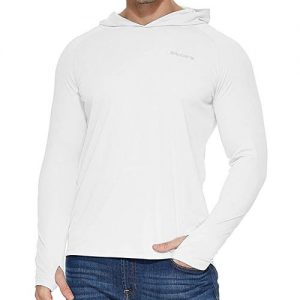
- MATERIAL: 100% polyester
- WEIGHT: Approx. 7.2 oz / 204 g
- UPF: 50+
- FEATURES: Thumb loops, moisture-wicking fabric, quick drying, lightweight, breathable
The BALEAF UPF 50+ Sun Protection Hoodie is the budget option I would choose if you want to try a sun hoodie without spending premium outdoor-brand money.
The material isn’t quite as refined as the best Arc’teryx, Black Diamond, or Patagonia fabrics, but it still feels lightweight, smooth, and breathable in use.
You also get one of the features I think matters most: proper thumb loops.
These help keep your wrists and the backs of your hands covered when hiking with trekking poles, climbing, or repeatedly reaching overhead.
The fit is straightforward and comfortable rather than highly technical, which makes this a good choice for general hiking, fishing, gardening, traveling, and everyday outdoor use.
CONCLUSION: If you are buying your first sun hoodie and don’t yet know whether you’ll enjoy wearing one, BALEAF offers a lot of functionality for the money. It isn’t the most technical option here, but it covers the fundamentals very well.
Patagonia Capilene Cool Sun Hoody

- MATERIAL: Lightweight synthetic performance fabric
- WEIGHT: Approx. 6.2 oz / 176 g
- UPF: 40+
- FEATURES: Moisture-wicking, fast-drying, lightweight, breathable, regular fit
The Patagonia Capilene Cool Sun Hoody is the current sun-focused model in Patagonia’s Capilene range.
I have always liked Patagonia’s lightweight Capilene fabric because of how comfortable it feels directly against your skin.
When you’re wearing a sun hoodie for an entire day, this matters enormously.
A shirt can have an excellent UPF rating, but if it becomes clammy or uncomfortable when you sweat, you’re eventually going to roll the sleeves up or take it off, which defeats the point.
The Capilene fabric manages moisture extremely well and dries quickly. It also works nicely underneath backpack straps because there isn’t much bulky material to bunch up around your shoulders.
I find it equally useful as a standalone hot-weather top or as a lightweight base layer when conditions are cooler.
CONCLUSION: Patagonia remains one of my favorite options if comfort is your priority. I particularly like this style of hoodie for hiking and backpacking where I may be wearing it continuously for many hours.
Columbia Terminal Tackle Hoodie

- MATERIAL: 100% polyester
- WEIGHT: Approx. 8.8 oz / 250 g
- UPF: 50+
- FEATURES: Omni-Shade sun protection, moisture-wicking, fast-drying, lightweight, breathable
The Columbia Terminal Tackle Hoodie is one of the more relaxed-fitting sun hoodies I have used.
That makes it particularly comfortable in hot conditions because the material isn’t constantly pressed against your skin.
I also like this fit for people who don’t want the very slim, athletic cut you get from many climbing-oriented tops.
It is slightly heavier than some of the ultralight options, but it doesn’t feel disproportionately warm.
It is extremely comfortable and works particularly well for hiking, fishing, boating, and everyday outdoor use.
The one thing I am still not a big fan of is the prominent branding down the sleeve. It doesn’t affect performance at all, but personally I prefer outdoor clothing with more discreet logos.
CONCLUSION: A very comfortable sun hoodie for hot weather, particularly if you prefer a looser fit. I also think it is one of the better options here for people with bigger frames who don’t want a figure-hugging technical top.
Mountain Hardwear Crater Lake™ Hoody
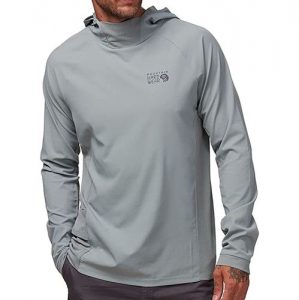
- MATERIAL: 88% polyester, 12% elastane
- WEIGHT: 5.9 oz / 167.5 g
- UPF: 50+
- FEATURES: Moisture-wicking fabric, three-piece hood, high neckline, thumbholes, stretch fabric, lightweight construction
The Mountain Hardwear Crater Lake Hoody is the current version of the Mountain Hardwear sun hoodie I originally recommended here.
I own both versions, and the differences are relatively minor, so most of what I liked about the older model still applies.
The standout feature for me is the amount of coverage around the neck and head. The high neckline and hood protect areas that are very easy to burn when you’re spending an entire day exposed to the sun.
The fabric feels extremely soft next to the skin and has enough stretch that it never feels restrictive when climbing or reaching overhead.
It also breathes extremely well.
This is important because the whole point of a sun hoodie is being able to leave it on even when you are working hard in hot conditions. If it becomes uncomfortable, you’ll eventually take it off and lose the protection.
The current Crater Lake uses lightweight UPF 50+ fabric and has low-profile thumbholes that help keep the sleeves extended over your wrists.
The hood also gives you excellent coverage without feeling bulky, which makes this particularly good for exposed hiking, climbing, and long days on the water.
CONCLUSION: The Mountain Hardwear Crater Lake Hoody remains one of my favorite options for prolonged sun exposure. It’s lightweight, exceptionally soft and breathable, while the hood and high neckline give you better coverage than most conventional hiking shirts. I particularly like it for exposed mountain hiking and climbing where you may have very little shade all day.
Arc’teryx Cormac Hoody

- MATERIAL: 100% recycled polyester waffle fabric
- WEIGHT: 169 g / 6 oz
- FEATURES: Moisture-wicking, quick-drying, lightweight, breathable, thumb loops, helmet-compatible brimmed hood, anti-odor treatment
The Arc’teryx Cormac Hoody is the current model I recommend in place of the older Remige Hoody that originally appeared in this guide.
I own both, and although there are some minor differences between them, the qualities I liked about the Remige are still very much present in the Cormac.
The fit is excellent. It feels comfortable next to the skin without being restrictive and works particularly well when you are moving constantly, whether hiking, climbing, or carrying a backpack.
One of the things I liked most about the older Remige was how unobtrusive it felt while wearing it. The Cormac continues that lightweight, minimalist approach.
The current fabric has a subtle waffle construction designed to help move moisture away from your skin and improve airflow. It dries quickly and doesn’t feel heavy when you start sweating.
The thumb loops are another feature I appreciate because they stop the sleeves riding upwards and help keep the backs of your hands covered.
The hood now has a laminated brim and is helmet compatible, which gives it a slightly more technical feel than the older model while still working well for ordinary hiking.
CONCLUSION: The Arc’teryx Cormac is one of the best-fitting and most comfortable sun hoodies I have used. If you liked the old Remige, the Cormac is the model I would look at now. It is particularly good for hikers and climbers who want a technical sun top that doesn’t feel bulky or excessively baggy.
Sun Hoodie Comparison
| Sun Hoodie | Best For | UPF |
| Black Diamond Alpenglow Pro | Technical climbing | 40+ |
| Arc’teryx Cormac | Fit & comfort | — |
| BALEAF | Best value | 50+ |
| Patagonia Capilene Cool Sun | Long hiking days | 40+ |
| Columbia Terminal Tackle | Relaxed fit | 50+ |
| Mountain Hardwear Crater Lake | Coverage & breathability | 50+ |
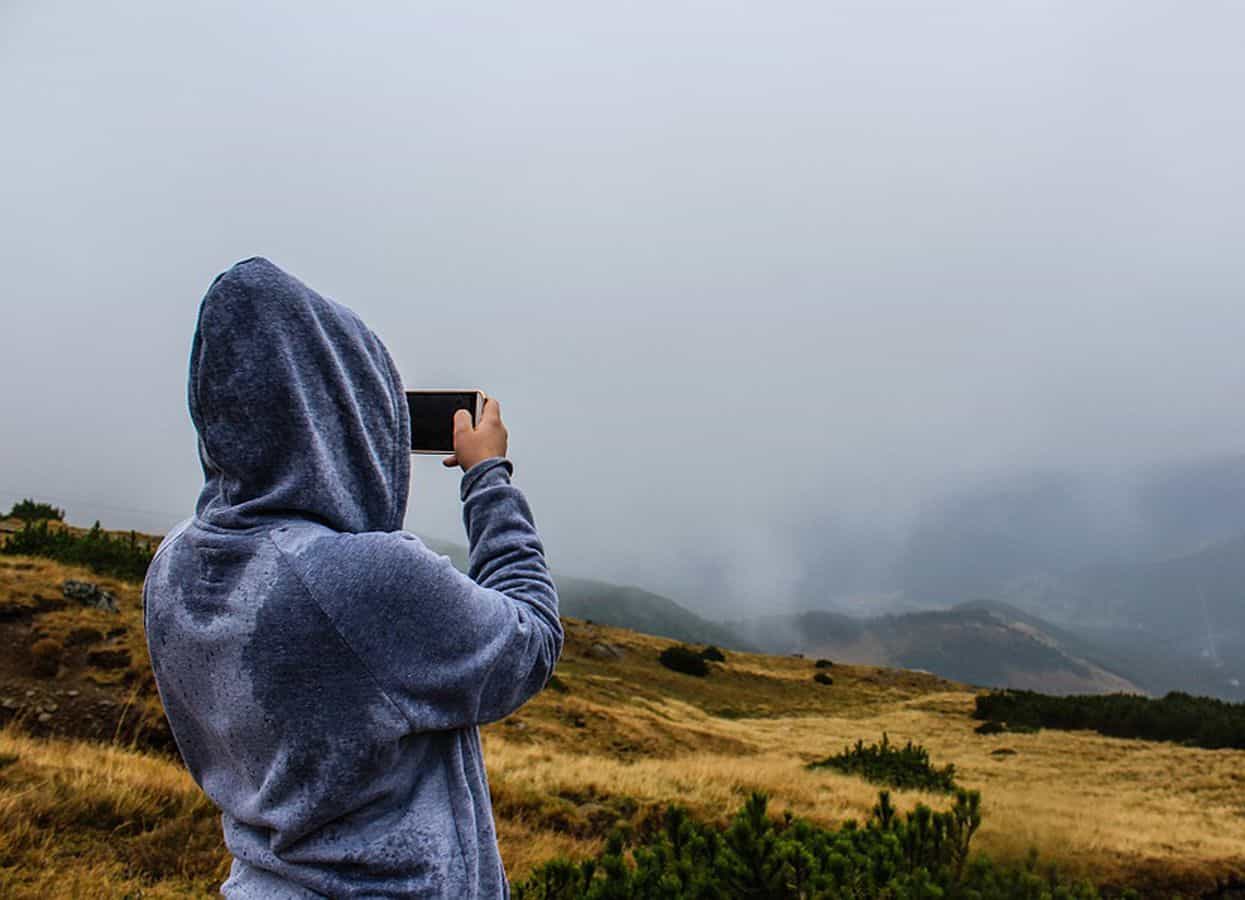
What to Look for In a Sun Hoody
After testing different designs, these are the things I pay most attention to when choosing a sun hoodie.
UPF Rating
UPF tells you how effectively a fabric reduces ultraviolet radiation reaching your skin.
I generally prefer clothing rated UPF 50 or 50+ when maximum sun protection is the goal, although UPF 40+ still provides a very high level of protection.
The important point is to buy clothing with a clearly stated UPF rating rather than assuming any thin long-sleeved shirt provides the same protection.
Breathability
Breathability is arguably just as important as the UPF rating in real-world use.
A sun hoodie only protects you while you are actually wearing it.
If the fabric becomes unbearably hot during a climb or steep ascent, you will naturally want to remove it or roll the sleeves up.
I therefore prioritize lightweight fabrics that allow heat and moisture to escape.
Mesh panels can help, but the breathability of the main fabric makes the biggest difference.
Lightweight Fabric
Lightweight fabric helps in two ways.
Firstly, it generally feels cooler in warm conditions.
Secondly, it adds very little weight to your backpack when you aren’t wearing it.
The trade-off can be durability. Extremely thin fabric is sometimes more vulnerable to snagging on rock, branches, and rough surfaces, so the absolute lightest hoodie isn’t automatically the best.
Stretch and Freedom of Movement
Stretch is particularly important for climbing.
When you reach overhead, the fabric needs to move with you rather than pulling the torso out of your harness or dragging the sleeves halfway up your arms.
Even for hiking, a little stretch makes a sun hoodie noticeably more comfortable underneath backpack straps.
Fit
I don’t like sun hoodies excessively tight.
A slightly relaxed fit allows some air to circulate while still keeping the fabric close enough that it doesn’t flap around excessively.
For climbing, I also look for a relatively long torso so the hem stays underneath a harness.
Sleeves should be long enough that you can fully extend your arms without exposing your wrists.
Thumb Loops
Thumb loops are one of my favorite features.
They keep the sleeves extended and provide some coverage across the backs of your hands.
I find them particularly useful when climbing or using hiking poles all day because both activities naturally make sleeves ride upwards.
They can also help close the gap between gloves and sleeves in cooler conditions.
Long Torso and Sleeves
A generous torso and sleeve length is particularly important for climbing and backpacking.
When you lift your arms, a short shirt can pull out from underneath a climbing harness or backpack waist belt.
Longer sleeves also help maintain wrist coverage when you’re reaching upwards.
This is one of those details that doesn’t seem important until you’ve spent several hours repeatedly pulling your clothing back into place.
Hood Design
Not all sun-hoody hoods are equally useful.
A good hood should cover the sides and back of your neck without constantly slipping backwards.
For climbing, check whether it is designed to fit over or underneath a helmet.
I also prefer a hood that still provides some neck protection when it isn’t being worn over my head.
Color
For genuinely hot and exposed conditions, I normally prefer lighter colors.
They also tend to feel more appropriate to me when spending hours in direct sunshine than wearing an all-black top.
That doesn’t mean you need to wear white. Light grey, blue, beige, or similar shades are usually what I would choose for very sunny conditions.
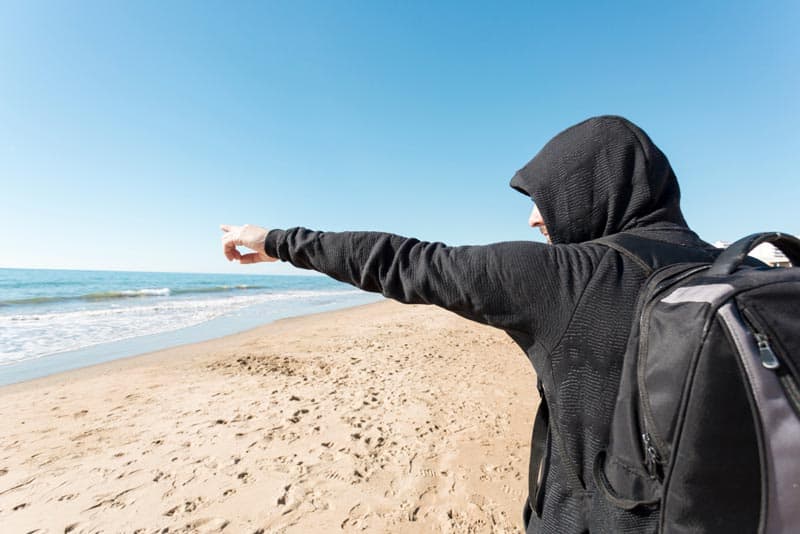
What Are Sun Hoodies?
A sun hoodie is essentially a lightweight technical long-sleeved shirt designed specifically for prolonged exposure to sunlight.
Unlike a conventional cotton hoodie, there is usually no thick insulating material.
Instead, sun hoodies use lightweight synthetic fabrics designed to wick sweat, dry quickly, stretch with your body, and allow heat to escape.
The hood protects your neck and ears while the long sleeves protect your arms.
Many designs also include thumb loops to extend the coverage towards your hands.
They are particularly popular with hikers, climbers, trail runners, anglers, paddleboarders, kayakers, and sailors because these activities can involve spending many hours in direct sunlight.
Do Sun Hoodies Actually Work?
Yes, providing the fabric has an appropriate UPF rating and you wear it correctly.
The biggest advantage for me is consistency.
Sunscreen can rub off, wash off, or become less effective if you forget to reapply it. Fabric remains between your skin and the sun for as long as you keep the garment on.
That doesn’t mean a sun hoodie completely replaces sunscreen.
Your face and any other uncovered skin still need protection, and I normally combine a sun hoodie with sunscreen and a hat during prolonged exposure.
Are Sun Hoodies Hot?
This was one of my biggest concerns before using them.
It seems counterintuitive to put on a long-sleeved hooded shirt when the weather is extremely hot.
In practice, a good sun hoodie doesn’t feel remotely like a normal hoodie.
The material is extremely thin and breathable, and keeping direct sunlight off your skin can actually make prolonged exposure much more comfortable.
The key is choosing one specifically designed for high-output outdoor activity rather than simply wearing any lightweight long-sleeved top.
Sun Hoodies Vs Sun Shirts
Traditional sun shirts normally use a button-up design with a collar and loose sleeves.
They work extremely well and arguably give you better ventilation because you can open the front and cuffs.
A sun hoodie trades some of that adjustability for more complete coverage.
The hood protects your neck, ears, and sometimes part of your forehead, while thumb loops help keep the sleeves over your wrists.
For hiking and climbing, I generally prefer the freedom of movement and simplicity of a hoodie.
For very hot, relaxed activities where maximum airflow matters, a loose button-up sun shirt can be equally good.
Can You Wear a Sun Hoody in Water?
Yes, and this is one reason sun hoodies are so useful for kayaking, paddleboarding, sailing, and fishing.
Most use synthetic fabrics that absorb relatively little water and dry quickly.
They can therefore be much more comfortable when repeatedly getting splashed than a normal cotton shirt.
I would still check the individual manufacturer’s instructions if UV protection while actually swimming or spending prolonged periods in the water is your main reason for buying one.
Who Uses Sun Hoodies?
Sun hoodies make the most sense for anyone who spends hours outside with limited shade.
That includes hikers, climbers, trail runners, outdoor instructors, anglers, sailors, kayakers, paddleboarders, and other people who spend long periods exposed to the sun.
They’re particularly useful if, like me, you don’t want to rely entirely on constantly applying sunscreen.
A sun hoodie doesn’t eliminate the need for sunscreen altogether, but it dramatically reduces the amount of exposed skin you need to worry about.
Are Sun Hoodies Worth It?
For hiking and climbing in strong sun, I think they absolutely are.
I originally thought sun hoodies looked slightly odd and wondered whether wearing a hood in hot weather would just make me overheat.
After actually using them, I changed my mind.
A good sun hoodie is essentially an extremely lightweight technical base layer with much better coverage than a normal T-shirt.
The best models are breathable enough that I don’t feel the need to remove them when I start working hard, and that is ultimately what makes them useful.
If I were choosing one today, I would prioritize UPF protection, breathability, fit, and coverage over pockets or unnecessary features.
For technical climbing, I particularly like the Black Diamond Alpenglow Pro.
For fit and all-day comfort, the Arc’teryx Cormac is excellent.
For maximum value, BALEAF is difficult to argue with.
And the Mountain Hardwear Crater Lake remains one of my favorites when I want a very soft, lightweight hoodie with excellent neck and head coverage.
I hope this updated guide to the best sun hoodies for hiking and climbing helps you choose one that you will actually want to wear all day.