9 Best Non-Gas Camping Stoves 2026 | Multi-Fuel Camp Stoves


Are Non-Gas Camping Stoves Better Than Gas Stoves?
In this guide to the best non-gas camping stoves, we share the reasons why they are better than gas-powered stoves and also the downsides. You will learn which stoves are best for different fuels and which can burn multiple fuels as opposed to just one. We also recommend 9 of the best stoves that don’t use gas canisters.
There are many reasons to prefer a non-gas camping stove or a stove that uses gas, along with other options for fuel. They can range from reducing the weight of gas canisters on a longer expedition to requiring a larger heating element for bigger groups or winter and high-elevation adventures where gas can be an issue.
We have reviewed a wide range of camping stoves. Some of them use many different fuels, including gas, and are aimed to be flexible and allow you to use whatever you have available, like wood, kerosene, or gasoline. Others are larger and fuel-specific, which will allow cooking for a larger group much easier, while some are designed for ultra-lightweight trekking.
While researching non-gas stoves for camping, we looked at things like how hot the stove can get, how long the fuels last, how they perform in the wind, and what types of food can be cooked. Finally, we will answer some frequently asked questions and take an in-depth look at what’s important when purchasing a non-gas-burning camping stove to take all the guesswork out.
Just to clarify: By non-gas camping stoves, we mean alternatives to the usual butane or propane canister stoves. Some of the models below burn white gas (a liquid petroleum fuel), which is confusingly named but is not the same as a pressurized camping gas canister.
Quick Picks: Best Non-Gas Camping Stoves
- Best Overall for Expeditions – MSR XGK-EX: A seriously reliable liquid-fuel stove that burns white gas, kerosene, and several other fuels. Our pick for extreme conditions.
- Best Alcohol Stove – Trangia 27 Cookset: A complete Swedish-made cooking system with excellent wind protection, two saucepans, a frying pan, and a kettle.
- Best Lightweight Wood Stove – Firebox Nano G2 Titanium: A tiny folding stove that’s ideal for heating water or cooking small meals using twigs and other suitable fuels.
- Best for Group Cooking – Bushbox XL Titanium: A premium German-made folding wood stove with a larger cooking surface and excellent fuel flexibility.
- Best Budget Stove – Esbit Pocket Stove: A simple folding solid-fuel stove that’s inexpensive, compact, and incredibly easy to carry.
The 9 Best Non-Gas Camping Stoves
MSR XGK-EX Multi-Fuel Mountaineering Expedition Stove


- WEIGHT: 384 g / 13.5 oz minimum (489 g / 17.2 oz packaged)
- MATERIAL: Metal construction with aluminum and steel components
- FUEL TYPE: White gas, kerosene, unleaded auto fuel, aviation gas, diesel, and jet fuel (correct jet required)
The MSR XGK-EX Multi-Fuel Mountaineering Expedition Stove is a little beast of a cooking stove and has been trusted by expeditions all over the world as a stove that will perform under the most extreme conditions. It has been designed to be easy to use, very reliable in almost any weather, and can cook a range of foods.
The MSR XGK-EX uses liquid fuels such as aviation gas, kerosene, or gasoline that you fill into a compatible fuel bottle. The fuel bottle is sold separately, although the stove includes the pump. Once the bottle is connected to the stove, the fuel system is pressurized, the burner is primed, and you can get cooking. It has retractable legs, so it’s very stable on the ground and can hold quite large pots or cooking containers. It burns hot and fast when turned on, and even the strongest wind won’t affect it too much when used with its supplied windscreen, but it works best in a sheltered location.
A useful feature is the Shaker Jet cleaning system, which helps clear the fuel jet without having to dismantle the stove every time it becomes blocked. You also get two different jets to suit different fuels, which makes a real difference when traveling through countries where white gas is hard to find.
VERDICT: This is probably the best non-gas cooking stove for extreme conditions. It has been proven time and again on expeditions all over the globe. It does run hot, so it’s not the best for simmering foods or slow-cooking a stew for a group. It’s great at getting water very hot very fast and therefore is best for beverages, dehydrated food, or instant noodles.
2026 UPDATE: MSR still makes the XGK-EX and quotes a boil time of 3.5 minutes for one liter of water using white gas, or 2.8 minutes using kerosene under its test conditions. The stove remains a current model, although stock varies between retailers.
Trangia 27 Cookset

- WEIGHT: 825 g / 1.82 lbs
- MATERIAL: Ultralight aluminum
- FUEL TYPE: Methylated spirits or denatured alcohol
The Trangia 27 Cookset uses alcohol as its fuel and is hands down the best alcohol camping stove on the market. It is made in Sweden and has been around for decades now without seeing any major design changes at all. You can get it in a non-stick version as well as hard-anodized aluminum, with different cookware and finish options available.
It comes with a stove, two saucepans, one frying pan/lid, a kettle for boiling water, and the windbreak that also holds the burner. The saucepans have been designed so that they can stack neatly together when packed, and you can use the cookware to prepare different parts of a meal without needing a separate collection of pots and pans.
You fill the small stove with either methylated spirits or denatured alcohol, which will burn for around 25-30 minutes depending on how much fuel you use and the conditions. So one small bottle of fuel lasts for a long time, and the best thing is you can measure it out on the bottle using a marker pen and see how much is left.
The windshield is one of the cleverest parts of the Trangia design. It isn’t just a flimsy sheet of metal that blows away in the first gust; it forms an integrated cooking system that protects the flame and supports the pans. This is one of the main reasons Trangia stoves have remained so popular for so long.
VERDICT: The 27 Cookset from Trangia is ideal for camping without gas canisters and is very cheap and reliable to run in most camping conditions. You get a nice steady burn that can boil water in under 10 minutes in favorable conditions, and the base is very sturdy, even on uneven ground. If you want a non-gas camping stove that runs on alcohol and meth spirits, then this is the number one set we recommend.
2026 UPDATE: Trangia still manufactures the 27-2 UL in Sweden. The current version retains the 825 g weight and includes two 1-liter saucepans, an 18 cm frying pan, a 0.6-liter kettle, the spirit burner, windshield, handle, and strap. This particular configuration is designed for one or two people.
Firebox Ultralight Titanium Nano Stove G2
- WEIGHT: Approximately 113 g / 4 oz for the stove
- MATERIAL: Titanium
- FUEL TYPE: Wood, solid fuel tablets, and compatible alcohol burners; other fuels require suitable accessories
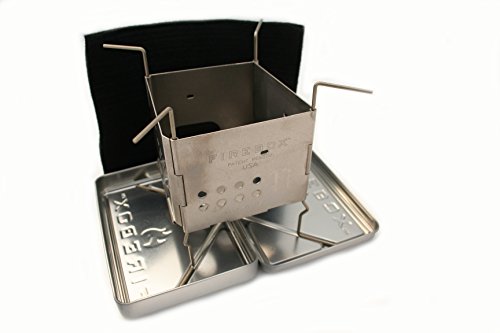
The Firebox Ultralight titanium nano is one of the best multi fuel camping stoves on the market. It is small and lightweight but can provide a great cooking hob for pots and pans to be used on. What makes it so good is the fact that it folds away so small and weighs practically nothing that you can take it everywhere you go.
Essentially the stove is a small fold-out stand made from titanium for durability that sits on its open carry case and can utilize a range of fuels, including wood, alcohol, and solid fuel tablets. While some fuels may require additional parts, like a compatible metal burner for holding alcohol, you can quickly and easily use small pieces of wood, which are usually abundant.
The genius of this design is how little you have to carry to make it useful. A handful of dry twigs can provide enough heat for a small meal or a cup of coffee, and the whole thing folds flat once it has completely cooled down. The downside is that you have to keep feeding it small bits of wood, which can get annoying when you are trying to cook something that needs a consistent temperature.
VERDICT: While you won’t be cooking pasta and the sauce at the same time, the Firebox Ultralight is a perfect little stove for a one or two-person meal or to boil water. It’s so lightweight that it’s great to carry while hiking on long remote treks, and its fuel flexibility will allow you not to have to carry in a large supply of alcohol or gas either.
Esbit Medium Pocket Stove

- WEIGHT: Depends on pocket stove size and included fuel; the original 28 g figure does not represent this complete medium stove kit
- MATERIAL: Galvanized steel
- FUEL TYPE: Esbit solid fuel tablets
When it comes to a lightweight, easy-to-use stove that is also very budget-friendly, look no further than the Esbit Medium Pocket Stove. This is a slightly more refined version of the military pocket stoves used all over the world. It uses solid fuel (hexamine or other compatible fuel tablets) that can be stored inside the stove when not in use, it is quick and easy to use, and the fuel will light easily even in cold weather.
The flame is small and fairly discreet, and while Esbit tablets are designed to burn with very little visible smoke, they can still produce fumes and leave a residue on the underside of your cooking pot.
It’s a simple fold-out design that raises the burner section off the ground while also providing a solid frame to place your pot, pan, or tin for cooking. It is one of the best-value non-gas stoves for camping on the market and one of the easiest designs to carry.
The one thing you need to remember is that solid fuel tablets don’t offer the same temperature control as an alcohol burner or a liquid fuel stove. Once they are burning, you largely control the heat by changing the distance between the flame and the pot, adjusting your cooking time, or using additional tablets.
VERDICT: The Esbit Medium Pocket Stove can be used by anyone, whether hiking, car camping, or sitting by a river; this value-for-money stove will always work for you. Its best uses are boiling water in a small pan, heating tins of food, or preparing simple meals easily, quickly, and quietly.
2026 UPDATE: Esbit continues to make its classic pocket stoves, including configurations supplied with two 27 g solid fuel tablets. The manufacturer quotes approximately 15 minutes of burn time for a 27 g tablet, although actual cooking performance depends heavily on wind, cookware, and temperature.
Bushbox XL Titanium

- WEIGHT: Approximately 430 g / 15.2 oz for the stove; 575 g / 20.3 oz for the current set with supports and bag
- MATERIAL: Titanium body with stainless steel components
- FUEL TYPE: Wood, compatible alcohol burners, charcoal, or solid fuel tablets
While there are times a small pocket stove will do the trick, there are others when you need something a little more substantial. The Bushbox XL Titanium is the best flat pack style of camping stove for larger groups as it will accommodate larger pans than almost any other stove.
The Bushbox comes in a pouch that is flat and easy to store out of the way. It is set up fairly quickly, with hinged sides that unfold into a sturdy square stove to cook on. It has slots for a grill plate on top, along with integrated hinges, side trivet slots as well as grates for differing fuels. It can use wood, a compatible alcohol burner, charcoal, or solid fuels, and it is larger than other models too.
One thing that sets the Bushbox XL apart from many cheaper folding stoves is that it doesn’t rely on lots of separate panels that you have to slot together before every meal. The hinged construction is much easier to deal with, especially when your hands are cold. The larger firebox also means you can use slightly bigger pieces of wood without constantly breaking them into tiny twigs.
VERDICT: The Bushbox XL is very durable, made primarily from titanium, and will last a long time. While it can be carried on a hike, its best use is at a stationary camp where grilling meat for a group or cooking up a large stir-fry on a frying pan can be done easily. While not on the budget side of things, the Bushbox does a great job at being flexible and will allow you to cook for groups or families almost anywhere with a simple setup and flexible cooking options.
2026 UPDATE: Bushcraft Essentials still makes the Bushbox XL Titanium in Germany. The current model has a titanium body with stainless steel used for the base plate and pot supports to reduce warping. It folds to approximately 1 cm thick and remains one of the more premium choices for anyone who wants a wood-burning stove without carrying a bulky metal box.
Marsh Kettles Flat Pack Mini Rocket Stove
- WEIGHT: Approximately 5.2 lbs / 2.36 kg (current manufacturer figure)
- MATERIAL: Metal alloy
- FUEL TYPE: Wood and suitable biomass fuels
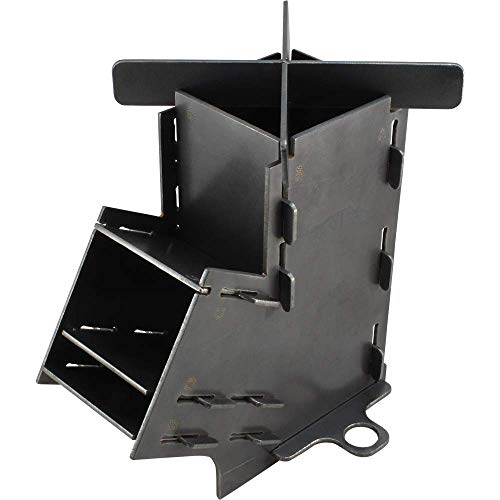
Rocket stoves and especially flat pack rocket stoves, are a great way to utilize a wood fire and concentrate the heat for cooking, and the Marsh Kettles Flat Pack Mini Rocket Stove is one of the best non-gas camping stoves on the market. Like the Nano and Bushbox, the Mini Rocket comes in a case that is flat with all parts for easy carriage and storage, but the setup before use is a little more complicated and results in a larger, hotter flame.
The Marsh Kettles Mini Rocket does come with many more parts than the simple box design. However, it is also a larger camping stove and therefore can cook larger meals. The way the rocket stove is set up allows you to utilize wood found nearby, and it’s placed in a gravity-fed burner that draws air through the combustion chamber to produce an intense heat capable of cooking small things fast or larger foods over time.
CONCLUSION: The Mini Rocket by Marsh Kettles is on the smaller side of rocket stoves. However, compared to other stoves on this list, it comes in much heavier and bulkier. You can carry this stove while hiking as it is very capable of feeding a group. However, its best use would be when driving right to the campsite.
Due to its high heat, you can cook a lot of food quite quickly, or you can use a larger pot to create a mega camp stew for everyone. This is a great stove for group cooking or heating water for everyone’s morning coffee.
2026 AVAILABILITY: Marsh Kettles still advertises its flat-pack rocket stove as available to purchase by contacting the company directly. The current listing describes a 5.2 lb stove that assembles in under three minutes and is made in the USA. Online checkout availability for this exact model is less straightforward than for the other products in this guide.
Lixada Titanium Alcohol Stove

- WEIGHT: Approximately 45 g / 1.6 oz (originally researched configuration)
- MATERIAL: Titanium
- FUEL TYPE: Denatured alcohol or methylated spirits
Sometimes simplicity is the best, and the Lixada Titanium Alcohol Stove and Rack Combo set is close to as simple as they come. This camping stove is simply a small round-tub container for holding alcohol fuel with a support cross-beam for holding pots and pans. It’s very affordable for a quality titanium camp stove, too, giving it some long-lasting durability.
Consisting of a burner and a cross stand, this little stove is lightweight and extremely quick to set up. Alcohol is the fuel for the burner itself; solid fuel tablets should only be used with a separate holder designed for them, rather than placed directly into the alcohol reservoir. The design is very similar in principle to the burner on the Trangia set, but it doesn’t come with the integrated windshield or larger cooking system.
VERDICT: This is a small non-gas camping stove that is designed for heating small things. It’s a great addition for any hiking adventures, and it’s great at heating some water for tea or coffee or a small pot for a couple cooking a stew. It’s not great for larger groups as a primary stove, but it’s small, lightweight, and reliable enough to carry with you almost anywhere.
Optimus Svea 8016279 White Gas Stove

- WEIGHT: 550 g / 19.4 oz
- MATERIAL: Brass / Aluminium
- FUEL TYPE: White gas (not kerosene)
The Optimus Svea 8016279 is a camping stove with a specific purpose – reliable cooking at high altitudes in demanding conditions whilst being compact and easy to pack. The Optimus Svea is a slick-looking camping stove that uses white gas, which is a liquid fuel, not a pressurized butane or propane gas canister.
The Optimus Svea is a compact, solid brass stove with very few loose parts or any need to assemble before use. It uses a self-pressurizing fuel tank, which means there is no separate pump to operate. This makes it a particularly simple liquid-fuel stove, although it still needs to be primed correctly before use.
Much like the Trangia stove, this design has been around for decades and is tried and tested for ultimate reliability. It uses white gas, and the flame can be controlled so that you can cook things without burning them to the base of your pan.
VERDICT: The Optimus Svea 8016279 is the camping stove that you would then take onward to the summit. It’s small and compact for a brass liquid-fuel stove, and its best uses include boiling water for dehydrated meals at altitude. It’s a cool-looking little stove that is also useful in any camping situation, especially when you need a morning coffee quickly and reliably.
2026 UPDATE: Optimus still lists the Svea as a current model, with a 550 g weight, 1,400 W heat output, 120 ml integrated fuel tank, and approximately 50 minutes of burn time at full output. It comes with a small cooking pot that doubles as the lid. White gas remains the manufacturer’s specified fuel; do not substitute kerosene or diesel.
REDCAMP Mini Alcohol Stove

- WEIGHT: Approximately 145 g / 5 oz (originally researched configuration)
- MATERIAL: Brass / Aluminum Alloy
- FUEL TYPE: Methylated spirits or denatured alcohol
When it comes to simplicity, we have another non-gas camping stove vying for the top spot, and that’s the REDCAMP Mini Alcohol Stove. Like the Lixada, the REDCAMP is essentially a central burner that holds alcohol, surrounded by a stand for holding pots and pans.
The stand for holding your pot also doubles up as some limited wind protection and comes with a foldable handle on the burner lid that you can use for temperature control – giving you a little more flexibility with your cooking options. It also has small holes around the base to increase airflow and assist with combustion.
VERDICT: Like the Lixada, the REDCAMP is a small burner designed to heat water or cook smaller dishes. By itself, you won’t be able to feed more than two people at a time, but it works perfectly for small pots or heating water. It’s designed for hiking use but it can be used anywhere outdoors you need a non-gas stove: on a mountain, by a beach, or sitting with a fishing rod watching a river flow by.
2026 UPDATE: REDCAMP continues to sell its Mini Alcohol Stove with an aluminum stand and brass burner. The current range includes different versions, so check the exact dimensions, weight, and accessories before ordering.

What Are the Different Types of Non-Gas Camping Stoves?
A wide variety of fuels available either to buy or to forage allows for a wide variety of cooker and stove designs. Many stove fuels and designs are for certain conditions – like altitude, for small uses – like boiling water for coffee, or for being a campsite workhorse – keeping a whole campsite fed every meal. There are always pros and cons to each design or fuel usage that we will look into in a little more detail:
Alcohol or Spirit Burners
Alcohol burner stoves are simple stoves that utilize a small tub that holds the liquid fuel with a stand on top for holding a cooking pot. While the Lixada and REDCAMP models are designed with simplicity in mind, the Trangia set uses the same fuel setup for more complex cooking. These stoves are great for a wide range of camping conditions and are very easy to use and cook with.
It’s important not to confuse methylated spirits or denatured alcohol with white spirit, which is a different petroleum-based solvent and is not suitable for most alcohol camping burners.
Wood Burning Camping Stoves
These wood-burning stoves are usually designed completely differently from an alcohol stove, and they tend to be either a fold-out box with a fire in the middle like the Firebox Nano or the Bushbox XL, or they can be a ‘rocket’ style with a separate combustion chamber (that’s subsequently bulkier). Wood stoves tend to allow longer, slower cooking of larger pots and grilling of meats – so they are great for group meals or more comprehensive recipes.
Multi-Fuel Camping Stoves
Multi-fuel stoves are designed and used on long hikes, expeditions, or when you are moving through different climatic zones regularly. They can use a range of fuels depending on the stove design, from wood and solid fuel tablets to white gas and kerosene. Some, like the MSR XGK-EX, are specifically designed to use several liquid fuels from a pressurized fuel bottle. The Optimus Svea, on the other hand, uses white gas in its own self-pressurizing tank.
Others, like the Firebox Nano, can also utilize wood alongside compatible alcohol burners and solid fuel. These stoves are the most flexible for fuel, but not every fuel is suitable for every multi-fuel stove, so check the manufacturer’s approved fuel list before using anything unfamiliar.

Guide to the Best Non-Gas Stoves for Camping
Here are some of the most important features to look for in a camping stove that doesn’t just run on butane gas:
Wood Fueled Stoves
Wood can be found all over our planet, wherever there are trees. Old dryer wood is often already on the ground, so it can be quite easy to collect for fuel. Wood is the fuel of our ancestors and has allowed our societies to grow over time. Wood is renewable and generally free to use where collecting it is permitted.
Some of the benefits of wood, apart from being readily available, is that when using wood, you can control the temperature of your stove by limiting the amount of fuel being used. This allows more complex foods to be cooked up and eaten.
Wood is also great for everything from very small stoves to raging campfires – so it has a flexibility that is hard to match. Different woods create different-smelling smoke, so if you are grilling or smoking meats, you are able to impart additional flavor through the use of wood.
There are some downsides with wood; not all trees are equal, and as such, burning times and temperatures can range quite a lot with wood. Conifer trees are soft and burn quickly compared to denser hardwoods, which generally burn for longer. Carrying wood can be an issue if it’s heavy and it is not available nearby.
Likewise, wood is not instant, it takes a little time to get it started and burned down to the level you want it for cooking. Overall, wood is a great resource for stoves and a great fuel for larger, more complex meals or group cooking.
Alcohol Fueled Stoves
Alcohol or methylated spirits are readily available in many supermarkets, hardware stores, and camping shops. Alcohol lights easily and burns steadily, so you can have a flame ready to be cooking on within seconds after lighting it safely. It doesn’t take a lot of fuel to heat a cup of water, so it’s quite efficient too.
You will have to carry spare alcohol fuel in a suitable, clearly labeled container, which is just fine if you are car camping, but if you are on a long extended hike, this could be an issue. Leaking fuel bottles are a rare occurrence, but it can happen and will certainly wreck your day if your backpack becomes fuel soaked. Overall, alcohol is a great instant style of fuel that is great for small stoves and small dishes and is very easy to use.
Never refill an alcohol burner while it is alight or still hot. The flame can be difficult to see in daylight, so make sure the burner is completely extinguished and cooled before adding more fuel.
Aviation Gas, Gasoline, Kerosene Stoves
Multi-fuel expedition-type stoves are primarily designed to heat water at altitude or use a range of fuels on an expedition. Different fuels are placed in a suitable pressurized container, hooked to the stove, and then used. The Optimus Svea is an exception because its white gas tank is built into the stove.
These fuels are great at producing a powerful flame and boiling water quickly and easily. Some high-output expedition stoves are not very good at simmering foods or creating recipes due to this high heat. Other liquid-fuel stoves offer much finer flame control.
Not every liquid-fuel stove can burn every type of fuel. Aviation gas, jet fuel, diesel, and kerosene should only be used where the manufacturer explicitly approves them and with the correct fuel jet installed.
Solid Fuel Tablet Stoves
Some small non-gas camping stoves, like the Esbit Pocket stove, use solid fuel tablets such as hexamine-based fuel. These stoves are also used by militaries worldwide. The fuel lights easily and burns consistently with very little visible flame. Depending on the tablet size and conditions, one tablet can boil a cup of water or heat a tin of food. The upside is the absolute simplicity and low profile this fuel provides.
The downside is you need to carry quite a lot of tablets if you are hiking. But overall they are cheap, lightweight, and as simple as they come, as you can even burn suitable solid fuel tablets on a properly designed holder without a full stove.
Sizes of Non-Gas Stoves
Like any piece of camping equipment, non-gas camping stoves come in a range of sizes and uses. Regardless of fuel types, the stoves themselves are usually designed to be either a one-pot burner or something you can either cook multiple things at once on or can use larger pots and pans.
Small, pocket-sized burners like the Esbit Pocket, REDCAMP, or Firebox Nano are mostly designed to heat a cup of water, a small pot, or a tin of food and therefore are either for personal use or for use by a couple.
Larger stoves like the Bushbox XL, the Marsh Kettles Mini Rocket, or the Trangia 27 cook set are all designed with bigger things in mind. They are better at a central campsite as opposed to long hiking trips and can provide adequate controllable heat to cook more complex food, although the Trangia 27 is primarily a one- or two-person cooking system.
Stove Weights
Lightweight, smaller stoves are designed for hiking expeditions or quick and easy use. You will hardly even notice the minimal extra weight these stoves will add. Heavier stoves are usually bigger and designed for more complex cooking. You can also hike with these if you don’t mind some extra weight, but the heavier stoves come more into their own when car or stationary camping.
Remember that published stove weights do not always include the fuel bottle, windshield, cookware, pot supports, or carry case. Sometimes the weight of the complete cooking system is far more useful than the bare stove weight.
Base Stability
Any stove, BBQ, or burner requires base stability to ensure it stays where you want it and doesn’t move around while cooking. Some of the smaller stoves, like the Lixada, can only take small pots and pans whilst remaining stable.
Larger stoves are often more stable as they have a wide base on the ground and can take heavier pots and pans, which enables more flexible cooking options.
Pot Stability
At the end of the day, it’s all about eating good food or having a nice hot cup of coffee, and all the stoves on this list provide an adequate surface, either a cross-section, a square or round top, or fold-out legs to allow a pot to sit on top of the flame for cooking. You do have to ensure your pots or pans are not too big for the size of your burner, but you should be able to cook easily on a stable platform.

Why Do Some People Prefer Non-Gas Stoves?
Let’s discuss gas itself first. Liquefied petroleum gas (LPG), including propane and butane, is a fantastic cooking fuel, which is why so many homes and camping stoves use it. It’s convenient, it burns efficiently, and it’s instant. So why isn’t it great for camping? Well, it can be, and it’s often great. However, it comes with limitations.
Gas bottles can be heavy, and even smaller camping gas canisters add weight to your pack. The canisters are pressurized, so you have to buy replacements and then carry the empty ones out again with you. There is no re-supply or safe refill in the forest. Because of the weight and lack of flexibility, many people prefer a stove that can use alcohol or solid fuel that doesn’t require a pressurized gas canister, or wood that is free rather than being stuck with only gas.
The best non-gas camping stoves provide flexibility that a gas camping stove does not, and the more time you spend out camping, or on longer hiking and camping trips, this becomes more and more important.
Are Solid Fuel Camping Stoves Any Good?
The simple answer is yes, with limitations. Solid fuel for camping stoves use tablets such as hexamine-based fuel. They are limited to small pots, cups of water, and simple meals, but they are very reliable and can be stored for a long time when kept dry. As previously mentioned, this is a small, simple type of stove used by militaries to heat and eat food in tactical environments. The weight of the solid fuel is its biggest drawback.
What Is the Safest Camping Stove?
Anything that burns or heats up is never completely safe, and all the non-gas camping stoves on this list get very hot. The simplest design is probably the Esbit Medium Pocket stove because there are no pressurized fuel systems, pumps, or liquid fuel connections to deal with. However, the solid fuel and the stove itself still become extremely hot, so you must allow them to cool completely before packing them away.
The most important safety rule applies to every stove in this guide: never use a portable camping stove inside a tent, vehicle, or other enclosed space. Wood, alcohol, solid fuel, and liquid petroleum stoves can all produce dangerous carbon monoxide, even when the flame looks clean. Always follow the manufacturer’s instructions and use your stove outdoors on a stable, fire-resistant surface with adequate clearance from anything combustible.
We hope you found this guide to the best non-gas camping stoves answered all of your questions. Thanks for reading.