Arc’teryx Thorium AR Hoody Review


In this Arc’teryx Thorium AR Hoody review, we look at the warmth, weight, durability, compressibility and weather resistance of one of Arc’teryx’s classic all-round down jackets. We tested it in the mountains, desert and everyday cold-weather use to see where it performs well and where its compromises start to show.
When you live an active outdoor lifestyle, having a good insulated jacket makes a huge difference once the temperature drops. There are lighter down jackets, warmer down jackets and cheaper down jackets, but the Thorium AR was designed to sit somewhere in the middle and do a bit of everything.
That was always the attraction for me. It wasn’t an ultralight specialist piece or a giant expedition jacket; it was simply a warm, durable down layer you could wear hiking, climbing, travelling or around town without feeling like you had picked the wrong jacket.
If you are comparing other options, have a look at our guide to the best down jackets.
2026 update: Arc’teryx no longer uses the old Thorium AR Hoody name. The current range includes the Thorium Hoody and Thorium Jacket, both of which have evolved significantly from the version reviewed here. The current men’s Thorium Hoody is now a heavier, more climbing-focused model with 750-fill down, a 30D shell, helmet-compatible hood and a listed weight of 598 g. :contentReference[oaicite:1]{index=1}
Arc’teryx Thorium AR Hoody: The Basics
The Thorium AR Hoody was Arc’teryx’s durable all-round down jacket, sitting between very lightweight pieces and heavier cold-weather insulation. The version we tested used 750-fill European grey goose down combined with Coreloft synthetic insulation in moisture-prone areas.
That mixture was one of the jacket’s strongest ideas. Down handled most of the warmth, while synthetic insulation was used in areas where sweat or dampness were more likely to become an issue.
The original jacket was manufactured by Arc’teryx, and the basic design philosophy is still visible in the current Thorium family. Arc’teryx still uses 750-fill goose down, Coreloft synthetic insulation and durable nylon shells in the modern versions. :contentReference[oaicite:2]{index=2}
Original Thorium AR Hoody Specifications
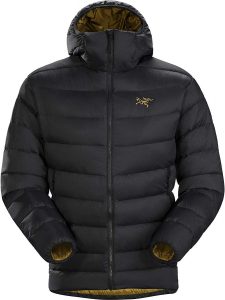
- Weight: approximately 14.8 oz / 420 g
- Insulation: 750-fill European grey goose down with Coreloft synthetic insulation
- Shell: Arato 30 nylon
- Fit: regular fit
- Water resistance: DWR-treated outer fabric
- Packed size: approximately 2.5 L
- Hood: insulated hood that could fit over some helmets, though not especially comfortably in the tested version
These specifications describe the older Thorium AR Hoody reviewed here, not the current Thorium range. That distinction matters because today’s models have different weights, fits, shell fabrics and features.

First Impressions
When the Thorium AR Hoody first arrived, the thing that stood out was how clean and understated it looked. A lot of insulated jackets either feel extremely technical or very bulky, while the Thorium managed to look relatively normal despite packing in a serious amount of insulation.
The outer fabric immediately felt more substantial than the paper-thin shells used on many ultralight down jackets. It still felt soft enough to wear comfortably, but there was a reassuring sense that a branch or rough rock wasn’t going to destroy it instantly.
In the women’s version we tested, the regular fit was shaped without feeling restrictive. It felt warm as soon as it went on, but didn’t turn you into the Michelin Man either.
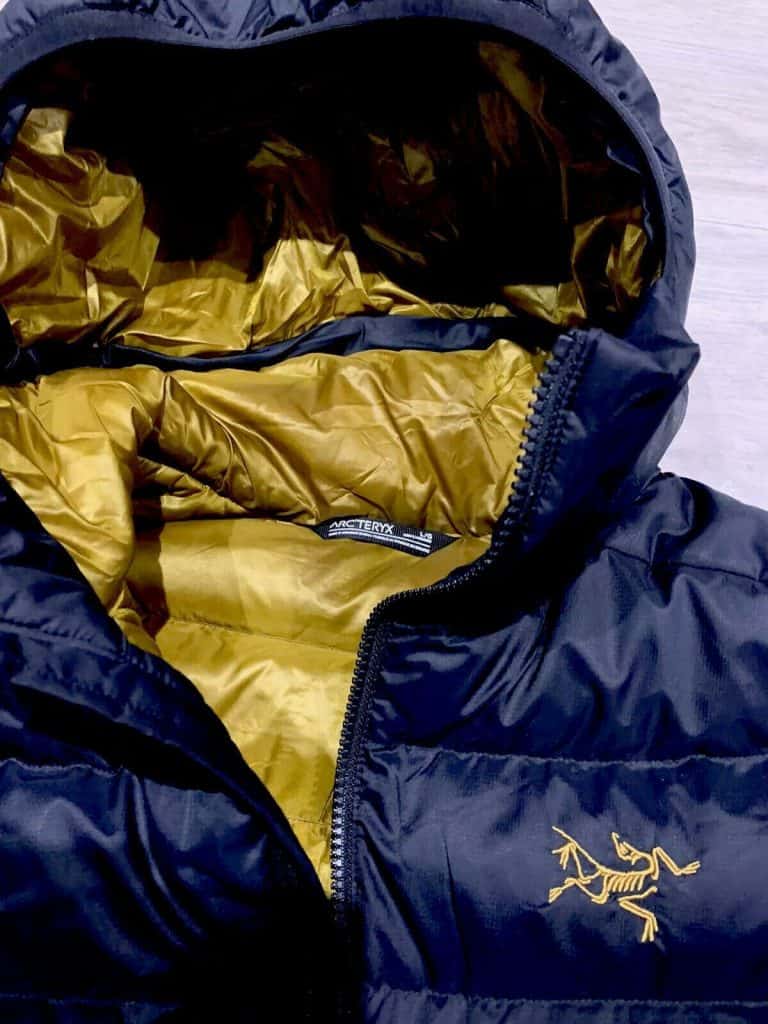
Arc’teryx Thorium AR Hoody Review
We used the Thorium AR in a wide range of conditions rather than treating it as a jacket that only came out for one specific activity. It saw mountain use, colder desert nights and general outdoor wear, which is exactly the kind of mixed role the jacket was designed for.
Warmth
The Thorium AR used 750-fill goose down as the main insulation, with Coreloft synthetic insulation placed in areas more likely to get damp. Arc’teryx called this Down Composite Mapping, and the idea was to keep down where its warmth-to-weight advantage mattered most while using synthetic insulation around higher-moisture zones.
What surprised us most was how warm the jacket felt for its weight. On paper, 750-fill down can look less impressive than the 850-fill numbers used in lighter premium jackets, but fill power alone does not tell you how warm a jacket will be.
The amount of down, baffle design, fit and overall construction matter just as much. In real use, the Thorium AR felt properly warm and noticeably more substantial than many lighter down jackets we had tried.
Compressibility
One of the big advantages of down is being able to compress a warm jacket into a relatively small space. The Thorium AR came with a roughly 2.5 L stuff sack, which was small enough to disappear into a backpack without too much trouble.
It was not the most compressible down jacket around, and that was never really its purpose. The tougher shell, synthetic insulation and relatively generous amount of fill all add bulk compared with a minimalist ultralight puffy.
For a jacket this warm and durable, though, the packed size was perfectly reasonable.
Weight
At around 420 g for the version we tested, the Thorium AR sat in the middle ground. It was light enough for backpacking and mountain use, but not something you would buy if your entire gear list revolves around shaving every possible gram.
Some of that extra weight came from the tougher shell and more robust construction. Personally, I don’t mind carrying a little extra if it means the jacket feels less like it is going to explode the first time I brush against a tree.

Water Resistance
Water is always one of the weak points of down insulation because once down gets genuinely saturated and loses loft, its insulating performance drops dramatically. The Thorium AR handled light moisture better than a pure down jacket thanks to the DWR finish and synthetic insulation in areas more likely to get damp.
That did not turn it into a waterproof jacket. In a proper rainstorm, I still wanted a waterproof shell over the top.
We also found that once the jacket became properly wet, it could take a while to dry. The best approach was always to treat the Thorium AR as insulation and use a shell when sustained rain was expected.
Fit and Comfort
The tested women’s regular fit was one of the things we liked most. It was shaped enough to avoid feeling boxy but still had room to move and layer underneath.
The jacket worked well for hiking and climbing because it didn’t bind badly through the shoulders or arms. The hood also trapped a lot of warmth around the head without seriously restricting vision.
On the old version, the hood could go over a helmet, but it felt tight enough that I would not have described it as a genuinely comfortable helmet-compatible hood. That is one area where the current Thorium Hoody has moved on: Arc’teryx now specifically lists the present hood as helmet compatible. :contentReference[oaicite:3]{index=3}
Durability
Down jackets have a habit of finding branches, sharp rocks and campfire embers. Once the shell gets torn, you can quickly end up leaving a trail of feathers behind you like an injured goose.
The Thorium AR felt much more reassuring than a lot of ultralight puffies because of its relatively robust Arato nylon shell. I still wouldn’t intentionally roll around on sharp rocks in it, but during normal outdoor use it handled abrasion extremely well.
Features
The Thorium AR was refreshingly simple. It had two hand-warmer pockets, an internal zipped pocket, an insulated hood and a straightforward front zipper without being covered in unnecessary technical features.
The collar lining felt comfortable against bare skin, and the zipper pulls were easy to use without adding much bulk. It was basically a very good down jacket rather than a gadget disguised as one.

How Warm Is the Thorium AR Hoody?
Arc’teryx never gave the Thorium AR a simple temperature rating, which is sensible because jacket warmth depends heavily on activity level, wind, humidity, what you wear underneath and how warm you naturally run.
In our testing, it felt warmer than the specification sheet might suggest. The combination of 750-fill down, generous loft and synthetic insulation in strategic areas made it a very dependable cold-weather layer for general outdoor use.
I would describe it as substantially warmer than a lightweight summer puffy but below the kind of heavy down jacket you would choose for prolonged inactivity in extreme cold.
Is 750-Fill Down Good?
Yes. The original review called 750-fill down “mid-range” because 850+ fill was increasingly common in expensive ultralight jackets, but that wording can be misleading.
Fill power measures how much volume a given weight of down can loft into. Higher fill power can give better warmth-to-weight and compressibility, but it does not automatically mean a jacket is warmer.
A jacket with a larger amount of 750-fill down can easily be warmer than a minimalist jacket using 850-fill down. Arc’teryx still uses 750-fill European goose down in the current Thorium range, which tells you there is nothing inherently second-rate about it. :contentReference[oaicite:4]{index=4}
Thorium AR Hoody vs Cerium
The modern Arc’teryx range makes the distinction between the Thorium and Cerium families easier to understand. The Thorium is the more durable, more substantial option, while the Cerium prioritizes lower weight and better warmth-to-weight.
For example, Arc’teryx currently lists the women’s Cerium Hoody at around 290 g with 850-fill down and a 15D shell, while the current Thorium family uses tougher 30D fabric and 750-fill down. :contentReference[oaicite:5]{index=5}
If I wanted the lightest possible insulating layer for backpacking, I would lean towards the Cerium. If I wanted something tougher that I could wear more often without worrying about every branch and rock, the Thorium philosophy makes more sense.
What Happened to the Arc’teryx Thorium AR Hoody?
The old Thorium AR Hoody has been replaced by newer Thorium models and Arc’teryx has largely moved away from putting the old AR designation directly into product names. If you search for the Thorium AR today, you will mostly find old stock, used jackets and older reviews like this one.
The current Thorium Hoody is not exactly the same jacket with a new label. Arc’teryx now describes the men’s version as a durable down belay hoody for rock climbing and hiking, with a 30D shell, 750-fill down, Coreloft 80, helmet-compatible hood, two-way front zip and a listed weight of 598 g. :contentReference[oaicite:6]{index=6}
The current women’s Thorium Jacket remains closer to the older all-round philosophy, with 750-fill down, Down Composite Mapping, a 30D shell, helmet-compatible hood and a listed weight of around 430 g. :contentReference[oaicite:7]{index=7}
Is the Thorium AR Still Worth Buying Used?
Potentially, yes. The jacket we tested was warm, durable and comfortable enough that I would still happily wear one today if it was in good condition.
With used down jackets, I would pay particular attention to loft, smells, damaged baffles, worn cuffs, zipper condition and whether the insulation has been repeatedly stored compressed. Down that still lofts properly can last a very long time.
I would not pay current-model money for an old Thorium AR simply because it has an Arc’teryx logo on it, but at a sensible price it remains a very capable jacket.
Current Thorium Hoody vs the Old Thorium AR
The current Thorium Hoody is more specialized than the one reviewed here. Arc’teryx now positions the men’s version as a cold-weather climbing and belay layer, with larger baffles, more down, a boxier layering fit and climbing-specific features such as a two-way front zip and oversized internal dump pockets. :contentReference[oaicite:8]{index=8}
It is also significantly heavier than the old jacket we tested. That makes it important not to look at a modern product page and assume those specifications describe the jacket photographed throughout this review.
The family resemblance is still obvious, though: durable shell, 750-fill down, strategic synthetic insulation and a focus on dependable warmth rather than chasing the absolute lowest weight.
What I Like About the Thorium AR Hoody
- Excellent warmth for general cold-weather use
- More durable shell than many ultralight down jackets
- Comfortable regular fit
- Good freedom of movement
- Useful combination of down and synthetic insulation
- Simple design without pointless features
- Reasonably compressible for the warmth
- Stylish enough to wear away from the mountains
What I Don’t Like
- Not particularly light compared with ultralight down jackets
- Takes time to dry if it becomes properly wet
- Old hood wasn’t especially comfortable over a helmet
- Premium Arc’teryx pricing
- Original Thorium AR is now discontinued
Arc’teryx Thorium AR Hoody Review Verdict
The Thorium AR Hoody was a very good all-round insulated jacket. It didn’t win every specification battle, but it combined warmth, durability, comfort and packability in a way that made it easy to use across a wide range of outdoor situations.
That balance was probably its biggest strength. There were lighter jackets, warmer jackets and more weather-resistant jackets, but very few that felt as happy going from mountain use to everyday cold-weather wear.
We used it across a lot of different environments and rarely found ourselves wishing we had chosen something else, provided we weren’t standing around in sustained rain without a shell over the top.
The original Thorium AR is no longer the model I would tell someone to go and buy new, simply because Arc’teryx has moved the line on. But as a review of the jacket itself, the verdict hasn’t really changed: it was warm, comfortable, durable and exceptionally easy to live with.
Where to Buy the Current Arc’teryx Thorium
If you are shopping new today, look for the Arc’teryx Thorium Hoody or Thorium Jacket rather than the old Thorium AR name. Just be aware that the current models are not identical replacements, so compare the modern specifications with what you actually need. :contentReference[oaicite:9]{index=9}