How Much Does a Four-Person Tent Cost?
A 4-person tent can cost anywhere from around $100 for a basic family camping model to $1,500 or more for a specialist expedition tent. For most casual campers, the realistic sweet spot is now roughly $150-$400, while lightweight backpacking and serious four-season tents often cost considerably more.
Camping in a solo tent has its advantages, but sharing with friends or family is often much more sociable. You may genuinely need space for four people, or you might simply want the extra room a 4-person tent gives two or three campers.
These 4-person tents come in everything from cheap festival domes to lightweight backpacking shelters and expedition tents designed for serious winter weather. That is why prices vary so dramatically.
The important thing is to compare tents designed for the same job. A $150 car-camping tent and an $800 four-season expedition shelter may both sleep four people, but beyond that they are completely different products.
How Much Is a 4-Person Tent?
There isn’t one useful average price because 4-person tents cover such a wide range of designs. I’ve split them into four rough price categories based on the current market and the type of camping they are generally suited to.
Budget 4-Person Tent Cost – Around $100-$175
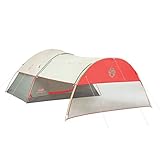
You can still occasionally find 4-person tents below $100, particularly during sales, but around $100-$175 is a more realistic starting point for a decent budget tent today. Current entry-level 4-person Coleman tents sit roughly in this area, which gives you a useful benchmark for what a mainstream family tent now costs.
Budget 4-person tents are usually intended for car camping, festivals and occasional weekends rather than serious backpacking. They are often perfectly waterproof enough for normal summer use but tend to use heavier fabrics, fiberglass poles and bulkier packed designs.
They may still have useful features such as a double-wall construction, bathtub floor, mesh ventilation and basic storage pockets. The main compromises tend to be weight, packed size, pole quality and how well the structure handles repeated exposure to strong wind and bad weather.
I wouldn’t automatically assume a cheap tent is badly made, but this is the price range where I would pay particular attention to seam quality, waterproof ratings, pole material and how much of the tent is actually protected by the rainfly.
Mid-Range 4-Person Tent Cost – Around $175-$350
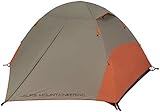
This is probably the best price range for most people. Between roughly $175 and $350, you start seeing stronger poles, better ventilation, larger vestibules, more usable doors and a noticeable step up in overall construction quality.
These tents are still commonly aimed at car camping or short walk-in camps rather than long-distance backpacking, but many are easier to carry and considerably more weather-resistant than the cheapest models. Internal pockets, better zippers, more guy-out points and improved fly coverage also become much more common.
At this level, I would expect a tent to be something I could use regularly rather than treating as a disposable festival purchase. It should handle ordinary three-season camping comfortably and stand up to much more repeat use.
Premium and Lightweight 4-Person Tent Cost – Around $350-$650
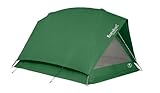
Once you move beyond about $350, you start paying for more specialized materials and design. This can mean a lighter backpacking tent, a more durable premium family shelter or a tent designed to remain stable in rougher conditions.
Current 4-person tents in this part of the market can easily approach or exceed $500. For example, premium car-camping models and ultralight 4-person shelters now routinely sit around the $500 mark, which would have looked unusually expensive when this article was first written.
Weight reduction is one of the biggest reasons prices rise. Strong lightweight poles, higher-spec fabrics and careful engineering allow a four-person shelter to pack down far smaller without simply making every component flimsy.
This is also where you need to distinguish between lightweight three-season tents and true winter tents. A premium summer backpacking tent may be extremely light but isn’t automatically stronger in snow or high winds than a heavier specialist shelter.
Expedition and Four-Season 4-Person Tent Cost – Around $650-$1,500+
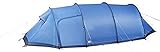
Serious four-season and expedition 4-person tents can cost anywhere from several hundred dollars to well beyond $1,000. At this level you are paying for strength, weather protection, reliable pole architecture and materials designed for repeated use in environments where shelter failure can become a safety problem.
These aren’t necessarily ultralight. Expedition tents often accept some extra weight because stronger poles, larger vestibules and more durable fabrics matter more than shaving every possible gram.
The current Fjällräven Abisko Endurance 4, for example, remains a genuine premium all-season shelter and sits firmly in this upper tier. Unless you regularly camp in severe winter conditions, remote exposed locations or expedition-style environments, you probably don’t need to spend this much.
How Much Should You Spend on a 4-Person Tent?
The amount I would spend depends far more on how the tent will be used than on the number of people sleeping inside it.
Beginners, Festival Goers and Occasional Campers
A budget tent is fine if you’re camping a few times each summer, staying relatively close to the car and avoiding severe weather. There is little point spending $600 on a lightweight expedition shelter for two festival weekends and one family campsite each year.
Budget: Around $100-$175
Weekend Campers and Regular Family Campers
If you’re going camping several times each year, I would move into the mid-range. Better poles, ventilation and waterproof construction are worth paying for once the tent becomes something you’re using regularly rather than occasionally.
Budget: Around $175-$350
Backpackers, Multi-Day Hikers and Camping Enthusiasts
If four people are actually carrying the tent into remote camps, packed weight becomes much more important. Lightweight 4-person backpacking tents are more expensive because reducing weight without sacrificing weather resistance requires better materials and more complicated construction.
This is also the range I would look at if camping is one of my main hobbies and I want something that will withstand years of frequent use.
Budget: Around $350-$650
Professionals, Expeditions and Winter Camping
Expedition tents are overkill for most people, but the price starts to make sense when you’re depending on the shelter in severe wind, snow and remote environments. Fjällräven’s history of tents gives some interesting context on how specialist tent design has evolved for demanding conditions.
If you’re camping somewhere that a broken pole or failed shelter could genuinely become dangerous, spending more for proven materials and structure isn’t simply buying luxury. This is specialist safety equipment.
Budget: Around $650-$1,500+
Why Are 4-Person Tents So Expensive?
The first reason is simply material. A four-person tent needs much more fabric, longer poles and a larger rainfly than a solo tent, and high-quality lightweight materials are expensive.
The second reason is engineering. Making a large structure lightweight while keeping it stable in wind is much harder than building a heavy dome for a family campsite.
Expensive tents can also use higher-grade pole systems, stronger fabrics, better waterproof coatings, more sophisticated ventilation and much more careful patterning. You’re paying not only for the raw material but for the design work that allows the shelter to remain light, stable and usable in poor weather.
That said, higher price doesn’t automatically mean a tent will last longer. Ultralight materials can actually be more delicate than heavier budget fabrics, so the best tent is the one designed for your style of camping rather than simply the most expensive one.
Does a More Expensive Tent Last Longer?
Not necessarily. A premium tent may use stronger poles, better stitching and higher-quality hardware, but an ultralight tent can deliberately use thinner fabric to save weight.
A $700 backpacking tent therefore isn’t automatically more abrasion-resistant than a $250 car-camping tent. What you’re often buying is a better strength-to-weight ratio rather than maximum toughness.
Care matters enormously too. Drying the tent before storage, avoiding prolonged UV exposure and using a footprint on abrasive ground can extend the life of almost any tent.
Is a 4-Person Tent Actually Big Enough for Four People?
Usually, but don’t expect luxury. The quoted capacity normally means there is enough floor space to fit the stated number of sleeping pads reasonably close together.
For four adults plus backpacks and other equipment, a 4-person tent can feel cramped very quickly. If you’re car camping and weight isn’t an issue, I often prefer going one size larger than the actual number of people using the tent.
For two people who simply want lots of room, however, a 4-person tent can feel incredibly spacious.
Final Thoughts
So how much does a 4-person tent cost? For most people today, somewhere around $150-$400 is the realistic mainstream range, although cheap tents can still fall below that and specialist expedition shelters can easily exceed $1,000.
If you’re an occasional camper, spend less and concentrate on basic waterproofing and usable space. If you’re carrying the tent long distances, camping frequently or depending on it in severe weather, spending more starts to make much more sense.
The biggest mistake is assuming price alone tells you how good a tent is. Decide whether you need a family camping tent, a lightweight backpacking shelter or a genuine four-season expedition tent first, then compare prices within that category.