

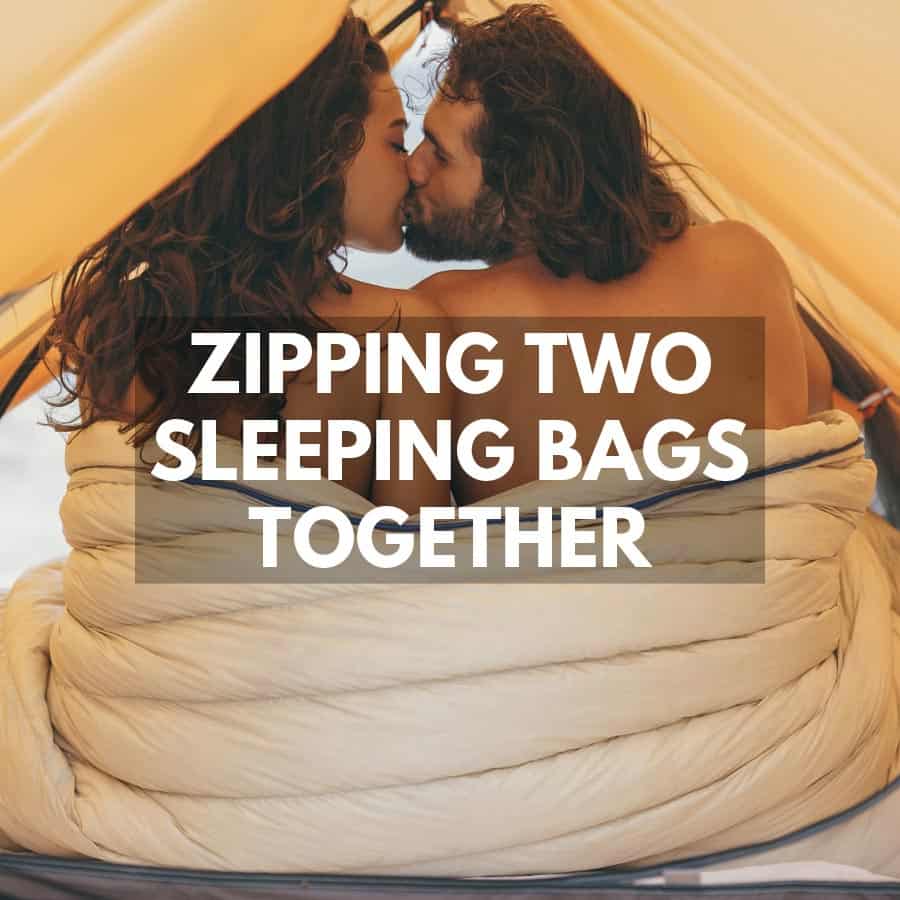
In this guide to zipping two sleeping bags together, we explain which sleeping bags are easiest to connect, how to check whether the zippers are compatible, and how to turn two single bags into a much more comfortable double sleeping setup. We also share a few lessons we have learned from sleeping in joined bags as a couple, including how to stop your sleeping pads drifting apart in the night.
Sleeping bags are traditionally designed to wrap one person up like a cocoon and trap as much body heat as possible. Double sleeping bags aren’t a new idea, though, and plenty of single bags can be zipped together to create something very similar.
For couples, this can be much nicer than sleeping in two completely separate bags. You get more room, can actually sleep next to each other and don’t have a zip and two layers of insulation separating you down the middle.
If you are thinking about connecting two sleeping bags because you want to use both of them yourself for extra warmth, that is slightly different. We have another guide on using two sleeping bags together for one person.
Can You Zip Two Sleeping Bags Together?
Yes, but only if the zippers are compatible. This is the first thing to check because two sleeping bags can look almost identical and still refuse to zip together.
The zipper type, size, length and orientation need to match. Some manufacturers deliberately make left-zip and right-zip versions of the same sleeping bag so that the two can be joined, while other bags are never designed to mate at all.
If you are buying bags specifically for this purpose, look for wording such as “zip together,” “mateable,” “left and right zip compatible” or similar in the manufacturer’s specifications. Two bags from the same model range are much more likely to work than two random sleeping bags from different brands.
Is Zipping Two Sleeping Bags Together a Good Idea?
If you are camping as a couple, it can be a brilliant idea. A joined sleeping system gives you much more freedom to move around and feels far more like sharing a normal bed than sleeping in two narrow cocoons side by side.
There are compromises, though. Sleeping bags are most thermally efficient when they fit reasonably closely around one person, so joining two together creates more empty space that your bodies have to warm. You also create a much wider opening around your shoulders where warm air can escape.
That usually isn’t a big problem for summer camping or mild weather, but I wouldn’t automatically assume that two 0°F bags zipped together will still provide the same protection as each bag used separately. If you are camping in serious cold, check out our guide to 0-degree sleeping bags and be more conservative with your sleep system.
Which Sleeping Bags Are Best for Zipping Together?
The easiest bags to join are normally rectangular sleeping bags. They have straight sides, lots of internal space and usually open much more like a duvet, which makes them naturally suited to becoming a double sleeping bag.
Mummy sleeping bags are more awkward because they taper towards the footbox and usually have shaped hoods around the head. Some mummy bags are specifically designed to zip together, but the finished arrangement is rarely as neat or spacious as two rectangular bags.
Ideally, use two bags of the same model, length and insulation level. That gives you matching zippers and prevents one side of your makeshift double bag being dramatically warmer than the other.

How to Connect Two Sleeping Bags Together
The exact process varies slightly between brands and zipper designs, but if your bags are designed to mate, connecting them is normally simple.
- Open both sleeping bags fully. Lay them next to each other with the interiors facing upwards and check that the zippers are compatible before fighting with them inside the tent.
- Join the first pair of zipper ends. Insert the zipper pin or corresponding end into the slider on the opposite bag, making sure everything is lined up correctly. You can see the basic components of a zipper in this YKK zipper guide.
- Zip the bags together around the edges. Depending on the bags, you may have one continuous connection or separate zippers down each side. Move slowly if you feel resistance rather than forcing the slider and damaging the zipper.
Once joined, lie inside before heading on your trip and make sure the setup actually works. It’s much better to discover that one zipper stops six inches short while standing in your bedroom than after you’ve driven three hours to a campsite.
5 Tips for Turning Two Single Sleeping Bags Into a Double
Avoid Mummy Bags if You Have a Choice
Mummy sleeping bags are fantastic when your priority is maximum warmth for minimum weight, but that tapered design isn’t ideal for sharing. When you connect two of them, the narrow footboxes and shaped hoods can create some strange-looking geometry.
If you’re buying sleeping bags specifically to use as a couple, two compatible rectangular or semi-rectangular bags will normally create a far better double system. If you already own two compatible mummy bags, though, there is no harm in trying them before buying anything else.
Think About the Hoods
Most mummy sleeping bags have large insulated hoods designed to wrap around one person’s head. Once two bags are joined, those hoods can end up bunched between you or sitting in an awkward position underneath your pillows.
Rectangular bags without hoods avoid this completely. Another nice option is a bag with a flat pillow pocket where you can insert a camping pillow without a mountain of hood fabric getting in the way.
Keep the Zippers Towards the Outside
Position the joined sleeping bags so that the main zipper hardware sits towards the outer edges rather than directly underneath or between you. Nobody wants to roll over at 3 a.m. and discover a cold zipper slider pressed into their ribs.
Good sleeping bags often have insulated draft tubes running behind the zipper to reduce heat loss. If yours don’t, keeping the zippers away from your bodies makes the setup more comfortable and reduces the amount of cold hardware you come into contact with.
Keep Your Sleeping Pads Together
This was one of the more annoying things we found when sleeping together in joined bags. You naturally move closer together during the night, which can slowly push two individual sleeping mats apart until somebody ends up lying in the freezing gap between them.
A double sleeping pad solves the problem completely. If you already own two single mats, you can also use purpose-made pad couplers, straps or simple loops of webbing to hold them together.
This matters for warmth as well as comfort because your sleeping pad provides most of the insulation underneath your body. A lovely warm double sleeping bag doesn’t help much if your hip is resting directly on cold ground.
Put the Easiest Exit Towards the Tent Door
Once you have zipped two sleeping bags together, you and your partner are slightly more connected than usual. If one of you has to climb across the other person to get out for a pee, everybody is probably waking up.
Arrange the bags so that the easiest opening is facing the tent door. It sounds like a tiny thing, but you will appreciate it enormously at 4 a.m.
And on a warm clear night, who doesn’t like sleeping with the tent door open so you can fall asleep next to each other looking at the stars?

Can You Zip Two Mummy Sleeping Bags Together?
Sometimes. The important part is whether the manufacturer designed the zippers to mate rather than simply whether both bags happen to be mummy shaped.
If the zippers are compatible, the result can work surprisingly well. You will still have two tapered foot sections rather than one huge rectangular footbox, though, and the hoods can end up in slightly strange positions.
With some designs, each person can keep their feet largely inside their own tapered section while sharing the wider upper part of the sleeping system. Other combinations become much more awkward, which is why I would always test them at home first.
Do the Sleeping Bags Need to Be the Same Brand?
Not necessarily, but using the same brand and preferably the same model makes life much easier. Zipper manufacturers produce many different sizes and configurations, and two visually similar zippers are not automatically compatible.
Even sleeping bags from the same company may use different zipper sizes or orientations between models. Don’t buy two bags purely because the teeth appear to line up in a product photograph.
If the manufacturer explicitly says two bags are compatible, great. Otherwise, physically testing them is the only way to know for certain.
Do You Need One Left-Zip and One Right-Zip Sleeping Bag?
Often, yes. Many sleeping bags designed to mate are sold with the zipper running down either the left or right side, and a left/right pair allows the corresponding zipper halves to meet properly when the bags are laid side by side.
This isn’t a universal rule because sleeping bag zipper systems vary, so check the manufacturer’s instructions for your particular bags. What matters is that the two zipper halves are designed to connect in the orientation you want to use them.
Are Two Sleeping Bags Zipped Together Warmer?
This is where things become interesting. Two people obviously produce more total body heat than one person, and sharing a bag lets some of that warmth circulate between you.
At the same time, joining two bags usually creates a much larger internal volume and a wider opening at the top. That means there is more air to warm and more opportunity for warm air to escape.
So I wouldn’t say two bags zipped together are automatically warmer or colder. In mild conditions they can feel wonderfully cosy, but in genuinely cold weather each person will usually get more predictable insulation from using their properly rated sleeping bag individually.
Can You Zip Two Different Temperature-Rated Sleeping Bags Together?
You can if the zippers are compatible, but the resulting system doesn’t magically average the ratings. If one side uses substantially less insulation, that side of the joined bag will still lose heat more quickly.
For couples who regularly share sleeping bags, matching insulation levels make much more sense. It also helps if both people have roughly similar preferences for sleeping temperature; one person roasting while the other is freezing doesn’t make for a particularly romantic camping trip.
Can You Join Sleeping Bags With Different Zipper Lengths?
Possibly, but even compatible zipper types can become awkward if the lengths differ significantly. You may end up with an unconnected section at the foot or shoulder end, creating a drafty gap.
Again, this is why matched sleeping bags are the easiest solution. The more differences you introduce, the more your nice simple double sleeping bag starts turning into an engineering project.
What Does Mating Two Sleeping Bags Together Mean?
“Mating” sleeping bags simply means joining two compatible bags together using their zippers. It sounds considerably more exciting than the actual process.
The terminology comes from components being described as mating or compatible parts. Zippers themselves have specific components including sliders, stops, teeth or coils and insertion pieces; this zipper anatomy guide gives a useful breakdown.
Once you have successfully mated the two sleeping bags, you and your partner are free to do whatever further mating you consider appropriate.
Is a Double Sleeping Bag Better Than Zipping Two Singles Together?
A purpose-built double sleeping bag is normally neater because the dimensions, insulation and zipper arrangement were designed from the start for two people. You don’t have spare hoods or mismatched footboxes to deal with, and many include features specifically intended for couples.
Two compatible singles are far more versatile, though. You can use them together when camping as a couple and separate them whenever one person camps alone, which saves buying and storing another massive sleeping bag.
Final Thoughts
Zipping two sleeping bags together can work brilliantly for couples, particularly in mild weather where maximum thermal efficiency isn’t the main concern. The key is making sure the zippers really are compatible rather than assuming any two sleeping bags can be forced together.
Rectangular bags make the easiest doubles, while mummy bags can work if they are specifically designed to mate. Keep your sleeping pads connected, position the awkward zipper hardware towards the outside and arrange the opening so that midnight trips to the tent door don’t involve climbing over your partner.
Once you’ve got those details sorted, two ordinary sleeping bags can become a surprisingly comfortable double bed in the middle of nowhere.






[…] Camping cots get you off the ground which is comfy and familiar but this does open you up to cool breezes coming from below and a lack of cushioning. This is why you should consider coupling your camping double cot with a thin sleeping pad or inflatable mattress. If you are sleeping as a couple or with a partner then you should also consider getting a double sleeping bag or at least zipping two single sleeping bags together to make a double. […]