Down Jacket Ruined In Wash? | 3 Ways To Fix Down Jacket Clumps After Washing

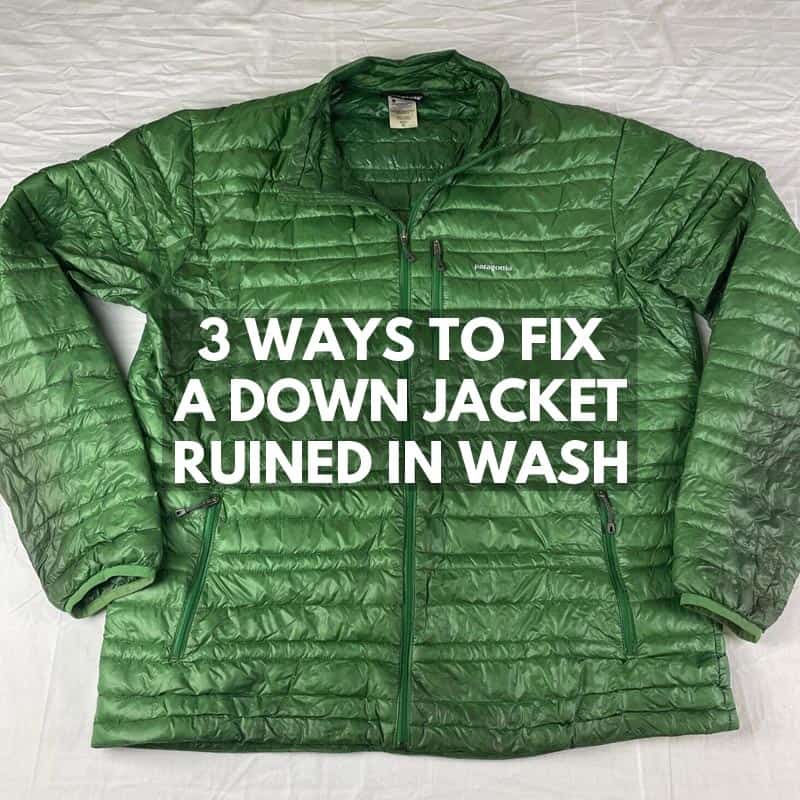
If your down jacket looks ruined after washing because all the feathers have clumped together and parts of the jacket now look completely flat, don’t panic. In most cases the jacket isn’t ruined at all — the down is simply still wet, stuck together or unevenly distributed inside the baffles.
I have had down jackets come out of the washing machine looking absolutely terrible and then return to almost normal once the down was dried properly and broken apart.
The key is not to judge the jacket while the insulation is wet.
Wet down collapses into dense clumps and can make entire sections of the jacket look as though the insulation has disappeared.
QUICK ANSWER
Flat and clumpy after washing? Usually fixable. Dry the jacket thoroughly on the lowest suitable tumble-dryer setting, regularly break apart the clumps by hand and use clean dryer balls if the care label allows.
Used normal detergent or fabric softener? Rinse or rewash the jacket with a specialist down cleaner to remove as much residue as possible.
Melted fabric, damaged baffles or obvious heat damage? That is different. Stop trying to wash it again and speak to the manufacturer or a specialist outdoor-gear repairer.
Is My Down Jacket Actually Ruined After Washing?
Usually, no.
If the main problem is that the jacket looks flat and the down has gathered into hard lumps, that is a normal part of washing down.
Rab specifically notes that a down jacket that looks ruined after washing is often simply not fully dry, with down clumped together or migrated inside the baffles.
The first thing I would do is check what actually happened.
- Is the shell fabric melted, shiny or distorted? This can indicate excessive heat.
- Are any internal baffles torn? Down migrating between sections can sometimes be caused by structural damage rather than normal clumping.
- Are feathers pouring through a tear? That requires a repair rather than more drying.
- Does the jacket simply look flat and lumpy? This is the classic recoverable problem.
- Does it still feel damp? Don’t judge the loft yet.
I would also check the care label before doing anything else.
There isn’t one universal washing temperature or drying setting that is correct for every down jacket.
Some manufacturers specify 30°C, some permit different cycles, and certain jackets contain materials or treatments that need their own care instructions.
The jacket manufacturer’s care label always takes priority.
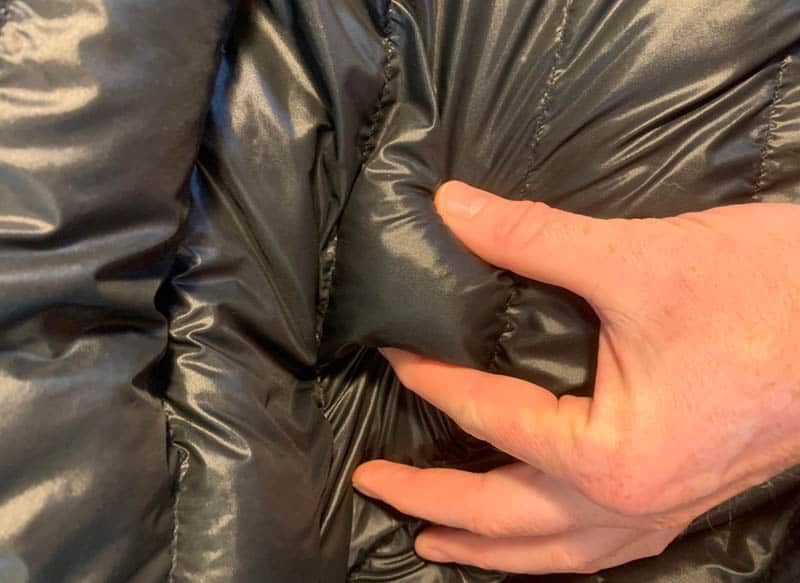
3 Ways to Fix a Down Jacket That Looks Ruined After Washing
If the shell and stitching are intact, these are the three methods I would try.
1. Dry It Properly and Break Up the Clumps

This fixes the majority of supposedly “ruined” down jackets.
Down clusters stick together when wet.
As they dry, you need to repeatedly loosen those clusters so the insulation can spread back through each baffle and regain its loft.
If the care label permits tumble drying, I use the lowest appropriate setting and check the jacket regularly.
Clean dryer balls can help knock the clumps apart while the drum turns.
Between drying cycles:
- Take the jacket out of the dryer.
- Feel each baffle for dense lumps.
- Gently pinch and massage the clumps apart through the fabric.
- Work the loosened down towards obviously empty areas of the same baffle.
- Give the jacket a shake.
- Put it back into the dryer and continue on low.
Be patient.
A jacket can feel dry on the outside while there is still moisture deep inside the down clusters.
That hidden moisture is one of the main reasons people stop drying too early and assume the jacket has been permanently damaged.
Once the jacket is genuinely dry, go through every baffle again.
For stubborn clumps I pinch the same lump from both sides of the jacket and gradually tease it into smaller pieces.
Do not yank or aggressively twist wet down.
Wet insulation is much easier to damage than dry lofted down.
2. Rewash It With a Proper Down Cleaner
If you used normal laundry detergent, fabric conditioner or far too much cleaner, I would consider rewashing the jacket properly.
Conventional detergents can leave residues that interfere with loft and water repellency.
Use a cleaner specifically designed for down.
Two products I have used and would choose are:
Nikwax Down Wash Direct Grangers Down WashBefore rewashing:
- Clean old detergent residue from the washing-machine drawer.
- Read the jacket’s care label.
- Use the amount of down cleaner specified by the cleaner manufacturer.
- Use a gentle cycle.
- Rinse thoroughly.
Nikwax currently recommends a 30°C synthetic cycle with a slow spin for Down Wash Direct, plus an extra rinse where possible.
The jacket’s own label still takes priority if it specifies something different.
After washing, dry it thoroughly using the method above.
3. Send It to a Specialist
If the jacket is expensive, damaged, unusually large or you’re simply not comfortable putting it through another wash, a specialist gear cleaner or repairer can be worth the money.
I would favour an outdoor-equipment specialist or the jacket manufacturer rather than assuming a normal dry cleaner understands down equipment.
Some established outdoor repair services include:
Rab also offers its own professional wash service for down equipment.
If there is an actual tear, broken baffle or heat-damaged fabric, I would skip the repeated DIY washing and go directly to the manufacturer or a specialist repair service.

How to Wash a Down Jacket Without Damaging It
You cannot realistically expect wet down to stay perfectly fluffy while it is being washed.
Some clumping is normal.
The objective is to clean the insulation without damaging the jacket and then restore the loft during drying.
This is the method I use:
- Read the care label first.
- Empty every pocket.
- Release tension from drawcords where practical.
- Close the main zip and other hook-and-loop fasteners that could snag.
- Clean conventional detergent residue from the detergent drawer.
- Use a specialist down cleaner rather than ordinary detergent.
- Wash one down jacket at a time if possible.
- Use the gentle temperature and cycle stated on the care label.
- Rinse thoroughly so cleaner isn’t left inside the down.
- Remove excess water carefully before drying.
One correction I would make to my old advice is the spin cycle.
I previously suggested avoiding spinning almost entirely.
Nikwax actually recommends using spin cycles to remove water, but starting slowly.
Wet down is extremely heavy.
Their current guidance is to spin several times, beginning slowly and increasing the speed once much of the water has already been removed.
That reduces the amount of water the dryer has to deal with without suddenly putting a very heavy waterlogged garment under maximum force.
What Should You Use to Wash a Down Jacket?
I use a dedicated down wash.
Normal laundry detergent is designed for normal clothing, not delicate down clusters and technical outer fabrics.
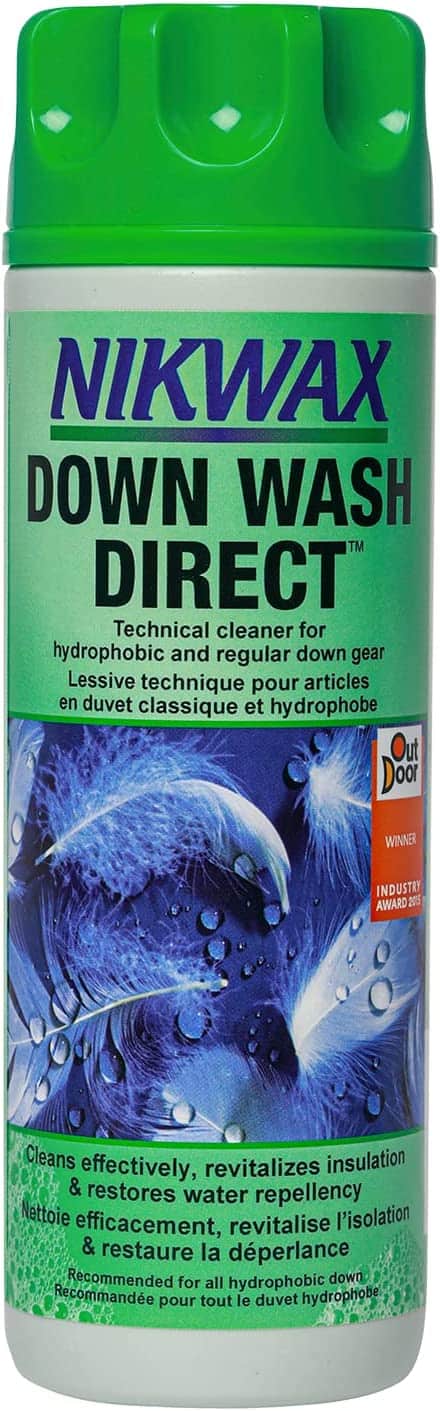


Nikwax Down Wash Direct and Grangers Down Wash are both made specifically for down-filled equipment.
The exact dosing instructions change between products, so follow the bottle rather than guessing.
How to Dry a Down Jacket and Restore the Loft
Drying is the most important part.
If the care label permits tumble drying, use a low setting and expect the process to take much longer than ordinary clothing.
I no longer recommend aggressively wringing a wet down jacket inside a towel.
A waterlogged down jacket is heavy and twisting it can put unnecessary stress on internal baffles and stitching.
Instead:
- Remove the jacket carefully from the washing machine. Support its weight rather than lifting it by one section of fabric.
- Use suitable spin cycles to remove excess water. Start gently rather than immediately using a violent high-speed spin.
- Check the care label to confirm tumble drying is allowed.
- Put the jacket in the dryer on the lowest suitable setting.
- Add clean dryer balls if permitted.
- Stop the dryer every 20-30 minutes.
- Shake the jacket and gently break apart clumps by hand.
- Continue until the down is fully dry and evenly lofted.
Grangers specifically recommends checking down garments every 20-30 minutes during tumble drying, then gently shaking and patting them to redistribute the insulation.
Nikwax likewise recommends low tumble drying where the garment label allows and repeatedly teasing clumps apart during drying.
There isn’t a reliable universal drying time.
A thin down jacket and a huge expedition parka contain completely different amounts of insulation.
Dry it until the down is genuinely dry, not until a timer tells you it should be.
Afterwards I like to leave the jacket somewhere warm and dry with plenty of airflow before storing it.

Why Does Down Clump After Washing?
Down works because thousands of tiny three-dimensional clusters create loft and trap air.
When those clusters get saturated, the fine filaments stick together.
Instead of filling the baffle like a soft cloud, the insulation collapses into wet lumps.
This can make one side of a baffle feel completely empty while all the insulation sits in a dense ball at the other end.
That doesn’t mean the down has vanished.
As the jacket dries, repeatedly separating those wet clusters allows them to open up again.
Once properly dry and distributed, the jacket should regain most or all of its original loft unless the insulation or garment has actually been damaged.
What if I Used Normal Detergent on My Down Jacket?
Don’t assume the jacket is destroyed.
I would rinse it thoroughly or rewash it with a dedicated down cleaner according to the care label.
The main problem with ordinary detergent is residue.
Technical down cleaners are formulated to clean down without leaving the same kind of deposits that can reduce loft, breathability and water repellency.
If you have only made the mistake once, I would concentrate on removing the residue and drying the jacket correctly rather than deciding it is ruined.
What if I Used Fabric Softener?
Again, don’t throw the jacket away.
Fabric softener is something I avoid on down and technical outdoor clothing because it can leave coatings and residue on both the insulation and outer fabric.
If it has already happened, rinse thoroughly.
If necessary, rewash using a proper down cleaner and then dry the jacket correctly.
The important part is getting as much unwanted residue out as possible.
What if I Washed the Jacket Too Hot?
Heat damage is different from clumped down.
If the jacket merely looks flat after a warm wash, continue with careful drying and see whether the loft returns.
If you see:
- Melted or glazed fabric
- Distorted panels
- Damaged seam tape
- Deformed zips
- Shrivelled synthetic components
then stop.
No amount of refluffing down will repair heat-damaged shell material.
Contact the manufacturer or a specialist repairer.
I wouldn’t use a blanket number such as “anything over 40°C ruins down” because different jackets use different face fabrics, laminates, seam construction and care instructions.
The garment label is the correct limit for your jacket.
Can You Air-Dry a Down Jacket?
Sometimes, if the manufacturer’s instructions allow it, but tumble drying is normally much easier for restoring loft.
The problem with simply hanging a soaked down jacket on a line is that the wet insulation can remain clumped for a very long time.
If you have no dryer, I would lay the jacket flat somewhere warm and well ventilated, regularly turn it, shake it and manually break apart the clumps as it dries.
Do not store it until you are absolutely certain the insulation is completely dry.
Leaving down damp for an extended period can cause far bigger problems than temporary clumping.
Can You Fix a Synthetic Puffer Jacket the Same Way?
Sometimes, but synthetic insulation behaves differently from down.
A synthetic puffer can also look uneven after washing and may benefit from careful drying, shaking and redistribution.
But synthetic insulation doesn’t form and recover from wet down clusters in exactly the same way.
If a synthetic jacket remains permanently flat, lumpy or distorted after it has completely dried, the insulation itself may have shifted, torn or degraded.
So I wouldn’t automatically treat every puffer as though it contains down.
Check the label first to see what insulation you actually have.
Can Down Move Between Baffles?
Yes, depending on how the jacket is constructed.
Some baffles are completely separated.
Others may contain internal openings that allow down to migrate during manufacturing or use.
If one panel still seems dramatically empty after the jacket is completely dry, gently massage the insulation around and see whether it can be redistributed.
If down is continually disappearing from one section or collecting somewhere it obviously shouldn’t, an internal baffle may be damaged.
That is a repair problem.
How Do You Know When a Down Jacket Is Completely Dry?
This is harder than it sounds.
I check three things:
- No cold, dense clumps when I squeeze each baffle.
- The loft has returned evenly throughout the jacket.
- The jacket feels consistently light rather than heavy in isolated sections.
Don’t just feel the shell.
The outside can be bone dry while the centre of a large clump is still damp.
This is why repeated checking and hand-lofting during drying works so well.
Should You Put Tennis Balls in the Dryer With a Down Jacket?
Clean dryer balls are my preference.
Tennis balls are commonly used for the same purpose and can help break up clumps as the dryer tumbles.
The important part is that whatever you use is clean and won’t transfer dye, dirt or anything else onto the jacket.
You don’t need to batter the jacket.
The balls simply provide a bit of repeated movement to help loosen the down while it dries.
Can You Reproof a Down Jacket After Washing?
Yes, if the outer fabric’s water repellency has deteriorated and the jacket manufacturer allows it.
If your down jacket has lost its water repellency, a compatible wash-in or spray-on treatment can help restore the DWR performance.
This is separate from fixing clumped insulation.
First make sure you understand whether your product is intended to treat:
- The outer fabric
- The down itself
- Or both
Follow the treatment manufacturer’s instructions rather than improvising.
When Is a Down Jacket Really Ruined?
There are situations where washing has caused genuine damage.
I would become concerned if:
- The outer fabric has melted or permanently distorted.
- Internal baffles have torn.
- A large amount of down has escaped.
- The insulation still won’t loft after being thoroughly cleaned and dried.
- The jacket has developed serious mould or persistent odour after being stored wet.
- Zips, seam tape or bonded sections have been damaged by heat.
A jacket that is simply flat, clumpy and pathetic-looking while wet is a completely different situation.
That is usually recoverable.
Final Verdict
If your down jacket looks ruined after washing, the most likely problem is that the down hasn’t dried and lofted properly yet.
Don’t start pulling seams apart or replacing the jacket.
Dry it thoroughly according to the care label, repeatedly break the clumps apart by hand and give the insulation enough time to recover.
If you used the wrong detergent, rinse or rewash it with a proper down cleaner.
If the shell or internal construction has genuinely been damaged, then it is time for a specialist repair.
But in my experience, the horrible flat jacket that comes out of the washing machine is usually far less disastrous than it first appears.
If someone you know is still wearing a filthy down jacket because they are terrified of washing it, send them this guide.