11 Best Waterproof Ponchos for Hiking 2026


Are you looking for the best waterproof poncho for hiking? In this ultimate guide to rain ponchos, I compare everything from ultralight backpacking ponchos to rugged military-style designs and tarp ponchos that can double as emergency shelters.
If you spend a lot of time outdoors, you understand how important it is to stay warm and dry when far from home. Waterproof jackets and pants are very good at what they do, but they aren’t always the easiest things to get on and off when you already have a backpack and other gear strapped to you.
The best waterproof ponchos can be lighter than most jackets while giving much better coverage around your legs. You can also pull a large rain poncho straight over your backpack, which makes them drastically more convenient to put on and take off when showers keep coming and going.
Another big benefit of hiking in a rain poncho as opposed to a jacket is ventilation and freedom of movement. Poncho fabrics aren’t necessarily breathable themselves, but the huge openings underneath allow far more air to move around your body, which can make a massive difference when hiking hard in warm rain.
- Check out our popular Surf Poncho Guide if you’re looking for a hooded towel or changing robe instead.
I’ve tested everything from incredibly thin emergency ponchos to heavy military-style designs, and they all make different compromises between weight, durability, coverage and pack size. To choose the best waterproof ponchos for hiking, I looked at the criteria in the buyer’s guide further down the page as well as how useful each one actually is when the weather turns bad.
11 Best Waterproof Ponchos for Hiking
Sea to Summit Ultra-Sil Nano Tarp Poncho

- MATERIAL: 15D Ultra-Sil Nano nylon
- SIZE: 145 x 265 cm / 57 x 104 in
- PACKED WEIGHT: 230 g / 8.1 oz
- BEST FOR: Ultralight hiking, backpack coverage and tarp use
The Sea to Summit Ultra-Sil Nano Tarp Poncho is still my number one waterproof poncho for hiking and camping. It is one of the biggest ponchos I’ve tested while somehow remaining ridiculously light, and Sea to Summit still makes some of the best lightweight outdoor gear out there.
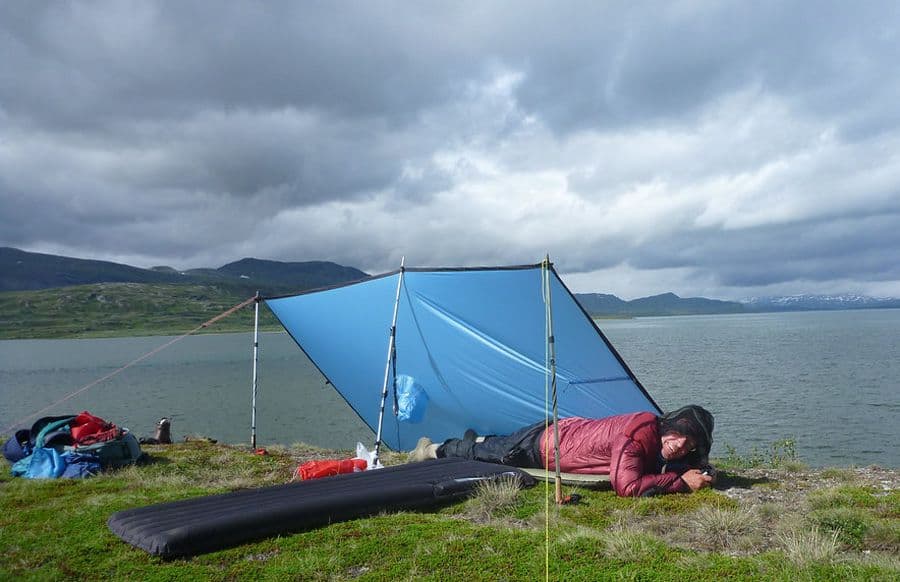
Not only is the Sea to Summit Poncho a waterproof jacket alternative, but it also opens out into a rain tarp large enough to create useful shelter. Using two hiking poles or lightweight tarp poles, guy lines and a few pegs, you can have an open-air waterproof shelter set up incredibly quickly.
The current Ultra-Sil Nano Tarp Poncho still uses 15D Ultra-Sil Nano fabric with double-stitched, tape-sealed waterproof seams. It is generously cut to accommodate a large backpack, and on an average-height person there is still enough material left to provide useful protection down towards the knees.
The sides snap together when you need more protection but can be opened for ventilation. There is also an ergonomic three-panel hood with a proper brim, which I much prefer to the basic drawstring hole you find on cheap ponchos.
The one compromise is obvious: 15D fabric needs more care than a heavy military poncho. I wouldn’t deliberately drag it through thorn bushes, but for normal hiking and backpacking the amount of coverage you get for the weight is exceptional.
VERDICT: This still ticks virtually every box for me. It covers a large backpack, ventilates extremely well, packs down tiny and genuinely works as a shelter rather than having “emergency tarp” written on the box as an afterthought.
The Sea to Summit rain poncho can keep you dry, give you somewhere to shelter and is so light that you’ll barely notice it in your backpack when the sun is shining. If I had to pick just one waterproof hiking poncho, this would still be it.

Frogg Toggs Ultra-Lite2 Poncho

- WEIGHT: Approx. 255 g / 9 oz
- HOOD: Adjustable with cord locks
- SIDES: Snap closures
- BEST FOR: Lightweight budget rain protection
The Frogg Toggs Ultra-Lite2 Poncho is the current version of one of the lightest inexpensive reusable ponchos I’ve used. Frogg Toggs is probably best known for fishing rain gear, so making something waterproof isn’t exactly unfamiliar territory for them.
The material is incredibly light and packs down to virtually nothing, which is the main reason to buy it. You get welded construction, side snaps and an adjustable hood, but there isn’t much unnecessary material or hardware adding weight.
The downside is durability. It feels much closer to an emergency poncho than something like the Mil-Tec or OneTigris, so I wouldn’t choose it for forcing my way through brambles or regularly pitching it under tension as a shelter.
The old version of this article said it cost less than $10, which is no longer a realistic expectation, but it is still cheap compared with most serious outdoor waterproofs. You can see the wider Frogg Toggs poncho range on the Frogg Toggs website.
VERDICT: This is still one of my favourite choices for keeping permanently in a backpack in case the weather changes. It isn’t the toughest poncho here, but its combination of low weight, tiny pack size and decent coverage makes a lot of sense for ordinary hiking.
OneTigris TENTSFORMER Bushcraft Poncho
- MATERIAL: 75D ripstop nylon with PU coating
- SIZE: 260 x 85 x 125 cm / 8.5 x 2.8 x 4.1 ft
- WEIGHT: 640 g / 22.5 oz
- WATERPROOF RATING: 1,500 mm
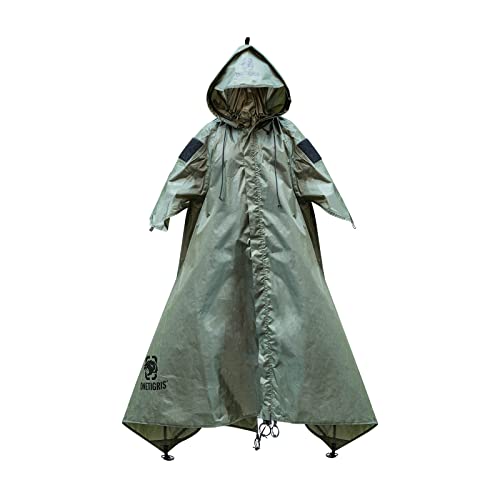
The OneTigris TENTSFORMER Bushcraft Poncho is one of the largest and most versatile rain ponchos you can buy without ending up with fabric trailing along the ground. It converts into a one-person shelter, and two TENTSFORMER ponchos can be combined to create a much larger teepee-style setup.
Things I like about this poncho are the hood design, the way the sleeves fit and the full-length zip, which allows it to behave much more like a jacket when I want better control over the fabric. The 75D ripstop nylon is also significantly tougher than the ultralight ponchos above, which gives me much more confidence when using it around woodland and rough camps.
The current PU-coated fabric has a 1,500 mm waterproof rating and the whole thing weighs around 640 grams. That is heavy compared with the Sea to Summit, but much easier to justify if I am genuinely planning to use it as both rainwear and shelter.
The price and quality have always made the TENTSFORMER attractive to bushcrafters, and the packed size is reasonable considering the amount of fabric involved. You can see the original OneTigris TENTSFORMER product information here.
VERDICT: Designed for far more than casual dog walking, the TENTSFORMER is a really good value multi-use poncho if you want something tougher than ultralight rainwear. I especially like it for bushcraft, longer camps and situations where I might genuinely need to use the poncho as a shelter or groundsheet.
Snugpak Enhanced Patrol Poncho

- MATERIAL: Paratex Dry nylon with waterproof PU coating
- WEIGHT: 410 g / 14 oz
- PACK SIZE: 20 x 10 cm / 8 x 4 in
- BEST FOR: Backpacking with a large backpack
The Snugpak Enhanced Patrol Poncho is the current evolution of the Patrol Poncho from the original article. Like most Snugpak gear, it has a much more military feel than the super-lightweight ponchos and is generously cut to cover both you and your backpack in one fell swoop.
The current Enhanced Patrol uses Snugpak’s Paratex Dry outer fabric with a waterproof PU coating and fully taped seams. At 410 grams it is still reasonably light and packs down to around 20 x 10 cm, so it is easy enough to forget about in your bag until the rain starts.
The hood has a drawcord adjustment and there is a useful large chest pocket. The extended rear gives better coverage over a backpack, which is important because a poncho that reaches your knees without a pack can suddenly become surprisingly short once you put 60 litres of gear underneath it.
If you’re interested in the fabric itself, Snugpak has more information on Paratex Dry here. The current model is described as 100% waterproof and Snugpak even suggests the oversized design can be used as an emergency bivvy.
VERDICT: I still rate the Patrol design as one of the best waterproof ponchos for backpacking with a large pack. It feels tougher and nicer against the skin than the cheapest ponchos without moving into the really heavy military end of the scale.
EXPED Pack Poncho UL
- MATERIAL: 15D ripstop nylon, silicone/PU coated
- WATER COLUMN: 2,500 mm
- WEIGHT: 200-235 g depending on size
- BACKPACK CAPACITY: Up to 100 L
The EXPED Pack Poncho UL replaces the Charles River Apparel Pacific Poncho in the current top 11. I genuinely liked the Pacific because it had much more style and a nicer feel than most plastic-looking rain ponchos, but Charles River now lists the Pacific Poncho as discontinued, so I don’t think it belongs near the top of a current buying guide anymore.
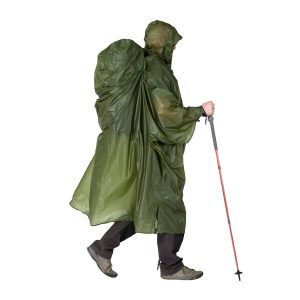
The EXPED is also much more specifically designed for hiking. It has an integrated expandable backpack compartment capable of covering packs up to 100 litres, which means the rear doesn’t simply get pulled halfway up your legs when you put a large rucksack underneath it.
The fabric is extremely light 15D ripstop nylon with silicone/PU coating, factory-taped seams and a 2,500 mm water column. Depending on size it weighs between 200 and 235 grams, which puts it right amongst the best ultralight ponchos despite the proper backpack accommodation.
I particularly like the small design touches: the anatomically shaped hood adjusts with one hand, sleeve snaps stop the fabric riding up and a small strap can attach the poncho to your backpack. That means in stop-start showers I can peel it back without immediately having to stuff the entire thing away.
VERDICT: If your main requirement is covering a large backpack while hiking, this is probably the most purpose-built poncho in the guide. It isn’t as versatile as the Sea to Summit Tarp Poncho, but the dedicated pack compartment is a genuinely good design.
Mil-Tec Waterproof Poncho

- MATERIAL: Waterproof ripstop fabric
- SIZE: Approx. 140 x 210 cm / 56 x 84 in
- WEIGHT: Approx. 680 g / 24 oz
- BEST FOR: Military-style durability and bushcraft
The Mil-Tec Waterproof Poncho has always appealed to people who value toughness over shaving every last gram from their pack. Unlike most ultralight ponchos, the material is thicker and more abrasion-resistant, which is much better suited to hunting, bushcraft and trekking through overgrown terrain.
The compromise is that it weighs more and doesn’t pack down nearly as small. If durability is more important than ultralight performance, though, that becomes a worthwhile trade, and suppliers such as Military 1st have sold this kind of military waterproof gear for years.
The side poppers are useful because they allow compatible ponchos to be joined together into a larger rain tarp. It can also be used as an emergency groundsheet or as part of a basic single-person bivvy setup without making me worry as much about ripping the material under tension.
One thing I need to correct from the original article is my old claim that the Mil-Tec was “made in the same way as GORE-TEX.” It isn’t: GORE-TEX relies on a waterproof/breathable membrane construction, while this type of poncho uses a much simpler waterproof coating, and you can see what GORE-TEX is actually made from here.
VERDICT: The Mil-Tec is heavier than most hiking ponchos but feels much more like something I can abuse. If you’re moving through woodland, sitting on it, pitching it as shelter and generally treating it as a piece of field equipment rather than delicate rainwear, that extra toughness is worth carrying.
Anyoo Waterproof Rain Poncho

- MATERIAL: Polyester/ripstop-style waterproof fabric depending on model
- DESIGN: Side snaps and adjustable hood
- USE: Rainwear, emergency cover and basic tarp
- BEST FOR: Affordable all-round use
The Anyoo Waterproof Rain Poncho used to sit down at the bottom of this page as an honorable mention, but I think it deserves a proper place in the current list.
It follows the classic rectangular poncho formula: waterproof material, adjustable hood, side snaps and enough surface area to provide useful backpack coverage or be opened out for emergency shelter.
That simplicity is part of its appeal. There is no complicated waterproof membrane, fitted sleeve system or technical jacket construction. You throw it over yourself when it rains, open the sides when you need airflow and stuff it back into the pouch afterwards.
I wouldn’t rank it ahead of the specialist Sea to Summit, EXPED or Snugpak options for a serious long-distance trip, but it gives casual hikers an awful lot of function for the money.
VERDICT: A solid affordable all-rounder. If you want a reusable poncho rather than disposable plastic but don’t need premium ultralight fabric or military-level durability, this is the sensible middle option.
SaphiRose Unisex Rain Poncho
- MATERIAL: Polyester
- SIZE: Approx. 114 x 160 cm / 45 x 63 in
- WEIGHT: Approx. 310 g / 10.9 oz
- BEST FOR: Hiking, travel and everyday use
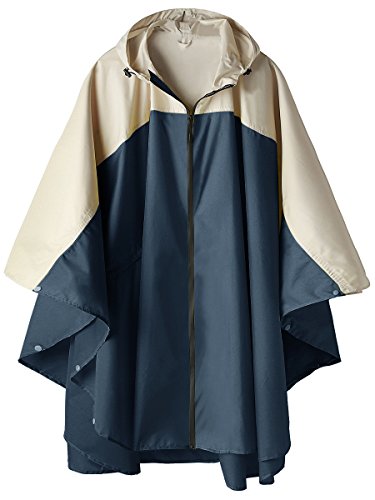
The SaphiRose Unisex Rain Poncho stands out from the crowd because of its full-length front zipper and useful pocket. The zip makes it easier to put on around a backpack and, more importantly, means I can open the whole front for ventilation when the rain eases without taking it off.
It is lightweight and packable and comes with a small storage pouch, making it easy to keep accessible in a daypack. A peaked hood, sealed seams, side poppers and hood adjustment give it the important rainwear features without making the design unnecessarily complicated.
The full zip does make it feel more like everyday clothing than many military-style ponchos, and there are plenty of different designs in the SaphiRose unisex poncho range. I wouldn’t choose this ahead of the Sea to Summit for an ultralight expedition, but I actually prefer the SaphiRose for casual use.
VERDICT: Overall, the SaphiRose still gets a thumbs up because it works for hiking without looking quite so utilitarian. The full front zip and pocket are small details on paper but become surprisingly useful when you’re wearing the poncho for hours.
Tilley Packable Hooded Poncho
- STYLE: Packable hooded rain poncho
- FIT: Relaxed oversized fit
- HOOD: Full coverage hood
- PACKABLE: Yes
- BEST FOR: Hiking, travel and everyday rain protection
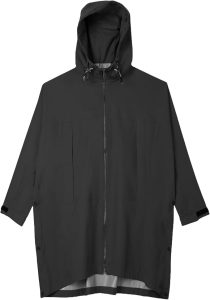
The Tilley Packable Hooded Poncho gives this list something quite different from the ultralight tarp ponchos and military-style designs above. Tilley has built its reputation around practical outdoor clothing, and this poncho feels much more like proper wearable rain gear than a rectangle of waterproof fabric with a hole cut in the middle.
The fit is deliberately loose enough to give you plenty of freedom of movement and useful coverage, while the hood provides proper protection around the head and neck. It is also designed to pack down for travel, which makes it much more realistic to keep in a backpack, car or suitcase instead of only reaching for it when you already know the weather will be terrible.
Where I think the Tilley makes the most sense is for hikers who want the convenience and ventilation of a poncho without looking like they’re wearing part of their tent. The cleaner clothing-style design works just as well for travelling, dog walking, festivals and everyday wet-weather use as it does on an easy hiking trail.
It doesn’t offer the shelter versatility of the Sea to Summit Tarp Poncho or the ruggedness of something like the Mil-Tec, so I wouldn’t buy it specifically for bushcraft or emergency shelter use. But that isn’t really what it is trying to do.
VERDICT: One of the smartest-looking ponchos in the guide and a good choice if you want proper reusable rain protection that feels more like outdoor clothing than survival gear. I especially like it for travel and everyday hiking where packability, comfort and appearance all matter.
Arcturus Lightweight Ripstop Nylon Rain Poncho
- MATERIAL: Ripstop nylon with waterproof PU coating
- WATERPROOF RATING: Approx. 3,000 mm
- WEIGHT: Approx. 310 g / 10.9 oz
- BEST FOR: Tough lightweight rain protection
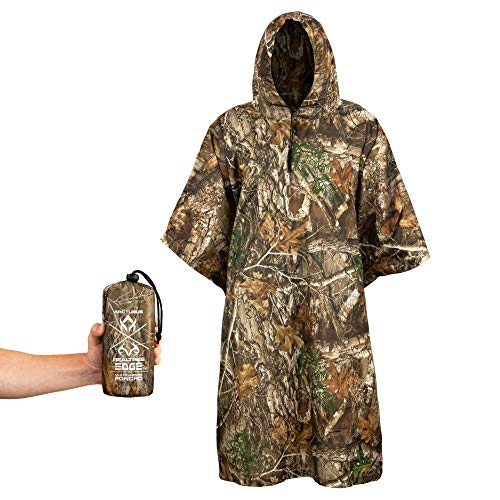
The Arcturus Lightweight Ripstop Nylon Rain Poncho is one of my favourite compromises between the ultralight end of the market and the heavy military options. I tested the Realtree EDGE version, but there are plain colours available if walking around looking like part of a hedge isn’t really your thing.
The ripstop construction and waterproof coating feel much tougher than disposable or nonwoven ponchos, while the whole thing still weighs only around 310 grams. The fit is long enough to cover a backpack and still provide useful protection down the legs, which comes in handy if you need to kneel on wet grass or sit briefly without soaking yourself.
You can also stretch it out as an emergency shelter, although there are better choices if that is your main reason for buying a poncho. For me, the Arcturus makes most sense as durable rainwear that happens to have some shelter versatility rather than as a dedicated tarp that you happen to be able to wear.
VERDICT: Considering the price, this remains an absolute bargain. It feels significantly more trustworthy than ultra-thin emergency gear but is still light enough that I don’t begrudge carrying it all day.
HAZARD 4 Poncho Villa Technical Soft-Shell Poncho

- MATERIAL: 3-ply stretch waterproof/breathable softshell
- SIZE: Approx. 203 x 135 cm / 80 x 53 in
- WATERPROOF RATING: 10,000 mm on current model
- WEIGHT: Approx. 1 kg / 2.3 lb
The HAZARD 4 Poncho Villa is still unlike almost every other rain poncho here because of the softshell material. Instead of glossy ultralight waterproof fabric, it feels much closer to a technical softshell jacket and offers considerably more abrasion protection and warmth.
The version I originally tested was the awkward one on this list because I liked hiking in it but found that prolonged torrential rain could eventually overwhelm it. I don’t want to erase that observation simply because the current spec sheet looks better, but Hazard 4 has since revised the product and now describes the Poncho Villa as a 3-ply waterproof/breathable softshell with a 10,000 mm waterproof rating.
At around a kilogram it is still far too heavy for anybody counting every gram. The payoff is a much quieter, tougher fabric, huge coverage over backpacks and enough perimeter grommets to turn it into a makeshift shelter or work surface.
The wide-brimmed adjustable hood remains one of the things I like most about the design, particularly for photography or situations where I am crouching down rather than simply walking along a trail. You can see the current Hazard 4 Poncho Villa specifications here.
VERDICT: I wouldn’t choose this for ultralight backpacking, but I am keeping it because the current version appears to address the main weakness of the model I originally tested. It is expensive and heavy, but its quieter softshell material and rugged construction make it genuinely different from everything else on the list.

Frequently Asked Questions About Waterproof Ponchos
What Is a Waterproof Poncho?
A waterproof poncho is a piece of waterproof clothing designed to cover most of your upper body and usually part of your legs. Most are made from a large single piece of waterproof fabric with a hood, and unlike traditional South American wool ponchos, rain ponchos aren’t primarily intended to keep you warm.
You can wear one directly over normal clothing and, if the cut is large enough, straight over your backpack as well. Some people prefer using a rain poncho instead of a pack cover because a poncho protects both the hiker and the pack while a normal rain cover only protects the exposed side of the bag.
What Are Waterproof Ponchos Used For?
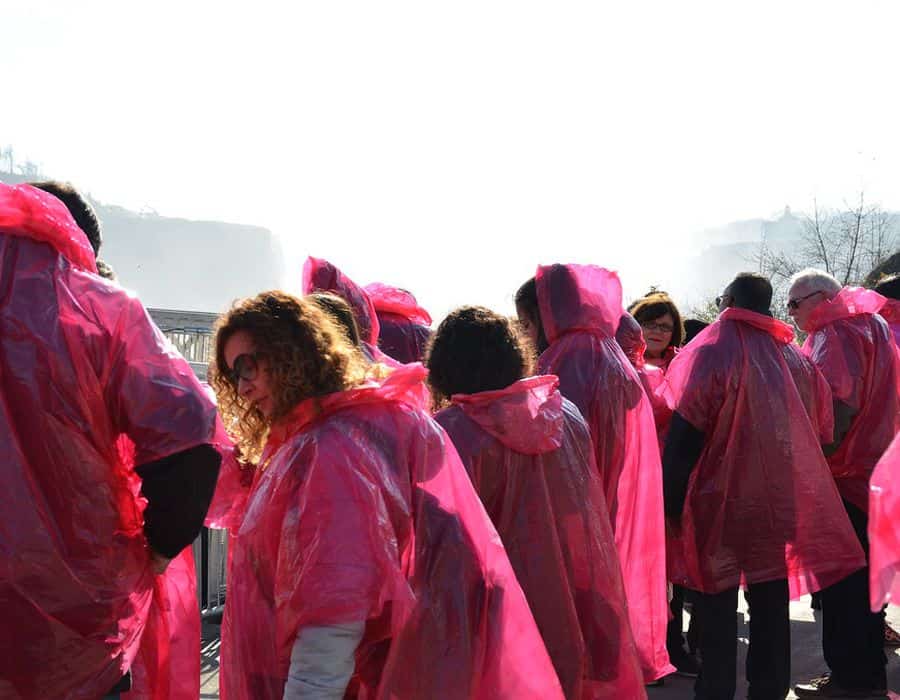
Waterproof ponchos are often used at festivals, sporting events and theme parks because they can be thrown over normal clothes in seconds. Those tend to be disposable plastic versions, whereas every main poncho in this guide is designed to be reused for hiking, backpacking, camping or other outdoor adventures.
They are a quick and easy way of covering most of your body when rain suddenly starts and are useful for far more than hiking. You can compare ponchos to umbrellas here, but the obvious advantage over an umbrella is that a poncho leaves both hands completely free.
What Are the Benefits of Using a Rain Poncho?
The main benefits are ventilation, backpack coverage, convenience and low weight. Instead of carrying a waterproof jacket, waterproof trousers and potentially a separate pack cover, one large poncho can provide most of the protection you need in ordinary rain.
Open sides also allow warm damp air to escape incredibly easily. That matters when hiking uphill because condensation building up inside close-fitting waterproof clothing can leave you almost as wet from sweat as the rain would have done.
What Is the Most Waterproof Poncho?
The most waterproof poncho isn’t necessarily the one with the biggest hydrostatic-head number. High-quality waterproof fabric, properly sealed seams and a design that stops wind-driven rain entering around the hood and sides are all equally important.
A hydrostatic-head rating is still useful for comparing fabrics, but once the material is genuinely waterproof I pay much more attention to the construction. A 10,000 mm fabric doesn’t help much if the hood continually blows off your head.
Which Is the Best Waterproof Poncho for Hiking?
For most hikers I still choose the Sea to Summit Ultra-Sil Nano Tarp Poncho because it combines enormous coverage, very low weight and genuine shelter capability. It can cover a large backpack without losing most of its leg protection and still packs down small enough for lightweight backpacking.
If you only want ultralight rainwear and don’t care about tarp conversion, the smaller Sea to Summit Ultra-Sil Nano Poncho is lighter. For very large backpacks, the dedicated expansion system on the EXPED Pack Poncho UL is also excellent.

Buyer’s Guide for the Best Waterproof Ponchos
This is where I break down the factors I use when judging waterproof hiking ponchos. Waterproofing obviously matters, but in real use the ventilation, cut, backpack coverage, hood and durability can make just as much difference to whether I actually enjoy wearing one.
Waterproofing
Let’s not be silly: when you’re looking for a waterproof poncho, you expect it to protect you from rain. Read descriptions carefully because water resistance and genuinely waterproof construction aren’t the same thing, and look for sealed seams and a proper hydrostatic-head figure where the manufacturer provides one.
You can maintain some ponchos with waterproofing treatments as the surface DWR wears away, but a DWR finish is not the same thing as the waterproof layer itself. On coated or siliconised ponchos, the main barrier normally sits within or on the fabric and the DWR simply helps water bead and roll away.
Breathability
Something ponchos generally don’t struggle with is ventilation because they are open at the bottom and usually at the sides. A close-fitting rain jacket may use expensive breathable membrane technology and still trap far more heat than a completely non-breathable poncho with huge openings underneath.
This really matters when hiking uphill, because condensation can soak clothing from inside and become dangerous in cold hiking weather. The fabric still matters, but with ponchos the physical airflow is often doing most of the work.
Wind Resistance
Most waterproof poncho fabrics block wind very effectively, but the shape of a poncho makes strong wind its biggest weakness. Once air gets underneath all that loose material you can have some fairly impressive Marilyn Monroe moments, and in really strong gusts a poncho starts behaving like a sail.
Side snaps, sleeves and waist cords help control this, and a simple lightweight belt around a tarp poncho can make a huge difference. For genuinely exposed mountain terrain, though, I would rather sacrifice some ventilation and wear a fitted shell.
Durability
If your only experience is with disposable theme-park ponchos, the reusable options here are in another league. Ripstop nylon and properly coated outdoor fabrics are much harder to tear, but there is still an unavoidable compromise between ultralight weight and resistance to abrasion.
The 15D Sea to Summit and EXPED ponchos need more care than something like the Mil-Tec. If I’m hiking maintained trails I happily choose the lighter fabric, whereas bushcraft and overgrown woodland give the heavier options a real advantage.
Weight and Pack Size
Because you normally only wear a waterproof poncho when it rains, the rest of the time it lives in your backpack. That makes weight and packability particularly important, and it is now possible to carry proper reusable rain protection at little more than 150 grams.
Lighter fabric normally means less durability, so there is no free lunch. The interesting question is whether your heavier poncho can replace something else such as a tarp or groundsheet, in which case total system weight matters more than the poncho’s number on its own.
Backpack Coverage
This is one of the features I pay most attention to because a poncho can look enormous until you actually put a large backpack underneath it. The pack pushes the rear fabric outwards and upwards, which can leave your lower back and legs much more exposed than expected.
Oversized designs such as the Sea to Summit solve this with sheer size, while the EXPED and VAUDE use dedicated expandable sections. If you hike with a 50-100 litre pack, this matters far more than it does with a little daypack.
Design
I look for a decent hood, usable arm openings, sensible closures and enough adjustment to stop the whole poncho flapping around. A good peaked hood keeps driving rain out of my eyes, while side snaps let me switch between maximum airflow and better weather protection.
Pockets and zippers are more personal preference, but I appreciate them more than I used to. A front zip can transform ventilation, and a secure pocket is useful for keeping a map or phone accessible without reaching underneath the entire poncho.
Flexibility
Freedom of movement is normally one of the easiest things for a poncho to get right because the cut is so generous. Even relatively stiff waterproof fabrics rarely feel restrictive when there is that much spare material around your shoulders and arms.
Thicker multilayer ponchos can become less supple when packed away for long periods, but storing them loosely where possible helps. The biggest movement issue tends to be excess fabric in strong wind rather than a lack of flexibility.
Value
The old version of this article suggested most rain ponchos cost around $12-$25. Cheap reusable ponchos still exist around that level, but specialist ultralight and multi-use designs can now cost many times more.
That doesn’t necessarily make them bad value. A $100+ tarp poncho that replaces rainwear, a pack cover and part of your shelter system may make more sense for a lightweight backpacker than a $20 poncho that only performs one job.
Convenience
This is probably the most underrated advantage of a poncho. When it starts raining I can often pull one straight over myself and my pack without stopping to unload anything, and when the shower disappears it comes off almost as quickly.
Many open-sided military and backpacking ponchos can also become an emergency shelter. Add a sleeping bag and something like the Therm-a-Rest NeoAir UberLite and you already have the basis of an extremely lightweight emergency sleep setup.
Waterproof Poncho Materials
These are some of the more common materials you’ll find on waterproof hiking ponchos and the basic differences between them. Whatever material is used, remember that stitches create holes, so seams need to be taped, sealed or otherwise waterproofed if the finished garment is going to keep heavy rain out.
Breathable Laminates
Made famous by GORE-TEX in the 1970s, breathable waterproof laminates remain excellent for close-fitting outdoor clothing. They allow water vapour to escape while stopping liquid water entering, which is particularly useful when a jacket is sealed around your wrists, neck and waist.
They aren’t as important in ponchos because a loose poncho already has enormous amounts of mechanical ventilation. I would happily use a laminate poncho, but I wouldn’t pay a huge premium for breathability alone when the sides are already open to the air.
Sil-Nylon and Sil-Poly
Silnylon is a lightweight woven nylon fabric treated or impregnated with silicone to create a waterproof barrier. It has an excellent strength-to-weight ratio and remains extremely flexible, which is why it appears so often in ultralight tarps, tents, dry bags and ponchos.
Sil-poly follows the same broad principle but starts with polyester instead of nylon. Both can produce extremely light waterproof gear, although very low-denier fabrics still need more care around sharp branches and rocks.
Polyester
Polyester yarn itself absorbs very little moisture, but a woven polyester fabric isn’t automatically waterproof because water can still pass between the individual fibres. Waterproof polyester ponchos therefore use some kind of coating or laminate to create the actual barrier.
A DWR treatment on the surface helps water bead and run away but should not be confused with the primary waterproof layer. Polyester does have excellent drying properties, which is one reason it remains so common throughout outdoor clothing and equipment.
PU-Coated Nylon
Nylon is another lightweight synthetic fabric that becomes genuinely waterproof when combined with an appropriate coating. PU stands for polyurethane, which bonds to the fabric to create a waterproof layer while the woven nylon provides the strength.
Ripstop nylon adds reinforcing threads into the weave so that a small tear is less likely to spread. It tends to be heavier than the very lightest siliconised fabrics but makes an excellent choice for military, bushcraft and hard-use ponchos.
PVC
Polyvinyl chloride (PVC) is used in countless different products and can make incredibly cheap, completely waterproof rainwear. This is the kind of plastic material many people associate with disposable emergency ponchos that feel a bit like a bin bag with a hood.
The problem is durability, breathability and waste. Most disposable versions aren’t designed to survive more than one or two outings, which makes very little sense for regular hiking when a reusable poncho costs only slightly more.
What Happened to the Helikon-Tex Swagman Roll and Charles River Pacific?
Two products from the original top 11 are no longer ranked above, but I haven’t silently erased them. The Helikon-Tex Swagman Roll Military Poncho is still a product I like, and the Swagman Roll is still available here, but its main strength is insulation rather than being a genuinely waterproof rain shell.
The Charles River Apparel Pacific Poncho was also a good product and one of the smarter-looking ponchos I’ve used. Charles River now marks it as discontinued, however, so keeping it in a current best-buy list would eventually send readers looking for a product they can’t reliably buy.
Final Verdict
The Sea to Summit Ultra-Sil Nano Tarp Poncho remains my overall winner because it gets the fundamentals right while also giving me something genuinely useful around camp. It is huge, extremely light, packs down tiny and can become shelter when I need it.
The smaller Sea to Summit Ultra-Sil Nano Poncho is better if you care almost entirely about minimum weight, while the EXPED Pack Poncho UL is probably the smartest hiking-specific design if you routinely carry a large backpack. At the tougher end, I would choose the OneTigris, Snugpak, Mil-Tec or Arcturus depending on how much abuse I expected the poncho to take.
Ultimately there isn’t one perfect waterproof poncho for every outdoor activity. The best choice comes down to how much coverage, ventilation and durability you need, and whether you want your poncho to do anything useful once you take it off.